
On April 17, 1975, the Khmer Rouge army marched into Phnom Penh. Over the next few frantic days, journalists covered what they saw before they were forced to leave. They watched, astounded, as Khmer Rouge soldiers, young peasants from the provinces, mostly uneducated teenage boys who had never been in a city before, swept through town. For them, Phnom Penh offered many mysteries. The boys didn’t know what to make of telephones, or toilets. But they set to their job right away, evacuating Phnom Penh, forcing all its residents, at gunpoint, to leave behind everything they owned and march toward the countryside. Hospital patients still in their white gowns stumbled along carrying their IV bottles. Screaming children ran in desperate search for their parents.
~Joel Brinkley, “Cambodia’s Curse”, pg. 40

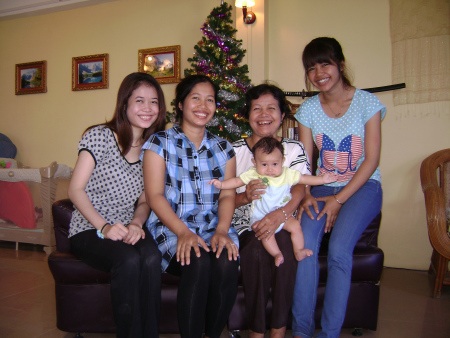
Srai Sim is my wife Makara’s mother and a survivor of the Khmer Rouge regime. This is her story.
Early Life and Marriage
Born in 1954 in Phnom Penh, Cambodia’s capital, Srai Sim was the only daughter in a family of five children. Her father worked for the government, while her mother was a homemaker.
At sixteen, Srai Sim married a hardworking young sergeant in the army. Together, they welcomed their first daughter, Srai Dtop, and looked forward to a promising future.
The Khmer Rouge Takeover
In 1975, as the United States withdrew from Vietnam, Cambodia was already in turmoil, plagued by political instability. That April, the Khmer Rouge (KR) took control of Phnom Penh, ordering its residents to evacuate under the false pretense of an impending American bombing. In reality, the KR sought to eradicate urban life and transform Cambodia into an agrarian society.
Seven months pregnant with their second child and with a three-year-old daughter in tow, Srai Sim and her family were forced to march out of the city. They were herded like cattle to Kampong Speu, where she gave birth to Srai Owne. A month later, they were relocated to Moung Roussei in Battambang province, given a week to rest, and then sent to Phnom Thippadei to build their own shelter and work under grueling conditions.
 Tragedy Strikes
Two months after settling in, KR soldiers began identifying former government workers. Srai Sim’s husband, a soldier under the previous government, was among those selected. The KR claimed these men would return safely to Phnom Penh, but only the men were taken.
A month after her husband’s departure, Srai Sim’s eldest daughter, weakened by starvation and illness, passed away before her fourth birthday. With little food herself, Srai Sim could no longer produce breast milk, and just three weeks later, baby Srai Owne also died. Soon after, a KR soldier visiting his mother in Moung Roussei revealed the truth—Srai Sim’s husband had been executed along with all the other men.
With no children to care for, Srai Sim was assigned to hard labor in the rice fields. Each day from 6 a.m. to 10 p.m., she worked under the threat of death, surviving on meager portions of rice soup. Malnourished and exhausted, she began to lose her eyesight. A friend had to guide her, and she feared being executed if the soldiers discovered her blindness.
When the rice season ended, she was reassigned to transporting wood by ox cart. The work was less physically demanding, and over time, her eyesight returned.
 A Forced Marriage

At the worksite, Srai Sim met Heang, a former farmer. The KR leaders, intent on forcing city dwellers and rural workers to intermarry, ordered them to wed. When Srai Sim refused, insisting her husband was waiting for her in Phnom Penh (though she knew he was dead), a soldier threatened to kill her. Resigned to survive, she relented. Along with 22 other couples, they were forcibly married on the same day.
Though Heang was happy to have a wife, Srai Sim remained distant. He feared she would leave him and would cling to her at night to prevent her escape. Soon after, she was sent back to the rice fields, while Heang was relocated 40 kilometers away to cut trees. Despite the grueling distance, he would walk all night just to visit her before making the return journey.
Escape and Survival
By late 1978, the Vietnamese invaded Cambodia to overthrow the Khmer Rouge. The fighting made its way to the Moung Roussei area. KR soldiers began killing many Cambodians rather than letting them escape during the chaos of the fighting. The KR soldiers rounded up Srai Sim and all the other workers and took them into the forest where Heang was working. They sent everyone up a small mountain to create a stronghold against the Vietnamese soldiers. It was extremely hot up the mountain, and they began to run out of drinking water.
Dehydration and heat took their toll. Those who attempted to flee were shot or caught in crossfire. Realizing they would die if they stayed, Srai Sim and Heang made a run for safety. As they sprinted, bullets flew past them. Miraculously, they reached Vietnamese soldiers, who ushered them to safety. By early 1979, the KR had fallen, and the couple settled in Moung Roussei.

A New Beginning
In 1980, Srai Sim and Heang had their first son, Sarin. Over the years, they welcomed more children: Makara, Petra, Seyha, Gunya, and Dtolla.
When Sarin was 17, he joined a Christian church and became deeply involved. Though Srai Sim remained devoted to Buddhism, she allowed him to practice his faith. However, financial hardship struck, shaking her beliefs. With her family struggling, Sarin invited her to church. She agreed.
At the service, she was overwhelmed by emotion, crying throughout. Though she didn’t understand why, she felt she had encountered God. She soon chose to follow Christ.
Serving Others
In 2002, the family moved to Poipet, where Sarin found work at a casino to support them. Trusting fully in God, Srai Sim started a house church, sharing her faith with her neighbors.
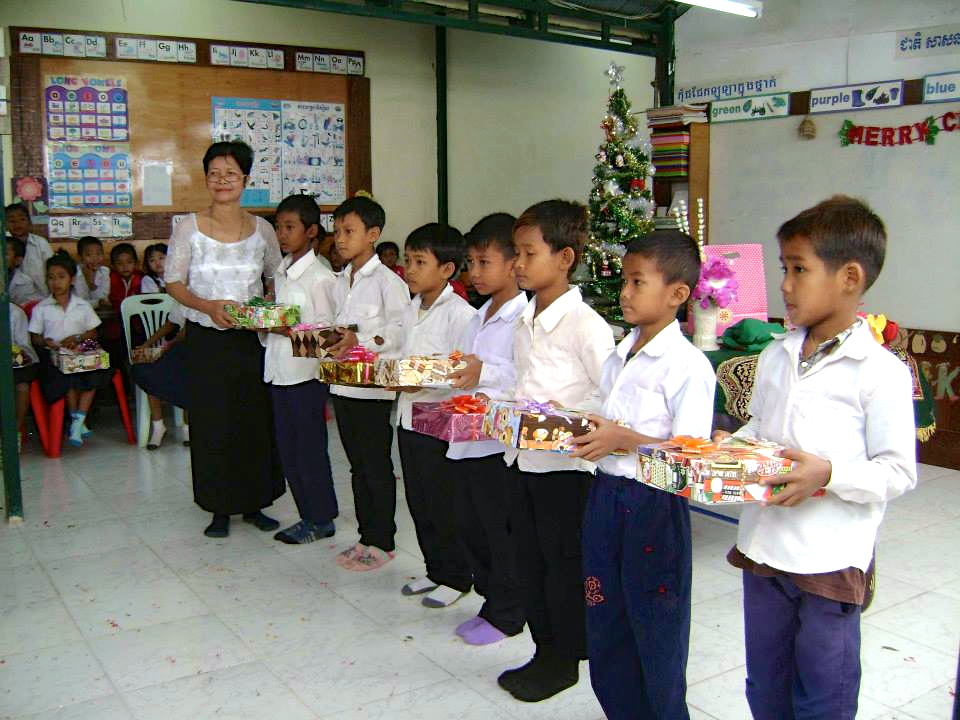
Today, she continues to serve as the director of a school in Poipet, strong in her Christian faith, working tirelessly to guide others to the truth she has found.

 Pursuit of Percipience