Subversive Jesus (Brief Book Review)

Subversive Jesus: An Adventure in Justice, Mercy, and Faithfulness in a Broken WorldSubversive Jesus: An Adventure in Justice, Mercy, and Faithfulness in a Broken World by Craig Greenfield

My rating: 4 of 5 stars

Craig Greenfield, who has lived in the slums of Phnom Penh and the notorious Downtown Eastside in Vancouver, gives us a good example on how to live as the selfless Christian. Many, if not all, of us need to be reminded of this.

I think if Greenfield and I were to sit down and discuss politics and economics, we would disagree on a lot. His great Satan is Empire. Empire, in my opinion, like most things is not evil in and of itself. It becomes evil when corrupted by sin. And, Jesus did not come to save us from the empire, but from sin. But, I agree with Craig, that salvation from sin is not simply going to heaven when you die – salvation is heaven coming to the earth now. And so, we Christians must fight for justice and we must work with the poor now.

Not all of us are called to live as Craig does of course (and he doesn’t say we must either). I too am a Canadian living in Cambodia, and my wife is Cambodian. When we were engaged and looking for a place to live, my wife, who grew up in the slum, suggested buying a house there. There was one for sale for $1200. I considered it and went to look at the place. But, as I stood in the four meter by five meter house, with its tin roof full of holes, concrete floor, and grey brick walls only inches away from the neighbour’s walls allowing for every sound to be heard, I knew there was no way I could live there or raise a family there. We bought land on the outskirts of town and built our own house instead. And, we still worked with the same people we would have if living in the slum anyway. “Find your own Calcutta” as Craig writes in the book.

I met Craig briefly a couple of years ago and have followed his work somewhat, so I know that he truly lives what he teaches and is an authentic authority on working with the poor.

Read the book!

View all my reviews

The Mother of Atheism

moonWhen the Cambodian king Norodom Sihanouk died in 2012, thousands of Cambodians swore they saw him in the moon. They believed his face literally appeared in the moon.

I remember once teaching Buddhist monks in Cambodia some English. I had finished explaining what the word millennium means. I said that we are now living in the third millennium according to the western calendar. I said that in the future we will have a 4th millennium, a 5th millennium, a sixth, etc… One of my students then said, “Oh, we will have come back many times by then.” He was referring to reincarnation of course.

Approximately 95% of Cambodians are Buddhist. Before Buddhism, Hinduism dominated in Cambodia. Cambodians don’t practice Buddhism at the same level. Some practice it very little. Some dedicate their whole lives to it, the monks for example.

However, you won’t find western-style atheism in Cambodia, or any country like it. The conditions necessary for atheism to flourish simply don’t exist in a culture which does not believe in a logical, reasonable, predictable Creator.

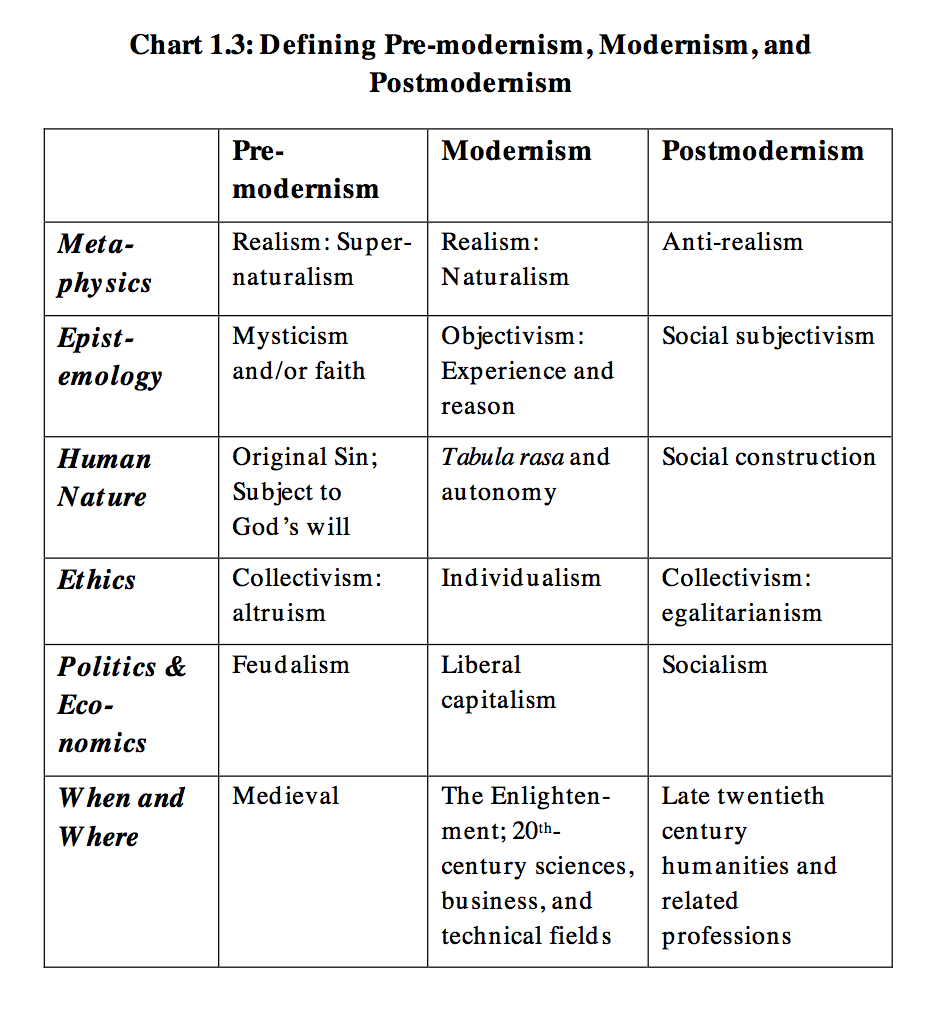
Science, as we know it today, was born in the Christian world. Christianity is the mother of science. The purpose of science is to study the physical universe, discover predictable patterns, and then use that knowledge to make life better for humanity. The first scientists were able to adopt this method due to the fact that they believed nature was predictable because it was created by a logical God. Modernism was based on the belief that we could know and understand how the universe works and manipulate the physical world to our advantage. As belief in God dwindled in the western world Post-Modernism rose. Post-Modernists are suspicious of absolutes: absolute truth and absolute patterns.

Atheism was born in the west when people began to believe that God could be understood with the same scientific methods used to understand the physical universe. Of course that does not work. How can you measure the One who created the universe as though He were a product of the universe? Atheists demand that God be scientifically provable.

Christian apologists, therefore, knowing that they can’t prove God scientifically, will turn to non-physical things to prove God: morality, consciousness, love, truth, goodness, and beauty. Morality, for example, is difficult to account for in a survival-of-the-fittest evolutionist world.

Christianity then, being the mother of science, is also the mother of Atheism. The belief in a logical and reasonable God gives us the ability to think likewise. But, when one steps off the foundation of God, and makes logic and reason the new foundation, disbelief in God arises. Unfortunately though, as the disbelief in God increases, the ability to think logically and reasonably decreases.

I’ve noticed that the militant atheism so popular ten years ago is being replaced with a much softer version today. Those outspoken atheists of the past are realizing the insanity which is taking over much of the field they liked to play in before. Gay marriage, for example, was widely accepted by atheists, but the new gender issues of today are not. If you look at popular Atheist Youtube creators you’ll notice their recent videos are much more anti-SJW compared to their older videos which are more anti-Christian/religion. Scroll down on Pat Condell’s videos for example.

This video is another good example…

It should come as no surprise to atheists that, as their own ability to think logically and reasonably is a direct result of Christianity, a rejection of Christianity is also a rejection of logic and reason. The evidence of that is all around in the insane social issues which plague western culture today.

Christian morality/logic/reason has been the immune system to the world’s evils in the past centuries, but as Christianity itself is rejected, that same morality/logic/reason is becoming an autoimmune disease. Hopefully people come to their senses sooner rather than later.

David and Goliath: Underdogs, Misfits, and the Art of Battling Giants (Brief Book Review)

David and Goliath: Underdogs, Misfits, and the Art of Battling GiantsDavid and Goliath: Underdogs, Misfits, and the Art of Battling Giants by Malcolm Gladwell

My rating: 4 of 5 stars

3.5 stars… This poorly titled book is full of interesting stories highlighting the often unseen advantages of the seemingly disadvantaged. But, the question which I kept asking as I read was: So, what’s the point?

Apart from the actual David vs. Goliath tale, Gladwell follows several stories to push his thesis: that the underdog, because of his disadvantage, is forced to act in ways which are unexpected, and so, give him an unexpected upper hand in a conflict…

  1. The coach of an unskilled girls basketball team, with no chance of beating other teams with taller and more experienced players, discovers that if his girls concentrate on speed they can dominate every area of the court and shut down the opportunities of the other team to shoot and play an effective traditional game style.
  2. Overly large class sizes hinder a teacher’s ability to control her class, so the obvious solution is small class sizes, right? Wrong. Class sizes which are too small hinder the learning experience for the kids in their own way. But yet, most parents hold to the idea that small class sizes are better, especially in expensive private schools.
  3. If you finish at the top of your class in mathematics, and you get accepted into MIT, you should definetely go, right? Well, not necessarily. The competitiveness at MIT is so high you might find yourself so discouraged that you’ll end up dropping out. You might be better off going to a less elite university where, still being challenged, you will be at the same level as your classmates. As Gladwell writes: Better to be a big fish in a small pond than a small fish in a big pond. The economist, Thomas Sowell, touches on this when he talks about affirmative action. Black kids, getting the highest marks on their S.A.T.’s compared to their school mates, are being let into elite schools at lower standards than normal but are later dropping out. They would do much better at schools which perform to their level.
  4. Dyslexia is a big problem for those who have it, but it also gives those same people a drive and a unique way of approaching life which opens unexpected doors.
  5. All would agree that a child dying from cancer does not need to be put through any more pain than they are experiencing already. Well, one doctor, who, because of his difficult upbringing, lacked this empathetic wisdom, and put children though painful medical treatments, and in doing so, discovered how to prevent leukaemia patients from bleeding to death.
  6. Martin Luther Kings’s team did some questionable things to get the rest of America to see the oppression the black community was suffering.
  7. The German bombing of London in WWII did not quite have the desired effect, as the survivors developed a sense of invincibility having nearly been killed but still escaping. They became indifferent to the attacks.

Those are some examples, but there are more.

Gladwell wants to persuade the reader to not always hold to the idea that might is right, or that the status quo is best, or that “the way it’s always been done” is the way to achieve.

He writes:

“…look at the shepherd [David] and the giant [Goliath] and understand where power and advantage really lie. It matters, in a hundred and specific practical ways. It affects the decisions we make as parents, the schools we choose to attend, and the way we fight wars and battle crime. It shapes the way we understand creativity and entrepreneurship and the way the oppressed seek to take on bullies and tyrants … We aren’t very good at confronting the lessons about power … Understanding the power of the underdog requires an effort. It requires standing up to conventional wisdom.” (page 294)

As I wrote above, the question I asked continuously as I read was: What’s the point? Often, the status quo is the status quo because it works. Years of experience of those who came before are what make life currently good for all. If you do find yourself the underdog, trying to change things might not be the best thing to do. The girls basketball team mentioned above just ended up pissing off all the other teams in the league. How do you know when to shake things up and when not to? I guess it depends on how revolutionary you feel.

Interesting book. It’ll make you think.

View all my reviews

Shop Class as Soulcraft (Brief Book Review)

Shop Class as Soulcraft: An Inquiry Into the Value of WorkShop Class as Soulcraft: An Inquiry Into the Value of Work by Matthew B. Crawford

My rating: 5 of 5 stars

Don’t mistake this book as a simple read for the next holiday. It’s quite deep. It’s really a philosophical treatise on the subject of work in relation to practical knowledge and craftsmanship.

Matthew Crawford is an electrician turned political philosopher turned motorcycle mechanic. He has a Ph.D. in political philosophy, so he’s not just some “grunt.” Not that he would need a Ph.D. to write a thoughtful book on this subject — the experience of working in both the office and on the construction site is really what gave him the fuel to write this book.

In it, he compares working with one’s hands verses “knowledge-based” work. Which is better for the soul? Obviously he sides with the hands on work, and he writes a fine critique of the corporate culture which has developed in the west over the last few decades.

My favourite chapter is called The Contradiction of the Cubicle. Crawford compares the hierarchical structure of the office to that of the construction site. Here’s an excerpt:

In the office…

Through the exercise of charismatic authority, the manager unsettles others, shaking them out of their cramped views and stale habits, thereby unleashing the creativity of all workers. This is a charismatic leader of a new kind, a sort of radical democrat. He does not seek followers; he seeks to make every man a leader of himself…

Workers must identify with the corporate culture, and exhibit a high level of “buy-in” to “the mission.” The division between private life and work life is eroded, and accordingly the whole person is at issue in job performance evaluations.
(pg. 149-150)

On the construction site…

In the trades, a master offers his apprentice good reasons for acting in one way rather than another, the better to realize ends, the goodness of which is readily apparent. The master has no need for a psychology of persuasion that will make the apprentice compliant to whatever purposes the master might dream up; those purposes are given and determinate. He does the same work as the apprentice, only better… For the apprentice there is a progressive revelation of the reasonableness of the master’s actions. He may not know why things have to be done a certain way at first, and have to take it on faith, but the rationale becomes apparent as he gains experience. [Office style] teamwork doesn’t have this progressive character. It depends on group dynamics, which are inherently unstable and subject to manipulation… 

[With the master/apprentice relationship] the judgements of the master [toward the apprentice] feel ennobling rather than debasing. There is a sort of friendship or solidarity that becomes possible at work when people are open about differences in rank, and there are clear standards.
(pg. 159-160)

The book is 210 pages long.

Give it a read!

Further reading…

The Case of Working With Your Hands by Matthew B. Crawford

Shop Class as Soulcraft by Matthew B. Crawford

In Praise of the Repairman by Peter Leithart

View all my reviews

The Friendly Forest by Edwin H. Friedman

“The Liberal Party believes that terrorists should get to keep their Canadian citizenship … because I do. And I’m willing to take on anyone who disagrees with that.”
~Prime Minister Justin Trudeau, July 4, 2015

The Friendly Forest

Once upon a time in the Friendly Forest there lived a lamb who loved to graze and frolic about. One day a tiger came to the forest and said to the animals, “I would like to live among you.” They were delighted. For, unlike some of the other forests, they had no tiger in their woods. The lamb, however, had some apprehensions, which, being a lamb, she sheepishly expressed to her friends. But, they said, “Do not worry, we will talk to the tiger and explain that one of the conditions for living in this forest is that you must also let the other animals live in the forest.”

So the lamb went about her life as usual. But it was not long before the tiger began to growl and make threatening gestures and menacing motions. Each time the frightened lamb went to her friends and said, “It is very uncomfortable for me here in the forest.” But her friends reassured her, “Do not worry; that’s just the way tigers behave.”

Every day, as she went about her life, the lamb tried to remember this advice, hoping that the tiger would find someone else to growl at. And it is probably correct to say that the tiger did not really spend all or even most of its time stalking the lamb. Still, the lamb found it increasingly difficult to remove the tiger from her thoughts. Sometimes she would just catch it out of the corner of her eye, but that seemed enough to disconcert her for the day, even if the cat were asleep. Soon the lamb found that she was actually looking for the tiger. Sometimes days or even weeks went by between its intrusive actions, yet, somehow, the tiger had succeeded in always being there. Eventually the tiger’s existence became a part of the lamb’s existence. When she tried to explain this to her friends, however, they pointed out that no harm had really befallen her and that perhaps she was just being too sensitive.

So the lamb again tried to put the tiger out of her mind. “Why,” she said to herself, “should I let my relationship with just one member of the forest ruin my relationships with all the others?” But every now and then, usually when she was least prepared, the tiger would give her another start.

Finally the lamb could not take it anymore. She decided that much as she loved the forest and her friends, more than she had ever loved any other forest were friends, the cost was too great. So she went to the other animals in the woods and said goodbye.

Her friends would not hear of it. “This is silly,” they said. “Nothing has happened. You’re still in one piece. You must remember the tiger is a tiger,” they repeated. “Surely this is the nicest forest in the world. We really like you very much and we would be very sad if you left.” (Though it must be admitted that several of the animals were wondering what the lamb might be doing to contribute to the tiger’s aggressiveness.”

Then, said two of the animals in the friendly forest, “Surely this whole thing can be worked out. We’re all reasonable here. Stay calm. There is probably just some misunderstanding that can easily be resolved if we all sit down together and communicate.” The lamb, however, had several misgivings about such a meeting. First of all, if her friends had explained away the tiger’s behavior by saying it was simply a tiger’s nature to behave that way, why did they now think that as result of communication the tiger would be able to change that nature? Second, thought the lamb, such meetings, well-intentioned as they might be, usually try to resolve problems through compromise. Now, while the tiger might agree to growl less, and indeed might succeed in reducing some of its aggressive behavior, what would she, the lamb, be expected to give up in return? Be more accepting of the tiger’s growling? There was something wrong, thought the lamb, with the notion that an agreement is equal if the invasive creature agrees to be less invasive and the invaded one agrees to tolerate some invasiveness. She tried to explain this to her friends but, being reasonable animals, they assured her that the important thing was to keep communicating. Perhaps the tiger didn’t understand the ways of the lamb. “Don’t be so sheepish,” they said. “Speak up strongly when it does these things.”

Though one of the less subtle animals in the forest, more uncouth in expression and unconcerned about just who remained, was overheard to remark, “I never heard of anything so ridiculous. If you want a lamb and a tiger to live in the same forest, you don’t try to make them communicate. You cage the bloody tiger.”

~Edwin Friedman (Friedman’s Fables, The Guilford Press, 1990) page 25-28