Malis flinched at the explosion. The sound of thunder, loud enough to shake her steel front door, came not from the sky, but from beyond the neighboring buildings. She stretched her neck to look over the rooftops and trees for the light of fire. Nothing.
“That’s good…” she thought. All day long, these falling គ្រាប់កាំភ្លើងធំ, or bullets of the big guns, pounded the world around her, from the north, then the east, and the west, causing her heart to shake in her chest. What was their target?
“Not my house. I am not afraid.” She entered and paced around her home. It was evening and she hoped she would get some sleep tonight. Another blast, then darkness. The power went out. Malis stood in the black, waiting.
“The lights will come back soon.” Thirty minutes passed. No power. It grew hot in the house. Malis went back outside. More darkness.
“I will call my husband…”
“What? No signal?”
Malis walked out into the street. Quiet, shadows heavy and still.
“Oh, Makara’s house still has light. I will walk there.”
Approaching Makara’s house, she did not hear the sound of a generator, which Makara’s foreign husband would have turned on soon after the lights went out. Only a single solar-powered light shone there. It was quiet and ghostly. The house was shuttered up. The cold white light was not comforting. Malis crouched down in front of the house and tried her phone again. Still no signal.
“Malis?”
“Yes?” It was Chantrea, the woman who lived on the other side of Makara’s home. She walked toward Malis. Chantrea’s ten year old boy, Dany, was with her.
“Come,” Chantrea said, “It’s time to go. We need to leave Poipet. I have my truck. We are leaving.”
“Going where?”
“To Battambang. Come. Pack a bag and put it in my truck.”
“I cannot leave. I don’t know where my husband is.” She held up her phone. “I cannot call him.”
“My phone doesn’t work either. You can call your husband when we have left the city. Come. I don’t want to drive with just my kids.”
“No. I will stay. I am not afraid.”
“No! You come!” Dany grabbed onto Malis’s arm, startling her. “My mom will drive us to Battambang!”
“No, no,” Malis smiled warmly at the boy, “I will stay. Don’t worry about me.”
“Well, think about changing your mind. We are going to get ready to go,” Chantrea said, and pulled Dany away.
For some time after Chantrea’s tail lights faded into the dark, Malis stayed crouched in front of Makara’s house. She didn’t yet know it would be two more days before the power and phone signals came back. Another loud blast pushed her up and back to her home.
Right now there is a strong separatist movement within Alberta. Many Albertans are dissatisfied with how the province is being treated by the federal government. This is not a new issue. It has been going on for decades. However, it is more serious now than before.
Will Alberta actually separate? My guess is almost certainly not, at least not in this generation.
Separation is not easy, and it needs a strong majority of more than just Albertans to happen.
What is necessary to trigger a referendum within Alberta?
🗳 1. Start With a Citizen Initiative Petition
To trigger a referendum in Alberta, citizens don’t just vote on it — they must organize a formal petition process under the Citizen Initiative Act. That process goes like this:
✅ a) File a Notice of Intent
An eligible elector (a Canadian citizen age 18+, resident of Alberta) must file a notice of intent with the Chief Electoral Officer of Alberta.
They must pay an application fee (currently $25,000 for a referendum application), which may be refundable if the petition succeeds.
✅ b) Submit a Formal Application
Within 30 days after filing the notice of intent, the proponent submits a full application for the initiative petition.
If the application meets requirements, the Chief Electoral Officer issues the petition officially.
📊 2. Collect Enough Signatures to Meet the Threshold
Once the petition is issued, supporters must collect valid signatures from eligible electors in a set period. For different types of issues, the thresholds differ:
🔹 Constitutional Referendum Proposal
(Which is how separation would be classified under Alberta law)
Supporters must collect signatures from 10 % of the number of Albertans who voted in the most recent provincial general election.
That 10 % is based on actual ballots cast — which currently works out to around ~177,000 signatures.
Signatures must be collected within a specified period (typically up to 120 days).
(Note: earlier versions of the law required 20 % of all registered electors and signatures in 2/3 of divisions, but recent amendments lowered and simplified the threshold.)
📅 3. Verification and Referendum Call
If organizers successfully collect and submit the required number of valid signatures:
Elections Alberta verifies the signatures and confirms whether the threshold is met.
Once verified, the provincial government is legally required to hold a referendum on the proposed question.
That referendum must happen on or before the fixed date of the next general provincial election (or, if too soon, the election after that).
🧠 What Happens Next
A successful petition doesn’t immediately result in separation — it forces the referendum on the ballot with the specific question you asked (e.g., “Should Alberta cease to be part of Canada?”). The actual legal effect of that referendum, especially for something as consequential as secession, depends on federal constitutional law, not just provincial processes.
📌 Simple Breakdown — What’s Necessary in Alberta to Trigger a Referendum
An eligible Albertan files a notice of intent to start a citizen initiative petition with Elections Alberta.
Submit a full application for a referendum petition within 30 days and pay the application fee.
Collect the required signatures (about 10 % of voters from the last election — about 177 000).
Elections Alberta verifies the petition.
The provincial government must then hold the referendum on the next election ballot.
If the referendum is successful, what happens next?
🧾 1. There Is No Right to Unilaterally Secede
Under the Canadian Constitution, a province cannot legally leave Canada on its own. The Supreme Court of Canada ruled in the Reference re Secession of Quebec (1998) that:
A province does not have a constitutional or international law right to unilaterally secede from Canada.
Any attempt to secede must be done through a constitutional amendment and negotiations with the federal government and other provinces.
Even a referendum with a majority vote doesn’t automatically trigger separation; it would trigger a duty to negotiate that could lead to separation if terms are agreed.
🗳 2. Referendum Requirements (Clarity Act)
Canada’s Clarity Act (2000), passed in response to that Supreme Court decision, sets out how a province could initiate the process in a way the federal government will deal with it:
✔️ Clear Question — A referendum question must be unambiguous about secession. ✔️ Clear Majority — The outcome must show a clear majority in favour of secession (not just a bare 50 %+1; what counts as “clear” is decided by the House of Commons). ✔️ Negotiation Trigger — Only after a clear result on a clear question would Canada be obliged to enter negotiations on terms of separation. ✔️ Federal Approval to Negotiate — Before any negotiations start, the House of Commons must agree the referendum was clear and valid. ✔️ Constitutional Amendment Needed — The only legal path to actual secession is via a constitutional amendment negotiated and agreed to under Part V of the Constitution Act, 1982.
So even if Alberta held a referendum and a majority voted “yes,” it would not, on its own, make Alberta independent — it would start a long constitutional process.
⚖️ 3. Constitutional Amendment — Who Must Agree?
There is legal debate on the exact amending formula that would apply, but generally:
General amending formula (Section 38): 7 provinces representing at least 50 % of Canada’s population plus both houses of Parliament.
Some constitutional scholars argue that secession might require unanimous consent of all provinces and Parliament, because leaving affects the entire federation.
This makes the legal hurdles extremely high.
🧑🤝🧑 4. Indigenous and Treaty Rights Must Be Addressed
Any negotiation over separation couldn’t ignore the fact that:
Most of Alberta lies on treaty territory (Treaties 6, 7, 8) between First Nations and the Crown at the federal level.
A province can’t unilaterally “take” treaty land or extinguish treaty obligations.
Under both Canadian law and international frameworks (e.g., UNDRIP), negotiation with First Nations and free, prior, and informed consent would be necessary for any legal change affecting treaty rights.
This further complicates and probably lengthens any real separation scenario.
📉 5. Provincial Laws (Like Referendums) Do Not Override the Constitution
Alberta’s recent provincial laws — such as Bill 54 lowering the signature threshold for citizen referendums — can help organize public expression of opinion but cannot change the Constitution or grant a province the legal right to secede on its own.
A provincial referendum could be struck down by courts if it interferes with constitutional obligations (including treaty and Charter rights).
🧠 Summary — What Would Be Required
A provincial referendum on separation with a clear, unambiguous question.
A clear majority “yes” result recognized by the House of Commons under the Clarity Act.
Negotiations between the Government of Canada, Alberta, all other provinces, and Indigenous peoples on terms of separation.
A constitutional amendment formally allowing Alberta to leave, approved per one of Canada’s constitutional amending formulas.
Resolution of federal obligations, division of assets and debts, and recognition of treaty rights.
This is not a quick or simple process — it would likely take many years of negotiation and legal work, and there’s no guaranteed outcome even if a referendum passed.
Provinces that were occupied by Thailand (Siam) — and when
1) Battambang
Occupied:1795 – 1907
Again:1941 – 1946
Details:
First period: Siam took control after weakening of the Khmer kingdom.
Returned to Cambodia under French colonial pressure in 1907.
Second period: Re-occupied by Thailand during WWII after the Franco-Thai War.
2) Siem Reap
Occupied:1795 – 1907
Again:1941 – 1946
Details:
Controlled together with Battambang as part of western Cambodia.
Included Angkor, which was under Siamese rule for over a century.
3) Sisophon area
(today mostly Banteay Meanchey)
Occupied:1795 – 1907
Again:1941 – 1946
Details:
Was not a separate province then, but part of the Battambang–Siem Reap region.
4) Parts of Koh Kong
Occupied:early 1800s – 1907
Details:
Coastal areas were administered from Siam (Trat region).
Returned to Cambodia under the 1907 Franco-Siamese treaty.
The two main occupation periods explained
First period: 1795–1907
Siam controlled much of north-western Cambodia:
Battambang
Siem Reap
Sisophon region
Parts of Koh Kong
These areas were ruled by Khmer governors loyal to Siam. They were returned to Cambodia when France forced Siam to cede them in exchange for other territory.
Second period: 1941–1946
During World War II:
Thailand, backed by Japan, re-occupied western Cambodia after defeating French Indochina.
Provinces taken:
Battambang
Siem Reap
Sisophon area
After Japan’s defeat, Thailand was forced to return all territory to Cambodia in 1946.
Quick summary table
Cambodian area
Occupied by Thailand
Returned to Cambodia
Battambang
1795–1907, 1941–1946
1907, 1946
Siem Reap
1795–1907, 1941–1946
1907, 1946
Sisophon / Banteay Meanchey
1795–1907, 1941–1946
1907, 1946
Parts of Koh Kong
early 1800s–1907
1907
Thailand (formerly known as Siam) has a history of territorial disputes and control over parts of what is now Cambodia, stemming from centuries of regional conflicts. The most notable periods of occupation involving specific provinces are as follows:
1794–1907: Siamese Control of Western Cambodian Provinces
In 1794, Siam acquired control over the Cambodian provinces of Battambang (Bătdâmbâng) and Siem Reap (Siĕmréab), including the area around Sisophon (now part of Banteay Meanchey province), as part of an agreement to install a Cambodian prince on the throne. These territories remained under Siamese administration for over a century, during which Cambodia was often treated as a vassal state amid broader Siamese-Vietnamese rivalries. In 1907, under a Franco-Siamese treaty, Siam ceded these provinces back to French Indochina (which controlled Cambodia at the time).
1941–1946: Thai Annexation During World War II
Amid the Franco-Thai War (October 1940–January 1941) and with Japanese support, Thai forces invaded and occupied disputed territories in French Indochina, including parts of Cambodia. Occupation began in earnest on January 5, 1941, and a Tokyo-mediated peace treaty on May 9, 1941, formalized the annexation of the following areas, which Thailand reorganized into new provinces:
When did the Khmer empire become Cambodia?
Short answer: there was no single day when the Khmer Empire “became” Cambodia — it was a long transition that happened over several centuries.
But we can pin down the key turning points.
The clear timeline
1) Khmer Empire
Dates: ~802 – 1431
Capital: Angkor
This is when Cambodia was a major regional power.
2) Fall of Angkor → Kingdom of Cambodia
Turning point:1431
Angkor was sacked by Ayutthaya (Siam).
The capital moved south to Phnom Penh / Longvek.
From this point on, the state is no longer an empire — it becomes what historians call the Kingdom of Cambodia.
This is the moment most scholars mark as:
The end of the Khmer Empire and the beginning of Cambodia as a kingdom-state.
3) Modern Cambodia begins
1863 – Cambodia becomes a French protectorate. This is when borders, administration, and the modern state structure really take shape.
1953 – Cambodia becomes fully independent.
Since then: the modern nation-state of Cambodia.
So what’s the real answer?
It depends what you mean by Cambodia:
Meaning of “Cambodia”
When it begins
Khmer people & culture
Over 1,000 years ago
Political state after Angkor
1431
Modern nation-state
1863–1953
Best simple answer
If someone asks this in plain language, the most accurate and useful reply is:
The Khmer Empire ended in the 1400s. After the fall of Angkor in 1431, the empire slowly became the Kingdom of Cambodia, which later developed into the modern country of Cambodia.
Please explain how Cambodia survived between powerful neighbors (Siam and Vietnam) after the empire fell.
This is one of the most important — and least appreciated — parts of Cambodian history. After Angkor fell, Cambodia didn’t survive by strength. It survived by adaptability.
Here’s the clear story.
How Cambodia survived between Siam and Vietnam
The situation after 1431
When Angkor fell, Cambodia lost:
Military dominance
Population centers
Economic power
At the same time, two aggressive neighbors were rising:
Siam (Thailand) from the west
Vietnam from the east
Cambodia sat right between them — the worst possible position.
From then on, Cambodian survival depended on diplomacy, balance, and endurance, not conquest.
Strategy #1 — Playing Siam and Vietnam against each other
Cambodian kings learned a hard rule:
Never let one neighbor become too strong over Cambodia.
So they constantly shifted alliances:
When Siam pressured → lean toward Vietnam
When Vietnam pressured → lean toward Siam
This wasn’t weakness. It was realpolitik — survival politics.
Yes, it meant:
Paying tribute
Accepting influence
Sometimes installing kings backed by one side or the other
But it kept Cambodia alive as a state, not erased from the map.
Strategy #2 — Moving the capital to survive
After Angkor:
Capital moved to Longvek, then Oudong, then Phnom Penh.
Why?
Safer from Siamese attacks
Better access to rivers and trade
Easier to maneuver diplomatically
This shift south is one reason Cambodia still exists today. If leaders had tried to hold Angkor at all costs, the kingdom likely would have been destroyed.
Strategy #3 — Accepting temporary loss to avoid total loss
Cambodia often:
Lost provinces
Lost control of kings
Lost independence for periods
But it never accepted extinction.
Examples:
Western provinces lost to Siam → later recovered
Eastern lands lost to Vietnam → some absorbed permanently, but core survived
Periods of Siamese or Vietnamese dominance → followed by restoration
Cambodia chose:
Better to bend than to disappear.
That choice kept Khmer identity alive when many smaller kingdoms vanished.
Strategy #4 — Using France as a shield
By the 1800s, Cambodia was close to being fully swallowed:
Siam controlled the west
Vietnam dominated the east
Cambodian kings were nearly powerless
So King Norodom made a desperate but smart move:
1863 — Cambodia accepts French protection
This cost sovereignty — but saved the country.
France:
Forced Siam to return Battambang and Siem Reap
Stopped Vietnam from absorbing Cambodia
Fixed borders that still exist today
Colonialism wasn’t kind — but in Cambodia’s case, it prevented national extinction.
Strategy #5 — Cultural survival even when political power was weak
Even when Cambodia was controlled or pressured:
Khmer language survived
Buddhism survived
Royal tradition survived
Identity survived
Empires fall. Cultures that adapt endure.
That’s the real miracle of Cambodia.
The honest bottom line
Cambodia survived because it learned to:
Negotiate instead of dominate
Endure instead of conquer
Adapt instead of collapse
Other kingdoms in Southeast Asia vanished completely. Cambodia didn’t — not because it was strongest, but because it was most resilient.
Please walk me through a short timeline of the most dangerous moments when Cambodia almost disappeared.
Here’s a short, clear timeline of the most dangerous points.
The moments Cambodia almost vanished
1) 1431 — Fall of Angkor
Threat: Total collapse after empire falls Danger: Very high
Angkor is sacked by Ayutthaya.
Population scatters, power breaks down.
Many kingdoms in this situation simply die out.
Why Cambodia survived: Leaders abandoned the ruins instead of clinging to the past and rebuilt farther south. Painful move — but smart.
2) 1594 — Siam captures Longvek
Threat: Annexation by Siam Danger: Extreme
Longvek, the new capital, is destroyed.
Thousands of Cambodians taken as captives to Siam.
Cambodia loses control of its own kings for years.
Why Cambodia survived: The kingdom accepted vassal status instead of extinction. Weak, yes — but alive.
3) 1700s — Being squeezed from both sides
Threat: Partition between Siam and Vietnam Danger: Extreme
Siam dominates the west.
Vietnam expands aggressively into the Mekong Delta.
Cambodian kings are installed and removed by foreign powers.
At this point Cambodia was a buffer state with almost no real power.
Why Cambodia survived: Kings played both sides relentlessly — switching alliances whenever survival required it.
4) 1834–1845 — Vietnamese occupation
Threat: Cultural and political erasure Danger: Possibly the closest Cambodia ever came to disappearing**
Vietnam directly controls Cambodia.
Cambodian administration dismantled.
Vietnamese officials attempt forced assimilation.
Khmer elites flee or are killed.
This was not just occupation — it was absorption in progress.
Why Cambodia survived: Popular resistance + Siamese intervention forced Vietnam to withdraw. If that war had ended differently, Cambodia likely would not exist today.
5) 1863 — The desperate choice
Threat: Permanent division between Siam and Vietnam Danger: Final moment before extinction
By the mid-1800s:
Cambodia controlled almost nothing itself.
Siam held the west.
Vietnam dominated the east.
The king had no army strong enough to resist either.
The critical decision: King Norodom accepted French protection.
This sacrificed independence — but saved the nation.
Without this move, Cambodia would almost certainly have been absorbed and erased within a generation.
6) 1975–1979 — Khmer Rouge
Threat: Physical destruction of the nation Danger: Catastrophic
Nearly one quarter of the population dies.
Institutions destroyed.
Educated class eliminated.
The state collapses completely.
This wasn’t foreign conquest — it was self-destruction on a national scale.
Why Cambodia survived: Vietnamese intervention ended the regime, and the people rebuilt from almost nothing.
The pattern you should notice
Every time Cambodia faced extinction, survival came from one of three things:
Hard compromise (accepting vassalage or protection)
Cultural endurance (Khmer identity outlasting political power)
Cambodia didn’t survive by winning wars. It survived by making the least bad choice when all choices were bad.
That’s not a romantic story — but it’s a real one.
Why did the Khmer empire decline?
The Khmer Empire didn’t fall because of one single disaster. It declined because several pressures hit at the same time, and together they were more than the empire could absorb.
Here’s the clear, honest breakdown.
Why the Khmer Empire declined
1) The empire grew too big to control
At its height, Angkor ruled:
Most of modern Cambodia
Parts of Thailand, Laos, and Vietnam
That’s impressive — but it created a problem:
The center became too far from the edges.
Communication was slow.
Local governors gained power and loyalty weakened.
Rebellions and breakaway regions became harder to stop.
The empire wasn’t defeated all at once — it slowly lost control from the outside in.
2) Environmental stress broke Angkor’s system
Angkor depended on one of the most complex water-management systems in the medieval world.
It worked brilliantly — until climate changed.
In the 1300s–1400s:
There were severe droughts, followed by massive floods.
Canals broke.
Reservoirs filled with sediment.
Rice production fell.
When food security weakens, everything weakens:
Army
Economy
Political stability
Angkor’s greatest strength became a liability.
3) Religious change weakened royal authority
For centuries, kings ruled as:
God-kings (Devaraja)
This system depended on:
Hindu state religion
Monumental temples
Absolute royal authority
Then Theravada Buddhism spread across the empire.
It changed society in a big way:
Less focus on divine kingship
More focus on monks, villages, and local communities
Power became decentralized
This was good for the people — but it weakened the state’s ability to mobilize huge resources for empire and war.
4) Strong enemies rose at the worst time
While the Khmer state was weakening:
Ayutthaya (Siam) was rising in the west
Vietnam was expanding in the east
Cambodia went from being:
the dominant power → to the buffer state
Angkor was attacked repeatedly, not just once. The famous sack in 1431 was the final blow — not the beginning of the decline.
5) Internal conflict and unstable kingship
Late Angkor was full of:
Power struggles
Short reigns
Rival claimants
Civil wars
An empire can survive enemies. It can survive droughts. But when leadership is unstable at the same time, collapse accelerates.
The real answer in one sentence
The Khmer Empire declined because environmental collapse, religious change, political fragmentation, and foreign pressure all hit together, leaving Angkor unable to function as the center of a vast empire.
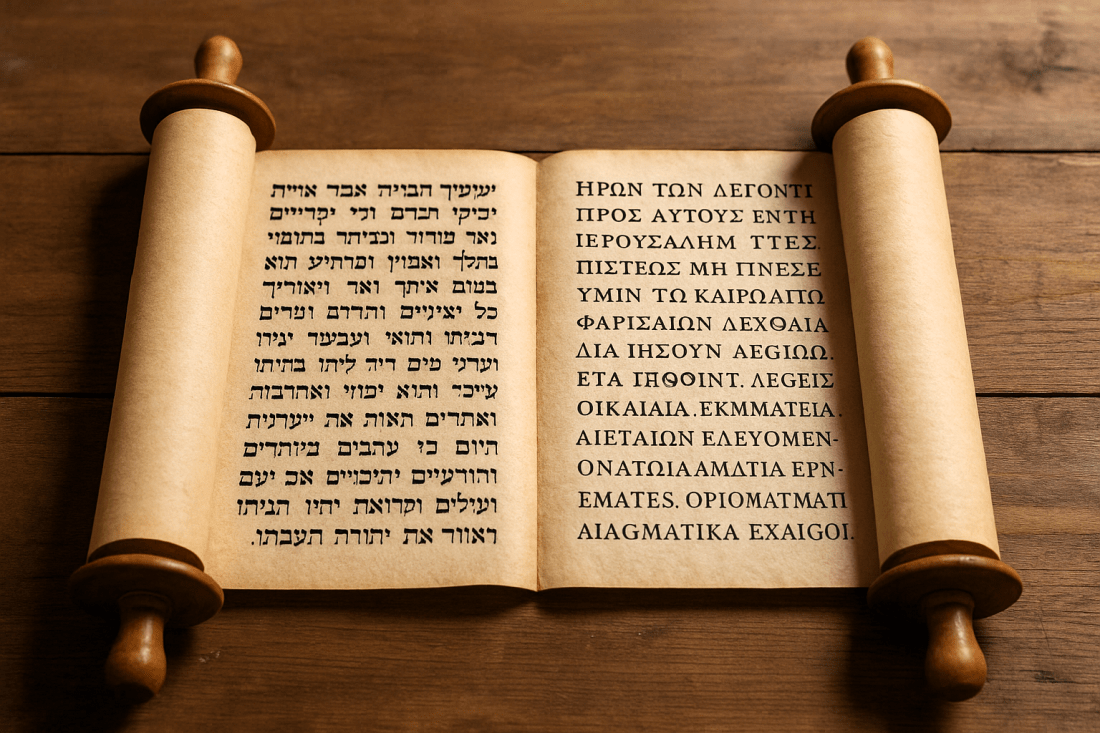
In this space I am going to store research concerning all things Hebrew Scriptures, focusing much on the Masoretic Text (MT) and the Septuagint (LXX): videos, articles, essays, Dead Sea Scroll (DSS) research, AI research, etc… So, if you are studying the MT and/or the LXX, and you’ve stumbled across this post, I hope you find something useful.
Part 1 of 3
Part 2 of 3
Part 3 of 3
***
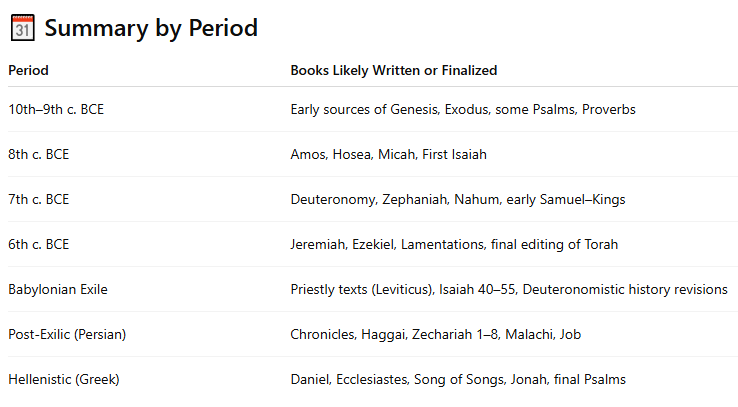
Dating the Hebrew Scriptures
***
Dating the Scriptures (AI Research – Grok, ChatGPT, and Claude)
Torah (Pentateuch)
The first five books—Genesis, Exodus, Leviticus, Numbers, and Deuteronomy—are traditionally attributed to Moses but are now understood by most scholars as composite works from multiple sources (Yahwist, Elohist, Priestly, and Deuteronomic) compiled over centuries. Final redaction likely occurred during or after the Babylonian Exile (6th century BCE).
Genesis: Likely compiled in its current form during the Persian period (538–332 BCE), though it incorporates earlier oral and written traditions from the 10th–6th centuries BCE. The creation stories, patriarchal narratives, and flood accounts reflect ancient Near Eastern motifs, with some elements possibly dating to the early monarchy (10th century BCE). The final shaping likely occurred post-Exile to address the needs of the returning community.
Exodus: Composed over time, with narrative cores (e.g., the Exodus event, covenant at Sinai) possibly rooted in 13th–10th-century BCE traditions. The Priestly and Deuteronomic elements were likely added during the 7th–5th centuries BCE, with final redaction in the Persian period (5th century BCE).
Leviticus: Primarily a Priestly work, likely composed between the 6th and 5th centuries BCE during or after the Exile, though some ritual laws may reflect earlier practices (8th–7th centuries BCE). Its focus on purity and temple worship suggests a post-Exilic context.
Numbers: A composite text with narrative and legal material, likely compiled in its final form during the Persian period (538–332 BCE). It incorporates earlier traditions, such as wilderness wanderings and census accounts, potentially from the 10th–7th centuries BCE, with Priestly and Deuteronomic additions in the 7th–5th centuries BCE. The final redaction reflects post-Exilic concerns about community identity and land allocation.
Deuteronomy: Likely composed in stages, with a core tied to the reforms of King Josiah (late 7th century BCE, c. 622 BCE), based on its alignment with the “Book of the Law” found in 2 Kings 22:8–10. Additional material was added during the Babylonian Exile (597–538 BCE) and finalized in the Persian period (5th century BCE). Its covenantal theology and legal code reflect both pre-Exilic and post-Exilic contexts.
Nevi’im (Prophets)
The Nevi’im include the Former Prophets (historical narratives: Joshua – 2 Kings) and Latter Prophets (prophetic oracles: Isaiah – Malachi). The Former Prophets form part of the Deuteronomistic History (DtH), likely compiled during the Babylonian Exile (6th century BCE) with earlier sources. The Latter Prophets’ dates are tied to the historical periods of the named prophets, though redaction often occurred later.
Joshua: Part of the Deuteronomistic History, compiled in the 6th century BCE during the Exile. It incorporates earlier traditions about the conquest of Canaan (potentially 13th–10th centuries BCE), but its final form reflects Exilic theology, emphasizing obedience to the covenant.
Judges: Also part of the Deuteronomistic History, finalized c. 6th century BCE. Stories of the judges likely stem from oral traditions of the pre-monarchic period (12th–11th centuries BCE), but the text’s structure and theological framing suggest Exilic redaction.
1 Samuel: Part of the Deuteronomistic History, compiled c. 6th century BCE. It includes traditions about Samuel, Saul, and David from the early monarchy (11th–10th centuries BCE), redacted to emphasize divine kingship and covenant fidelity.
2 Samuel: Continues 1 Samuel, part of the Deuteronomistic History, finalized c. 6th century BCE. It draws on court records or oral traditions about David’s reign (10th century BCE), shaped by Exilic concerns about leadership and divine judgment.
1 Kings: Part of the Deuteronomistic History, compiled c. 6th century BCE, with possible updates in the Persian period. It incorporates royal annals and temple records from the monarchic period (10th–7th centuries BCE), framed to explain the Exile as divine punishment.
2 Kings: Completes the Deuteronomistic History, finalized c. 6th century BCE, with a possible secondary redaction (Dtr2) post-562 BCE to account for Judah’s fall. It uses earlier sources from the divided monarchy (9th–7th centuries BCE).
Isaiah: A composite work spanning centuries. Chapters 1–39 (First Isaiah) are largely from the 8th century BCE (c. 740–700 BCE), attributed to Isaiah of Jerusalem. Chapters 40–55 (Second Isaiah) date to the late Exilic period (c. 550–538 BCE), and chapters 56–66 (Third Isaiah) to the early Persian period (c. 538–500 BCE). Redaction continued into the 5th century BCE.
Jeremiah: Core oracles from Jeremiah’s ministry in the late 7th–early 6th centuries BCE (c. 627–587 BCE). The book was likely edited during the Exile (6th century BCE) and finalized in the Persian period, incorporating prose narratives and later additions.
Ezekiel: Primarily from Ezekiel’s prophetic activity during the Exile (c. 593–571 BCE). The book’s final form, with its priestly and visionary content, was likely completed shortly after, c. 550 BCE.
Hosea: Oracles from Hosea’s ministry in the Northern Kingdom (c. 750–725 BCE), with possible redaction in Judah during or after the fall of Israel (722 BCE). Final form likely 7th–6th centuries BCE.
Joel: Difficult to date precisely due to lack of historical markers. Likely post-Exilic (5th–4th centuries BCE), though some argue for a pre-Exilic core (8th–7th centuries BCE). Its apocalyptic tone suggests a later composition.
Amos: Oracles from Amos’ ministry in the Northern Kingdom (c. 760–750 BCE), with possible Judahite redaction after 722 BCE. Final form likely 7th–6th centuries BCE.
Obadiah: Likely post-Exilic (5th century BCE), addressing Edom’s role in Judah’s fall (587 BCE). Some suggest an earlier core (7th–6th centuries BCE).
Jonah: Likely a post-Exilic composition (5th–4th centuries BCE) due to its narrative style and universalist themes. Some argue for a 6th-century BCE origin, but its fictional nature suggests a later date.
Micah: Oracles from Micah’s ministry (c. 740–700 BCE), with possible Exilic or post-Exilic additions (6th–5th centuries BCE). Final form likely 5th century BCE.
Nahum: Oracles concerning Nineveh’s fall (612 BCE), likely composed shortly after, c. 612–600 BCE, with possible later redaction.
Habakkuk: Oracles from the late 7th century BCE (c. 605–598 BCE), addressing Babylon’s rise. Final form likely early 6th century BCE.
Zephaniah: Oracles from Zephaniah’s ministry (c. 640–622 BCE), with possible Exilic redaction. Final form likely 6th–5th centuries BCE.
Haggai: Dated precisely to 520 BCE, based on internal references to the second year of Darius I. Minimal redaction, likely finalized shortly after.
Zechariah: Chapters 1–8 from Zechariah’s ministry (c. 520–518 BCE). Chapters 9–14 (Second Zechariah) are likely later, from the 5th–4th centuries BCE, due to distinct style and historical context.
Malachi: Post-Exilic, likely 5th century BCE (c. 450–400 BCE), addressing temple and social issues in the Persian period.
Ketuvim (Writings)
The Ketuvim include diverse genres (wisdom, poetry, history), with composition spanning a wide range. Many reached their final form in the Persian or Hellenistic periods.
Psalms: A collection spanning centuries, with individual psalms potentially from the 10th century BCE (Davidic period) to the 5th century BCE. The collection was likely finalized in the Persian period (5th–4th centuries BCE).
Proverbs: Contains older sayings (some possibly from Solomon’s time, 10th century BCE), but the collection was likely compiled in the Hellenistic period (c. 332–198 BCE), with final redaction in the 3rd century BCE.
Job: Likely composed in the 6th century BCE, post-Exile, though its poetic core may reflect earlier traditions (7th–6th centuries BCE). Its philosophical tone suggests a post-Exilic context.
Song of Songs: Possibly rooted in earlier love poetry (8th–7th centuries BCE), but likely compiled in the Persian or Hellenistic period (5th–3rd centuries BCE).
Ruth: Likely post-Exilic (5th–4th centuries BCE), reflecting Persian-period concerns about identity and inclusion. Some argue for an earlier monarchic setting (8th–7th centuries BCE).
Lamentations: Likely composed shortly after Jerusalem’s fall (587 BCE), with final form in the early 6th century BCE. Its poetic structure suggests rapid composition.
Ecclesiastes: Likely composed in the Hellenistic period (c. 3rd century BCE, possibly 250–200 BCE), due to its philosophical tone and linguistic features. Some suggest a 4th-century BCE origin.
Esther: Post-Exilic, likely 5th–4th centuries BCE, reflecting events in the Persian court. Its narrative style suggests a later date, possibly 4th century BCE.
Daniel: Chapters 1–6 likely from the 6th century BCE (Exilic), but chapters 7–12, with apocalyptic visions, date to the 2nd century BCE (c. 167–164 BCE), during the Maccabean revolt. Final form c. 164 BCE.
Ezra: Likely compiled in the Persian period (5th century BCE, c. 450–400 BCE), with sources from the return from Exile (538 BCE onward).
Nehemiah: Companion to Ezra, compiled c. 450–400 BCE, with memoir material from Nehemiah’s governorship (c. 445 BCE).
1 Chronicles: Likely 4th century BCE, post-Exilic, retelling Israel’s history with a focus on Davidic lineage and temple worship. Draws on earlier sources (e.g., Samuel, Kings) from the 10th–6th centuries BCE.
2 Chronicles: Companion to 1 Chronicles, also 4th century BCE, with similar sources and theological focus on Judah’s temple and monarchy.
Notes on Scholarship and Evidence
Earliest Evidence: The Dead Sea Scrolls (c. 2nd century BCE) provide the oldest surviving Hebrew manuscripts, confirming that many books were in near-final form by then. Earlier inscriptions, like the Khirbet Qeiyafa ostracon (c. 1000 BCE), suggest Hebrew writing existed by the early monarchy, supporting the possibility of early written traditions.
Challenges: Dating relies on internal evidence (historical references, linguistic features) and external evidence (archaeology, ancient Near Eastern texts). The Documentary Hypothesis, though less dominant, informs Pentateuchal studies, while the Deuteronomistic History model shapes understanding of Joshua–Kings.
Debates: Conservative scholars (e.g., Edwin R. Thiele) argue for earlier dates, especially for Pentateuchal traditions (15th–13th centuries BCE), citing Mosaic influence. Critical scholars (e.g., John J. Collins, Israel Finkelstein) favor later dates, emphasizing Exilic and post-Exilic redaction. Archaeological evidence, like the Ketef Hinnom scroll (7th century BCE), supports pre-Exilic writing but not necessarily full texts.
Compilation Over Time: Most books evolved through oral traditions, written sources, and multiple redactions. For example, the Pentateuch’s final form reflects post-Exilic priorities, but earlier traditions may date back centuries. Prophetic books often combine a prophet’s oracles with later editorial framing.
***
📜 The Torah / Pentateuch (Genesis – Deuteronomy)
Traditional attribution: Moses Scholarly view: A compilation of sources over centuries
Book
Date
Notes
Genesis
10th–5th century BCE
Contains material from the J (Yahwist, ~950 BCE), E (Elohist, ~850 BCE), P (Priestly, ~6th century BCE), and D (Deuteronomist, ~7th century BCE) sources. Final form likely post-exilic (5th century BCE).
Exodus
Same as Genesis
Composite from J, E, P, and D traditions.
Leviticus
ca. 6th–5th century BCE
Primarily Priestly material, likely written or compiled during the Babylonian Exile.
Numbers
10th–5th century BCE
Composite like Genesis and Exodus. Final form post-exilic.
Deuteronomy
ca. 7th century BCE, with later edits
Core written during Josiah’s reforms (~620 BCE). Final form edited in exile or post-exile.
📘 Historical Books (Joshua – Esther)
Book
Date
Notes
Joshua
7th–6th century BCE
Possibly Deuteronomistic History; post-Josiah, edited in exile.
Judges
7th–6th century BCE
Part of the Deuteronomistic History (DtrH).
1 & 2 Samuel
7th–6th century BCE
Earlier sources from 10th–9th c. BCE; edited by Deuteronomistic historians.
1 & 2 Kings
6th century BCE
Finalized during Babylonian Exile; strong Deuteronomistic theology.
Ruth
5th–4th century BCE
Set in Judges era, but written later; some see it as a response to Ezra-Nehemiah’s exclusionary policies.
1 & 2 Chronicles
ca. 400–350 BCE
Post-exilic; retelling of Samuel–Kings from a priestly perspective.
Ezra–Nehemiah
ca. 400–350 BCE (some argue slightly later)
Compiled from earlier memoirs and edited in post-exilic period.
Esther
4th–3rd century BCE
Possibly fictional court tale with Persian setting; no direct mention of God.
🎙️ Wisdom and Poetry (Job – Song of Songs)
Book
Date
Notes
Job
Core: 6th–5th century BCE; edits later
Possibly written in exile; explores innocent suffering.
Psalms
ca. 10th–3rd century BCE
Collected over centuries; some psalms trace to Davidic era, others are post-exilic.
Proverbs
Core: 10th–6th century BCE; final: ~4th c.
Some sayings may be Solomonic; final compilation likely late Persian period.
Ecclesiastes
ca. 3rd century BCE
Philosophical reflections, traditionally attributed to Solomon.
Song of Songs
ca. 4th–3rd century BCE
Love poetry; possibly allegorical or secular; final form Hellenistic.
Lamentations
ca. 586–500 BCE
Likely written after the destruction of Jerusalem by Babylon.
📢 Major Prophets (Isaiah – Daniel)
Book
Date
Notes
Isaiah
Parts from 8th–5th century BCE
Divided into First Isaiah (1–39) ~740–700 BCE, Second Isaiah (40–55) ~540 BCE (exilic), Third Isaiah (56–66) ~500–450 BCE (post-exilic).
Jeremiah
7th–6th century BCE
Contains autobiographical materials, later edited.
Ezekiel
ca. 593–571 BCE
Written during exile in Babylon.
Daniel
ca. 167–164 BCE
Set in Babylon, but written during Antiochus IV’s persecution; earliest example of apocalyptic literature in Bible.
📣 Minor Prophets (The Twelve)
Often collected as one book in the Hebrew Bible. Dates vary per prophet:
Book
Date
Hosea
8th century BCE (before 722 BCE)
Joel
ca. 500–350 BCE (disputed: some say earlier)
Amos
ca. 760–750 BCE
Obadiah
ca. 6th century BCE
Jonah
ca. 4th–3rd century BCE
Micah
ca. 740–700 BCE
Nahum
ca. 620–610 BCE
Habakkuk
ca. 610–597 BCE
Zephaniah
ca. 640–609 BCE
Haggai
520 BCE
Zechariah
Chapters 1–8: 520–518 BCE; 9–14: ~4th century
Malachi
ca. 450–400 BCE
***
Based on the latest scholarly consensus, here’s a comprehensive list of when each Old Testament book is thought to have been written:
Torah (Five Books of Moses)
Genesis, Exodus, Leviticus, Numbers, Deuteronomy
The majority of modern biblical scholars believe that the Torah reached its present form in the post-exilic period (5th century BCE)
However, these books contain material from various periods, with some traditions potentially dating much earlier
Historical Books
Joshua, Judges, 1-2 Samuel, 1-2 Kings
This group of books, plus Deuteronomy, is called the “Deuteronomistic history” by scholars, appearing in two “editions”, the first in the reign of Judah’s King Josiah (late 7th century BCE), the second during the exile (6th century BCE)
Final form: 6th century BCE (Babylonian exile period)
1-2 Chronicles
Chronicles was composed between 400 and 250 BCE, probably in the period 350–300 BCE
Ezra-Nehemiah
Ezra–Nehemiah may have reached its final form as late as the Ptolemaic period, c. 300–200 BCE
Ruth
The Book of Ruth is commonly dated to the Persian period (538-332 BCE)
Esther
Esther to the 3rd or 4th centuries BCE
Poetic/Wisdom Literature
Job
It is generally agreed that Job comes from between the 6th and 4th centuries BCE
Psalms
The psalms making up the first two-thirds of the psalter are predominantly pre-exilic and the last third predominantly post-exilic. The collected book of Psalms was possibly given its modern shape and division into five parts in the post-exilic period, although it continued to be revised and expanded well into Hellenistic and even Roman times
Proverbs
Proverbs is a “collection of collections” relating to a pattern of life which lasted for more than a millennium, and impossible to date
Contains material from various periods, making precise dating difficult
Ecclesiastes
Ecclesiastes can be no earlier than about 450 BCE, due to the presence of Persian loan-words and Aramaic idioms, and no later than 180 BCE
Song of Songs
The Song of Songs could have been composed at any time after the 6th century BCE
Lamentations
It is generally accepted that the destruction of Jerusalem by Babylon in 586 BCE forms the background to the Book of Lamentations
Major Prophets
Isaiah
Scholars recognise three “sections” in the Book of Isaiah
First Isaiah (chapters 1-39): 8th century BCE
Second Isaiah (chapters 40-55): 6th century BCE (exile period)
Third Isaiah (chapters 56-66): 5th century BCE (post-exilic)
Jeremiah
The Greek version was probably finalised in the early Persian period and translated into Greek in the 3rd century BCE, and the Hebrew version dates from some point between then and the 2nd century BCE
Ezekiel
Internal evidence dates the visions to between 593 and 571 BCE. While the book probably reflects much of the historic Ezekiel, it is the product of a long and complex history, with significant additions by a “school” of later followers
Daniel
The Book of Daniel can be dated more precisely to 164 BCE thanks to its veiled prophecy of the death of a Greek king of Syria
Minor Prophets
In the Hebrew Bible the Twelve Minor Prophets are a single collection edited in the Second Temple period, but the collection is broken up in Christian Bibles. With the exception of Jonah, which scholars regard as fictional, there exists an original core of prophetic tradition behind each book
The individual books span from the 8th century BCE (Amos, Hosea) to the post-exilic period (Haggai, Zechariah, Malachi).
Key Points:
Much of the Hebrew Bible/Old Testament may have been assembled in the 5th century BCE
Many books underwent complex editorial processes over centuries
Dating relies primarily on internal evidence and historical references
The final canonical form of most books was established during or after the Babylonian exile (6th-5th centuries BCE)
This represents the current scholarly consensus, though individual scholars may hold different views on specific books, and new archaeological discoveries continue to refine our understanding of biblical composition dates.



 Pursuit of Percipience