
But when you see Jerusalem surrounded by armies, then know that its desolate is near.
~Luke 21:20
Here is a good documentary/drama of the events leading up to the destruction of Jerusalem and the temple in A.D. 70.
But when you see Jerusalem surrounded by armies, then know that its desolate is near.
~Luke 21:20
Here is a good documentary/drama of the events leading up to the destruction of Jerusalem and the temple in A.D. 70.

A wise man once said, “All we know from history is that we don’t know from history.” In AD 311 emperors Constantine and Galerius signed an edict of toleration ending the persecution of Christians. The other religions were not done away with, but Christianity was allowed into the pluralistic worldview of the time.
The agenda of this edict was not to usher in some golden age of toleration. It was a transitional time where one worldview was replaced by another. The pluralistic worldview was being replaced by the Christian worldview. The time of tolerance was only temporary.
Today in the west we see something similar going on. One worldview is being replaced by another. All this talk of tolerance is, again, just a temporary time of transition. Anyone who thinks that this time of tolerance is a permanent thing is fooling themselves. In fact, the time of tolerance has already passed, and the incident with Mozilla shows that.
With Mozilla you have a situation where a man holds to traditional beliefs and he was punished for it. He was punished because his beliefs don’t conform to the new worldview.
Some would say that the Mozilla incident is simply the free market working as it should. That is true, but it is only true as a secondary issue, it is only true because of everything I mentioned above. In a true free market capitalist system no one would care what the CEO’s personal beliefs were. They would only care about how much money he could make the company.
As a Christian I am not tolerant. I don’t defend tolerance and I stand for what I believe in. I am very intolerant regarding abortion for example; in fact I am guilty of hate crime when it comes to abortion. That does not mean I am going to go around planting bombs in abortion clinics or anything–I have no desire to hurt anyone. But, if possible, I won’t support a business, or a politician, or a special interest group that supports abortion.
If, in this day and age, a CEO is punished for not celebrating gay marriage, so be it. But don’t tell me that is tolerance–that would be akin to doing something like pissing on my leg and telling me it’s raining.
image credit:
http://mashable.com/2014/04/03/mozilla-ceo-steps-down/

The heat in Poipet these days is so intense that it penetrates everything. I put my hand on my laptop and worry about the heat it’s giving off, but then put my hand on the desk’s surface to discover it’s radiating the same amount of heat. The brick walls project heat. The feverish wooden doors. Lying on the couch is like dipping into a sauna. My pillow feels like bread freshly taken from the oven. Heated toilet seats are overrated.
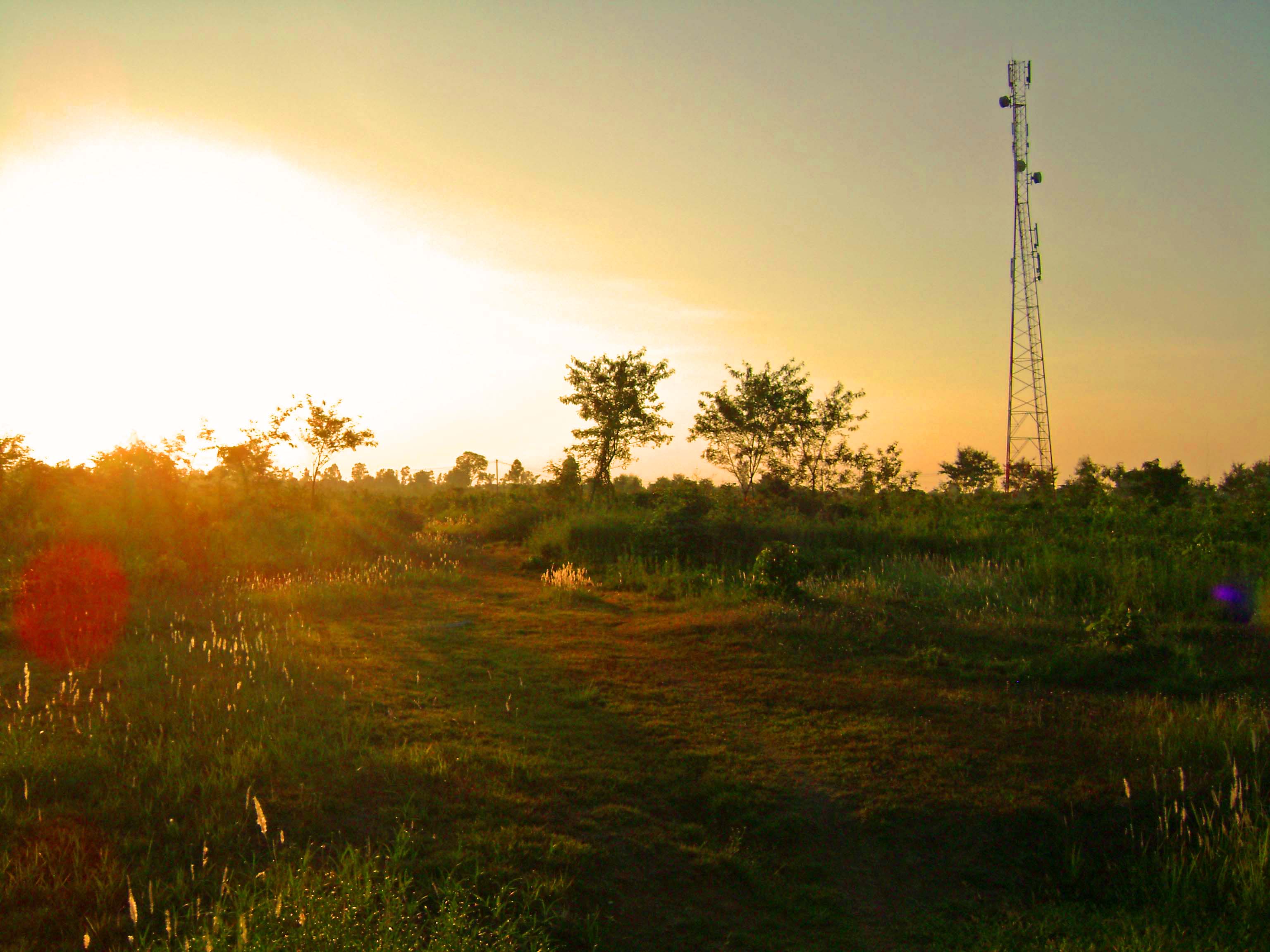
So, the favorite part of my day has become the early morning just after the sun comes up and hasn’t had a chance to infiltrate anything yet. This is when I can jump on my mountain bike and hit some trails before our students start showing up for school at 6:30.
I live on the northern edge of the city so I don’t have to go far to be in the bush. Once the rainy season really kicks in I’ll probably be forced to head south onto the city’s pavement. But as long as it stays dry I’ll keep riding on what was not too long ago Khmer Rouge mine fields.
Here are some pictures…




There are two ways, I think, we should read the Bible. One is to study it deeply. This means choosing a chapter or a couple of verses at a time and reflecting on each word carefully. The second way is to read it in a more general fashion, like how you’d read a novel. The first way is to get you to understand fully what each specific author wanted to get across to his readers. The second is to get you intimately involved with the whole overarching plan of God.
One handy way to deeply study the Bible is to use a Hebrew and Greek lexicon. This way you can look up the original meaning of the words you’re currently reading in English. I wouldn’t recommend getting too caught up in this though. The people who translated the different versions of the Bible were experts in the Greek and Hebrew, and so, took great care in getting the proper meaning of the original into English. But still, if you’re curious about a word, you can look it up, and you might be surprised at what you find.
Here’s an example:
Romans 8:15 says,
“For you did not receive the spirit of slavery to fall back into fear, but you have received the Spirit of adoption as sons, by whom we cry, ‘Abba! Father!'”
We read the word ‘adoption’ and assume that it simply refers to kids with no parents getting parents. But it means something different. The Greek word, ‘uihothesia’, means the establishing or setting in place a male child into the position of being a son. And what Paul was likely referring to is the Roman practice where a father would officially set his oldest son into the place of being the legitimate heir to the family. A male child didn’t automatically become an heir simply for being the oldest biological offspring, and the father could cast him out of the family if he wanted to. It wasn’t till the boy was older, and had proven to his father that he was worthy of the family name, that the father would officially name him the heir. Once the boy was set in place he had all the rights, privileges, and burdens of that family. He was seen as being one with his father and having the authority of his father.
Now when we apply this analogy to the modern Christian, the term ‘son’ becomes gender neutral, and the ‘adoption’, or setting in place one as God’s heir who has rights and authority as His heir, appertains to all believers. This changes our understanding of adoption from being, “I was an orphan and now I have a daddy who loves me” to being, “I was not rejected by my Father, and now I have all the rights and privileges of being His son, His heir.” And when you begin to study what having His authority means, you will begin to understand how profound this ‘adoption’ really is.
A tool I use for this kind of study is “eSword“. It is free for PC, and there is an app for iPad, which is not free, but I bought it and use it all the time.
A tool I use for my general reading of the Bible is a reading plan called “Professor Grant Horner’s Bible Reading System”. This plan is designed to get you to read from all over the Bible each day. The plan suggests you read ten chapters per day, but you can set your own pace. Click here to read about the plan. I like this plan because it gives you a good bird’s eye view of the whole Bible and you will see scripture supporting scripture — all of the Bible tied together.
Another tool is, as you’re reading the New Testament, when an author quotes an Old Testament passage, you may have a Bible which gives you what that OT verse is. For example, Paul, in 1 Corinthians 15:27, quotes Psalm 8:6. Now if you flip to the Psalm verse you won’t see in your Bible a reference to 1 Corinthians. So, write it there yourself. Now, every time you read the NT and see a reference to the OT, go to the OT and write in the NT verse yourself. Once you’ve done that for awhile you’ll find as you’re reading the OT all sorts of references to the NT. Why is this helpful? Because then you’ll have Jesus, Paul, Peter, John, and the other NT writers teaching you how to understand the OT passages. Every time you come across one of your written references in the OT to the NT, go and look it up, and the NT writer will tell you what that OT verse is really saying. Now, again, you have a tool to give you a clear overarching view of the plan of God.
There are lots of good ways to read and study the Bible. I love studying the Bible and can spend hours doing it. These are just a couple of ways I do so.

I’m writing up some articles about life in Cambodia. I don’t know when I’ll be done with them, so I’ll just keep posting them in these segments as I go. This article is number two. Click here to read part one.
Fast forward to the future, and I’m raising a family in Cambodia. Cambodia: one of the poorest countries, sub-standard schools, unnerving health care, corrupt law enforcement, and dirt roads.
In Cambodia I encounter a whole new kind of poverty. This is third world poverty. This poverty is deeply pervasive, affecting the whole culture. If western poverty were compared to a light sunburn on one’s arm, Cambodian poverty would be a full body, third degree, heretic’s execution burn. And it’s not just material poverty, in fact materialistic lack is the smallest part of the problem. This is a deep spiritual poverty. If you’re hungering for a spiritual experience, don’t waste your time at the Angkor Wat temple, just visit a slum. The material world and the spiritual world intersect more strongly at places of extreme poverty. The utter spiritual poverty of man is seen and understood most clearly in places riddled with garbage and open sewage.
But I don’t want to portray too dismal a picture. Here’s what else you’ll see in the slum…


I actually don’t live in the slum myself. My family and I live in a house that’s nicer than what we would live in if back in Canada. There are some missionaries who feel its necessary to live right in the mud with the locals, and that’s cool, I’m just not one of those missionaries. I don’t need to change who I am in order to share the gospel or make disciples. I’m not one of those prosperity gospel guys, but I’m not one of those poverty gospel guys either. Rich or poor, you’ve got to go where God calls you. Wealth is a relative concept anyways.
This brings me to my son, Noah–the slum dog missionary kid.
My wife’s parents, Noah’s grandparents do live in the slum, right in the heart of it. They have had opportunity to get out of it, but I think it is where they feel they belong for now. Noah’s grandmother, Srai Sim, serves God in her own way there. Noah spends a lot of his time at their home, eating, sleeping, playing with the oodles of kids in the area. He gets right into it and couldn’t care less about this place or that place. Noah, when he grows up, will be able to spend time with the rich and the poor, and not feel out of place in either situation. A long-term missionary friend told me recently that the US military likes to recruit missionary kids because they grow up in difficult, poverty stricken situations, and won’t be taken off guard when encountering it in some overseas combat mission. Makes sense.
It is not a sheltered life, thank God. Noah is being, and will be, exposed to things that the wisest of the west have never dealt with. I’ve seen near mega-church pastors mortifyingly stripped of their “know-it-all-ness” when crossing the Poipet border into Cambodia. It’s very refreshing. A well rounded wisdom–that’s what Noah is growing up into here in the third world.
to be continued…
 Pursuit of Percipience