“Those among us who are constantly rhapsodizing about ‘change’ in vague and general terms seem to have no fear that a blank cheque for change can be a huge risk in a world where so many other [non-western] countries that are different are also far worse off.”
N.T. Wright’s main push in a lot of his books is that the traditional definition of Christianity (Jesus died for your sins so that you don’t have to go to hell) is only one slice of a much larger pie, and the problem of Western Christianity is that it made that slice the whole pie.
The Reformation really centred on one main issue: How does the individual get saved? It was necessary to focus on that issue at that time as the Catholic Church had really messed it up. But, over the last 500 years, the Church has never gotten away from focusing on that one issue. N.T. Wright criticizes that problem. The early Christians didn’t focus on that issue, and neither did the pre-Christian Jews.
This is how many, if not most, Christians view their faith:
“God told his human creatures to keep a moral code; their continuing life in the Garden of Eden depended on their keeping that code perfectly. Failure would incur the punishment of death… Humans were therefore heading for hell rather than heaven. Finally, however, Jesus obeyed this moral law perfectly and in his death paid the penalty on behalf of the rest of the human race… Those who avail themselves of this achievement by believing in him and so benefiting from his accomplishment go to heaven… those who don’t, don’t.” (Page 75)
Wright does not deny the truth of that description of Christianity; he just argues that there is much more to the faith that only that. Wright says our biggest problem as humans is not that we are sinners who broke some law, but rather that we are idolators. “The human problem is not so much ‘sin’ seen as the breaking of moral codes–though that, to be sure, is a part of it…– but rather idolatry and the distortion of genuine humanness it produces.” (Page 74)
The result of putting anything before God, refusing to worship Him, and refusing to live out our created purpose leads to sin, and sin leads to death, which is separation from God. The Israelites of the Old Testament saw their exile as a form of death. It was when Israel stopped worshipping God and refused to fulfill their role as a kingdom of priests to the nations that God desolated the temple and sent His people into exile.
For Israel, the term “forgiveness of sins” was directly related to being allowed to return from exile. Wright argues that we too need to see that term in the same light as the Jews. Exile for humanity is the being cut off from proper human life: peace, unity, love, being proper image bearers and worshippers of God.
“[L]awbreaking is a symptom of a much more serious disease… [idolatry]… The result is slavery and finally death. It isn’t that humans do wrong things and so incur punishment. This is one element of the larger problem, which isn’t so much about a punishment that might seem almost arbitrary, perhaps even draconian; it is, rather, about direct consequences.” (Page 77)
N.T. Wright suggests “that in the Bible humans are created in order to live as worshipping stewards within God’s heaven-and-earth reality, rather than as beings who, by moral perfection, qualify to leave ‘earth’ and go to ‘heaven’ instead.” (Page 77-78)
Wright uses the term vocational covenant. Our vocation as humans is to image God to creation as caring stewards, and to image creation back to God as thankful worshippers. If we abandon that vocation we corrupt ourselves and creation too. Sin is simply the result of breaking that vocational covenant, which then leads to death and separation from God.
So, notice how Wright’s emphasis is not You broke God’s law and now He’s angry at you and you are going to hell, but rather it’s, We abandoned our vocational covenant by refusing to worship God and refusing to steward creation, and because of that we have corrupted ourselves and are separated from God.
The question then is: How is this problem of us breaking our vocational covenant, and the consequences thereof, fixed?
Wright spends some time writing about the purpose of the nation of Israel. As I mentioned above, Israel was a kingdom of priests to the nations. That means that they were acting as the image bearing mediators between God and the world. They were priests, and as priests they were to work to reconcile creation with God. That of course included being a light to the Gentile nations. This was, as Wright puts it, their vocation.
You have seen what I did to the Egyptians, and how I bore you on eagles’ wings and brought you to Myself. Now therefore, if you will indeed obey My voice and keep My covenant, then you shall be a special treasure to Me above all people; for all the earth is Mine. And you shall be to Me a kingdom of priests and a holy nation. ~Exodus 19:4-6
It is too small a thing that You should be My Servant To raise up the tribes of Jacob, And to restore the preserved ones of Israel; I will also give You as a light to the Gentiles, That You should be My salvation to the ends of the earth…. Kings shall see and arise, Princes also shall worship, Because of the Lord who is faithful, The Holy One of Israel; And He has chosen You. ~Isaiah 49:6-7
Arise, shine; For your light has come! And the glory of the Lord is risen upon you. For behold, the darkness shall cover the earth, And deep darkness the people; But the Lord will arise over you, And His glory will be seen upon you. The Gentiles shall come to your light, And kings to the brightness of your rising. ~Isaiah 60:1-3
When Israel was faithful to that vocation they were at peace with the nations and the nations would come to them to worship God. But, when they abandoned that covenant, they would be in conflict with God, and thus the nations as well. Continual non-repentance led to exile, when the Israelite people were pushed out of their promised land, their temple was abandoned by God, and they spent a time in “death” separated from the true life that they were supposed to have.
“[H]umans were made for a purpose [and] Israel was made for a purpose, and … humans and Israel alike have turned aside from that purpose, distorted the vision, and abused their vocation.” (Page 99)
The Greek word for sin, hamartia, means “missing the mark”. Wright points out that sin then is not so much a result of failing to keep a “do/don’t do” list of rules, but rather failing to be proper image bearers, and failing “to reflect the praises of creation back to the Creator and [failing] to reflect the Creator’s wise and loving stewardship into the world.” (Page 99)
If Israel was supposed to reconcile the creation back to the Creator, what would happen if Israel itself was in need of reconciliation? How could they fulfill their vocation if they themselves were just as corrupt as those they were called to help? What could be done if those who had the authority to reconcile had forfeited that authority over to powers which worked for evil and death? Others, or One, would have to come and take back that authority and fulfill the vocation of reconciliation.
When the tabernacle was first complete, the glorious presence of God came down to cover it (Exodus 40:34ff), and again when Solomon’s temple was complete, the glory cloud of God came again (1 Kings 8:10-11). However, after the exile, when the Jews went back to Jerusalem and completed the rebuilding of the temple, there is no mention of God’s glory coming down then (Ezra 6:13ff). What you do see is the presence of God leaving the temple (what would have been Solomon’s temple) in Ezekiel 10 & 11.
In Malachi, a prophet sent to Israel after Ezra’s temple had been built (the second temple), we see that the Jews were neglecting their covenantal responsibilities again. They were doing so because they were disappointed at what the second temple era was: no renewed kingdom of Israel (they were still in a form of exile) and a perception that God’s glory never did return from exile with them to once again fill the temple. But Malachi told the people: “Behold, I send My messenger, and he will prepare the way before Me. And the Lord, whom you seek, will suddenly come to His temple, even the Messenger of the covenant, in whom you delight. Behold, He is coming.” (Malachi 3:1) Now, that messenger sent to prepare the way was John the Baptist (Matthew 11:10; Mark 1:2; Luke 7:27), so, “the Lord who will suddenly come to His temple” was Jesus.
“In Jesus’s day, the hope was alive that the Glory would return at last. But nobody knew exactly what that would mean, how it would happen, or what it would look like.” (Page 112) The Jews’ great hope after the exile was not to make it to heaven when they died, but to be restored within the present world, to be forgiven of their sins, and to be a part of the new covenant promised to them by the prophet Jeremiah (Jeremiah 31:31-34). This new covenant, we know today, would also include the Gentile nations.
Jesus is the One who took the vocational covenant of Israel onto Himself and fulfilled it once and for all in His life, death, and resurrection. But how does that work? What did Jesus really do on the cross?
Seven Revolutions: How Christianity Changed the World and Can Change it Again was written by Mike Aquilina and James L. Papandrea.
It teaches an idea which I strongly agree with: that Christianity, since its beginnings, has changed the whole world for the better and continues to do so.
The authors focus on seven revolutions; seven ways in which Christianity rearranged the world in new and positive methods.
The first revolution is concerned with Human Dignity. Unwanted life, be it children, or slaves, or cripples, was thrown away in the ancient world, and no one thought much of it. It was the first Christians who condemned this behaviour and openly spoke out against abortion, child murder, gladiatorial violence, and the overall low view of “inconvenient” persons.
The second revolution, which builds on the first, is on Family. In contrast to the Roman culture, Christian homes had husbands and wives who loved each other, and children who were valued and cared for. The marriage was not just a contract, and the wife was not just the property of the husband (she was, but he was her property now too). Sex was seen in a new light as well: not just something for the physical pleasure of the man, but a sacred activity to both marriage partners. As one second century author wrote:
“They [Christians] marry, as everyone does; they beget children, but they do not destroy their offspring. They have a common table, but not a common bed. They are in the flesh, but they do not live after the flesh. They pass their days on earth, but they are citizens of heaven. They obey the prescribed laws, and at the same time surpass the laws by their lives. They love all men, and are persecuted by all.” (Epistle to Diognetus, 5)
The third revolution addressed is that of Work, and how labour became holy. “Shoemakers, cleaners, weavers — these were the people who called themselves Christians. How could a religion made up of such lowly people be anything but contemptible?” (Page 80) Manual labour was despicable to the upper classes in the ancient world, and that type of work was best left to slaves. But Christians welcomed and treated as equal both manual labourers and slaves in relation to the upper class Christians. Manual labour is seen as holy in the Christian faith. God Himself worked with His hands in creating the world. How could a religion like this lead people to salvation when clearly the physical world is dirty and disgusting while the spiritual world is beautiful and pure?
The fourth was a revolution of Religion. Whereas the pagan religions of the past were more so contracts between patron (the god) and people and were seen as a patriotic duty, Christianity focuses on having an actual relationship with God and with fellow believers. A Christian, rather than trying to guess at what makes the gods happy, receives divine revelation which allows for a direct and intimate knowledge of God. And then there is the monotheistic/trinitarian nature of God: God is one, but He is three persons in relationship, and that relationship of love spills over into humanity causing Christians to not only love God, but also to love people. And don’t leave out the Christian view of morality — living a life which pleases God, not to earn salvation, but to live out the salvation already received.
Number five: a revolution of Community. The authors, perhaps unnecessarily, start this chapter with an overview of the Augustine/Pelagius controversy. Augustine believed in original sin and total depravity, while Pelagius believed in free will and humanity’s ability to live a perfect life. The Church (the Catholic Church) decided the truth was somewhere down the middle of those extremes — not all depends on God, and not all depends on us. Therefore we must work with God in His mission to “extend His love to others.” (page 137) The debate of free will vs. original sin still rages on in Protestant circles, but the point of the book is clear: “the revolution of the community is that God calls us to love our neighbour.” (Page 137) The focus here is on working with the poor, and the contrast of Christian charity (loving others for the sake of love) against pagan charity (doing good to others to be seen doing good). Christians are not to build up treasure in this world, but rather in heaven, and “the storehouses of heaven are the stomachs of the hungry.” (Page 141)
Next, a revolution in Death. This is a Catholic book, and while I don’t think it’s too Catholic for non-Catholic readers, this chapter on death does hold much of the theology, particularly concerning relics and patron saints. While I’m not Catholic myself, I do agree with the premise of this chapter, which has to do with resurrection and Christianity’s conquering of death itself. Death has no more sting and the horrors of death are nothing more than a temporary sadness. A new body and a new life await those who belong to Christ.
The final and seventh revolution is about the State and Religious Freedom. Again, being a Catholic book, there is no mention of the Reformation’s contribution to the western world and to how individual liberty grew out of that movement influencing so much of western politics. The book mainly focuses on the influence of Constantine and his edict of religious tolerance. “By the time the Church was in a position to influence government in the fourth century, a Christian idea of government had emerged — that those who governed should be the protectors of those whom they govern. Leadership was not a right; it was a responsibility — one that included serving the ‘least’ of society. To govern was to be entrusted with something very valuable — human beings created in the image of God and the resources to sustain them. In other words, Christian leadership is a form of stewardship” (page 183). That’s good in theory, but fast forward 1000 years and the Church’s rule wasn’t doing so great. Much was corrected by the Reformation.
The final two chapters talk about how the Church can change the world again. Several “to-do” items are given for the Church:
Reject isolationism
Respect the value of every human life
Reject the culture of celebrity and humiliation as entertainment
Respect the humble, the labourer, and the poor
Reject the creation of a secular religion of the state
Respect religious freedom (freedom of religion, not from religion)
Reject a defeatist attitude
Respect your neighbours
All in all I thought it was a good book. I give it 3.5 out of five stars. I think the Catholic authors focused too much on ancient history, neglecting the huge changes made in the last 500 years. But, there is much to be learned from those ancient centuries as well so that we need not repeat the mistakes of the past.
“The seven revolutions of the Church can be broadly grouped into two categories: the protection of all human life, and the protection of each person’s dignity and freedom.” (Page 204)
“Just like the early Christians, we may find ourselves facing a choice between two kinds of sacrifice. We will either sacrifice our place of comfort within society to speak up for life and freedom, or we will sacrifice our convictions and accept the current definition of freedom (that is, absolute freedom of convenience for the individual, and freedom from having to be confronted with expressions of religious faith that may convict one of selfishness).” (Page 217)
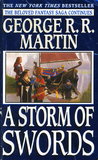
I just finished the third book of George R.R. Martin’s A Song of Ice and Fire Series.
This series is, as everyone knows, the storyline behind the Game of Thrones TV series. Not long ago, and before I read the first novel, I bought the first season of the show on DVD. I watched the first episode and liked it. The problem for me though was all of the explicit sex and nudity. I’ve got three little kids at home and I don’t want them seeing any of that stuff. Plus, me being a married man, I thought it best if I didn’t watch it either. I returned the DVDs. However, later on, I did end up binge watching all six seasons of the TV series online. Despite the unnecessary sex and nudity, the show is excellent.
The novels and the TV series tell a story which I believe is very relevant to our world today. Martin obviously bases his world on the real one, and does a good job illustrating the conflicts we see today; for example: the true threat against Westeros is coming towards the ill defended wall, but the kings and lords are apathetic to the danger as they fight one another to establish their own power. The one question I found myself repeatedly asking while watching and reading is: Where is the righteous king who will come and set everything right?
There are two more published novels after this third one (A Feast for Crows and A Dance with Dragons) and there are apparently two more in the works. Also, it’s said there will be another two seasons of the TV series. I don’t know if I’ll bother watching the new TV seasons coming as I am into the novels now. I do hope the author actually finishes the series.
The novels run at about 1000 pages, but it’s still effortless reading.
Just to illustrate how good the TV show is, here is a clip from season six, episode ten (spoilers of course)…..
Here is a thought provoking article written by Richard Bledsoe on Theopolis Institute….
Jesus and Godel’s Theorem
“Religion” is an attempt to create or build a tower with a top, or to build a temple that is self-contained. The story of The Tower of Babel in Genesis 11 is the story of mankind’s attempt to create a world that is self-contained and does not need God. All ancient pagan temples were renewed attempts to complete the Tower of Babel. These were termed “ziggurats,” and were viewed as connecting points, or umbilical cords between heaven and earth. Heaven and earth were in the ancient pagan cosmology, part of one eternal entity.
The Temple in Israel was purposely built with a similarity to the ancient ziggurat, and as an answer to the ziggurat. It was built on the top of a mountain, and was a “connecting” place to the God of Israel. But the God of Israel was not encompassed or contained within it, nor was His liberty compromised by it, as were pagan gods by their temples. Never-the-less, Israel was constantly tempted to believe that their temple was like the temples of the nations. The destruction of Shiloh, the capture of the Ark in Samuel’s time (1 Samuel 4), and the destruction of Solomon’s Temple (2 Chronicles 36:15-21) contradicted Israel’s constant temptation to “religion”. The theology of Steven Spielberg’s Raiders of the Lost Ark is quite accurate. The Nazis, like Israel at Shiloh, believed that possession of the Ark entailed possession and control of Jehovah. In this they were wrong.
Arend Theodoor van Leeuwen says that the destruction of Herod’s Temple in 70 A.D. was in principle the destruction of all temples. The last 20 centuries of Christian history have progressively undone one temple after another. But, Christians themselves are tempted to new temples. Byzantine was an attempt to recreate on a Christian basis, at least a partial “ontocratic” or self-contained church/state, to use van Leeuwen’s terminology. The Roman Catholic Church has constantly been tempted in this way, and Protestant sectarianism is guilty in these ways as well.
Hopefully, it is increasingly clear that there is no top to the towers of this world, as we saw demonstrated in the 20th century when we saw all of the great ideologies fall. This opens the door to nihilisms, but also makes more clear than ever that it is only the Sovereign Triune God who is the I Am that I Am, and I Will Be that I Will Be. Only He is self-contained.
The modern city, and indeed, the modern world as a “global village,” is a “tower without a top.” Religion is done for. Bonhoeffer glimpsed this possibility in what he termed a “religionless Christianity. The story of The Tower of Babel sets the theme for all of God’s redemptive work in history. Fallen man’s idolatrous desire is to make for himself a self-contained world of complete adequacy.
When Carl Sagan says, “The Cosmos is all there is, or all there ever will,” he is stating the sentiments of the builders of the Tower of Babel. For them, the upper emporium was the realm of the gods, but it was by human effort and construction, a reachable realm, and that was itself a part of one cosmos. As one moved up the tower to the realm of the gods, one’s own being could also be “divinized”. Man’s being was potentially divine, given the right techniques and methods, amongst which “tower construction” was foremost. But God frustrated them and left them off with an incomplete tower, a tower without a top.