
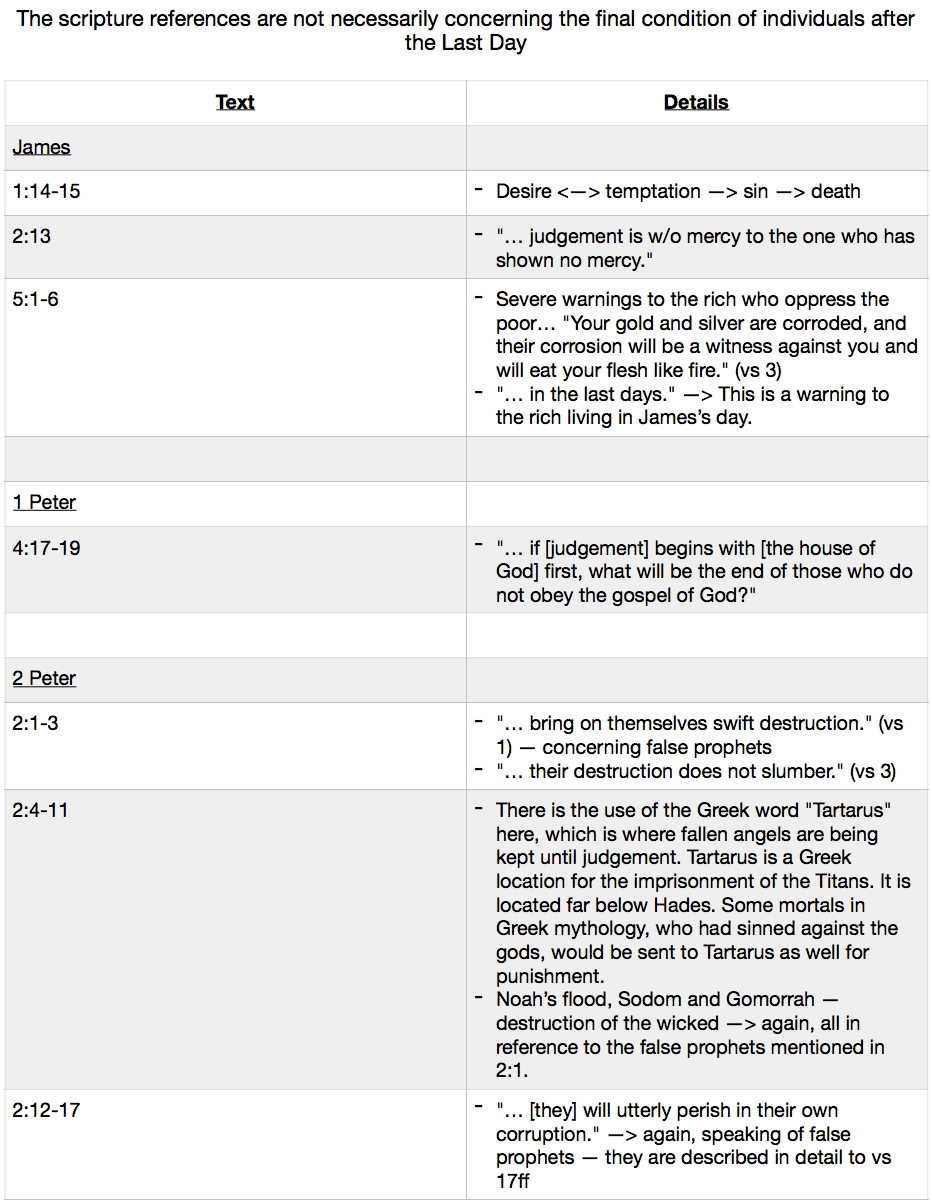


~~~
~~~


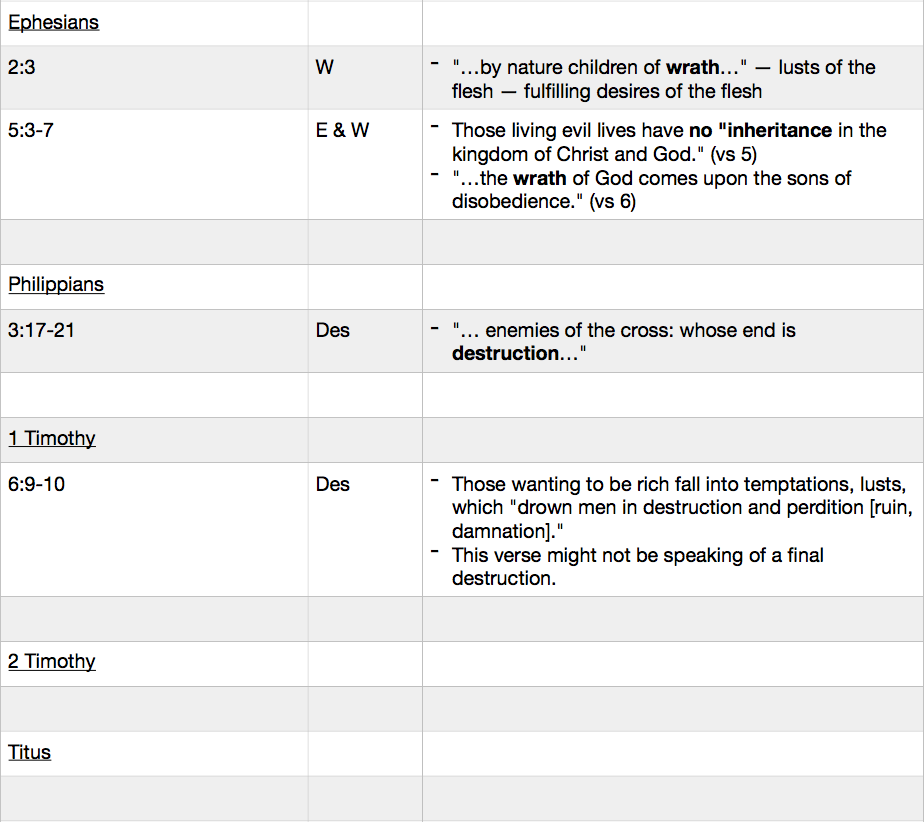
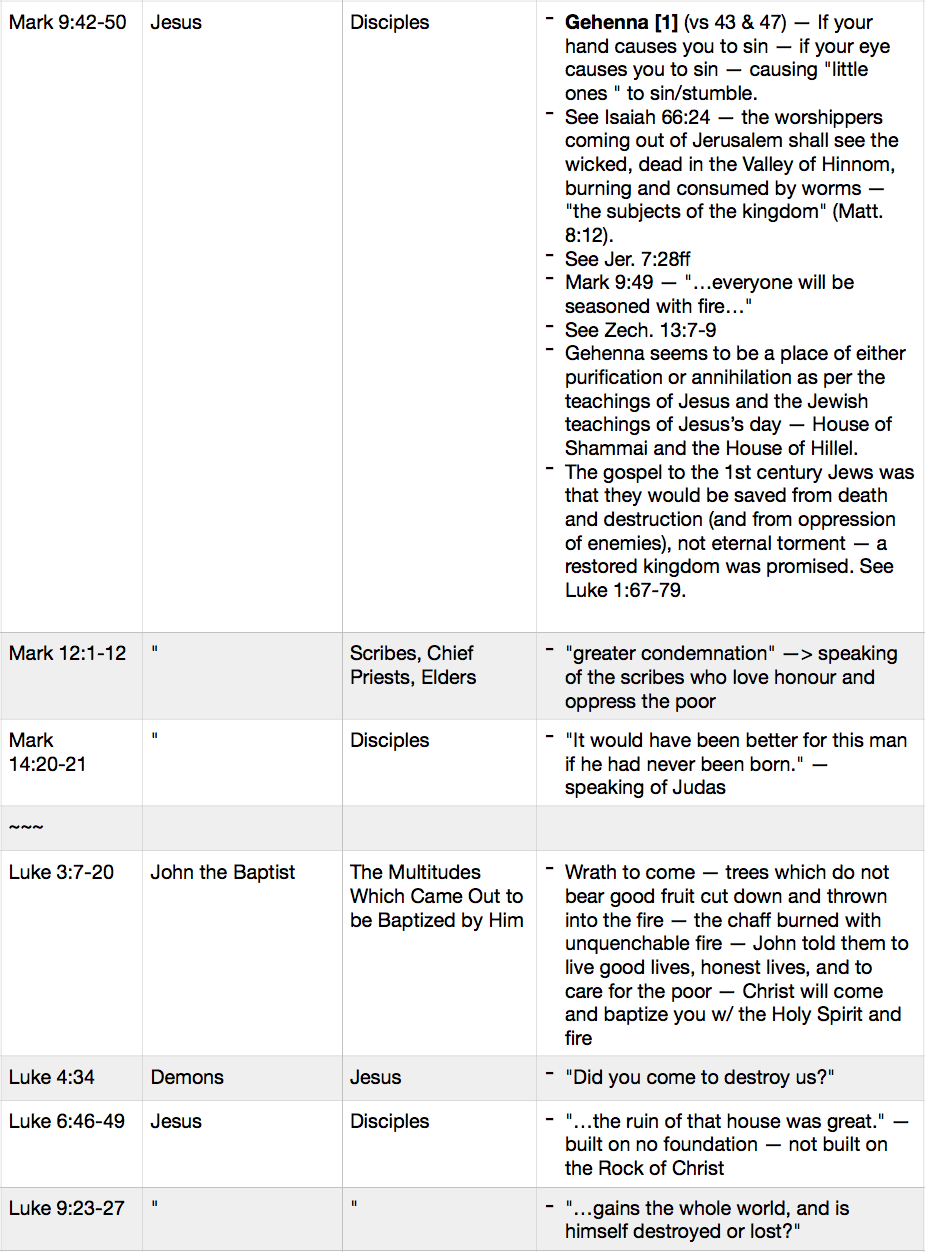
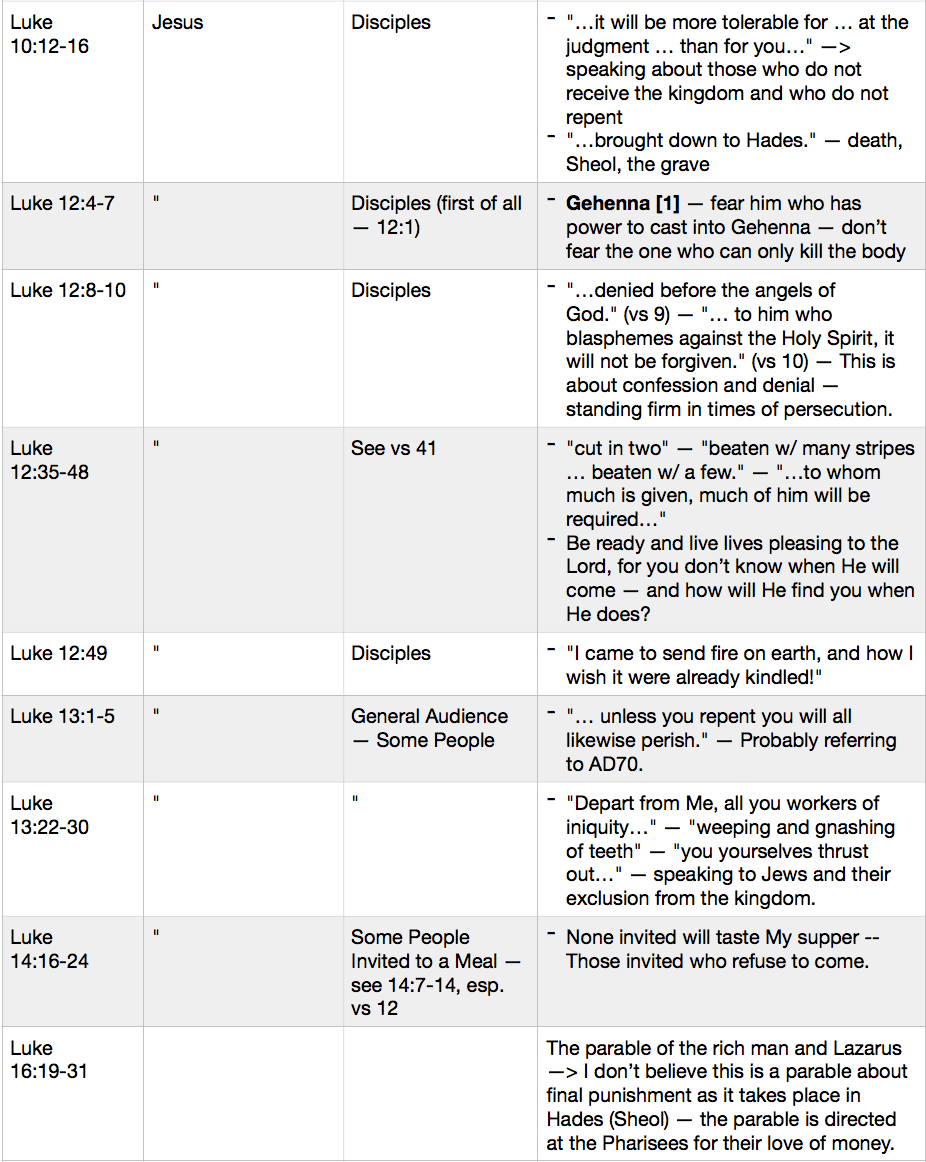
Notice the lack of H’s.
~~~
What did Jesus mean when He said, “some of you shall not taste death…?” Consider this scripture…
24 Then said Jesus unto his disciples, If any man will come after me, let him deny himself, and take up his cross, and follow me.
25 For whosoever will save his life shall lose it: and whosoever will lose his life for my sake shall find it.
26 For what is a man profited, if he shall gain the whole world, and lose his own soul? or what shall a man give in exchange for his soul?
27 For the Son of man shall come [μέλλω — is about to come] in the glory of his Father with his angels; and then he shall reward every man according to his works.
28 Verily I say unto you, There be some standing here, which shall not taste of death, till they see the Son of man coming in his kingdom.
-Matthew 16:24-28
This passage can be a problem for Christians. Is Jesus saying He will return (vs 27) before all His disciples die (vs 28)? If so, was Jesus wrong in predicting His own return?
There are three other questions we must ask (and answer as best we can) in order to answer those first ones: 1) When Jesus says, “some… shall not taste death…,” what time frame can we deduce from that? 2) What is meant by “the Son of man coming in His kingdom?” 3) Is vs 27 and vs 28 referring to the same event?
The first question answered…
Jesus makes the interesting statement that some of His disciples (and possibly some of the crowd who were also present [Mark 8:34]) would not taste death before they see the Son of man come in His kingdom. He makes the same statement in Mark 9:1, and again in Luke 9:27. To “taste death” means, in fact, to die (see Hebrews 2:9), but for Jesus’s disciples it was not a final death of course. And they would not all die before this great event, but perhaps most would.
The plain reading of Jesus’s statement tells us that this event would be far enough in the future so that some, if not most, of His followers would already have died, but not so far in the future that they would have all died.
Many scholars and commentators suggest that Jesus is referring to the transfiguration here (for example click here, here, here, or here). In the text, we see that the transfiguration occurred 6-8 days later. These scholars suggest that because the event of the transfiguration occurs directly after Jesus makes His statement, the two must be connected. I don’t doubt there is a significance between the two, but the significance of Jesus implying some would die before the Son of man comes in His kingdom outweighs the significance of the order of the narrative. How many disciples died in those 6-8 days? None that I’m aware of.
Imagine speaking like Jesus in another context…
Teacher: Good news kids! It’s only 6 more days till your summer vacation!
Kids: Yaaaaaaay!!!
Teacher: And you know what else?! Some of you will live to see the last day of school!
Kids: <looks of fear and confusion followed by weeping>
Putting it plainly, if you tell a group of adults that something will happen in the future, and that some of them will die before it happens, but not all of them will die, you are talking about an event that is approximately 30-50 years in the future. The “Son of man coming in His kingdom,” from the perspective of Jesus’s disciples, was an event which would happen towards the end of the first century.
Jesus makes a similar statement in Matthew 10:23, which also places the event of “the Son of man coming in His kingdom” potentially decades into the disciples’ future.
The second question…
13 I saw in the night visions, and, behold, one like the Son of man came with the clouds of heaven, and came to the Ancient of days, and they brought him near before him.
14 And there was given him dominion, and glory, and a kingdom, that all people, nations, and languages, should serve him: his dominion is an everlasting dominion, which shall not pass away, and his kingdom that which shall not be destroyed.
1 The Lord said unto my Lord, Sit thou at my right hand, until I make thine enemies thy footstool.
2 The Lord shall send the rod of thy strength out of Zion: rule thou in the midst of thine enemies.
3 Thy people shall be willing in the day of thy power, in the beauties of holiness from the womb of the morning: thou hast the dew of thy youth.
4 The Lord hath sworn, and will not repent, Thou art a priest for ever after the order of Melchizedek.
5 The Lord at thy right hand shall strike through kings in the day of his wrath.
6 He shall judge among the heathen, he shall fill the places with the dead bodies; he shall wound the heads over many countries.
7 He shall drink of the brook in the way: therefore shall he lift up the head.
61 [Two false witnesses] said, This fellow [Jesus] said, I am able to destroy the temple of God, and to build it in three days.
62 And the high priest arose, and said unto him, Answerest thou nothing? what is it which these witness against thee?
63 But Jesus held his peace, And the high priest answered and said unto him, I adjure thee by the living God, that thou tell us whether thou be the Christ, the Son of God.
64 Jesus saith unto him, Thou hast said: nevertheless I say unto you, Hereafter shall ye see the Son of man sitting on the right hand of power, and coming in the clouds of heaven.
65 Then the high priest rent his clothes, saying, He hath spoken blasphemy; what further need have we of witnesses? behold, now ye have heard his blasphemy.
20 And when ye shall see Jerusalem compassed with armies, then know that the desolation thereof is nigh.
21 Then let them which are in Judaea flee to the mountains; and let them which are in the midst of it depart out; and let not them that are in the countries enter thereinto.
22 For these be the days of vengeance, that all things which are written may be fulfilled.
23 But woe unto them that are with child, and to them that give suck, in those days! for there shall be great distress in the land, and wrath upon this people.
24 And they shall fall by the edge of the sword, and shall be led away captive into all nations: and Jerusalem shall be trodden down of the Gentiles, until the times of the Gentiles be fulfilled.
25 And there shall be signs in the sun, and in the moon, and in the stars; and upon the earth distress of nations, with perplexity; the sea and the waves roaring;
26 Men’s hearts failing them for fear, and for looking after those things which are coming on the earth: for the powers of heaven shall be shaken.
27 And then shall they see the Son of man coming in a cloud with power and great glory.
15 When ye therefore shall see the abomination of desolation, spoken of by Daniel the prophet, stand in the holy place, (whoso readeth, let him understand:)
16 Then let them which be in Judaea flee into the mountains…
27 For as the lightning cometh out of the east, and shineth even unto the west; so shall also the coming of the Son of man be.
28 For wheresoever the carcase is, there will the eagles be gathered together.
29 Immediately after the tribulation of those days shall the sun be darkened, and the moon shall not give her light, and the stars shall fall from heaven, and the powers of the heavens shall be shaken:
30 And then shall appear the sign of the Son of man in heaven: and then shall all the tribes of the earth mourn, and they shall see the Son of man coming in the clouds of heaven with power and great glory.
31 And he shall send his angels with a great sound of a trumpet, and they shall gather together his elect from the four winds, from one end of heaven to the other.
32 Now learn a parable of the fig tree; When his branch is yet tender, and putteth forth leaves, ye know that summer is nigh:
33 So likewise ye, when ye shall see all these things, know that it is near, even at the doors.
34 Verily I say unto you, This generation shall not pass, till all these things be fulfilled.
14 But when ye shall see the abomination of desolation, spoken of by Daniel the prophet, standing where it ought not, (let him that readeth understand,) then let them that be in Judaea flee to the mountains…
26 And then shall they see the Son of man coming in the clouds with great power and glory.
27 And then shall he send his angels, and shall gather together his elect from the four winds, from the uttermost part of the earth to the uttermost part of heaven.
28 Now learn a parable of the fig tree; When her branch is yet tender, and putteth forth leaves, ye know that summer is near:
29 So ye in like manner, when ye shall see these things come to pass, know that it is nigh, even at the doors.
30 Verily I say unto you, that this generation shall not pass, till all these things be done.
I encourage anyone reading this (*crickets*) to read the full chapters referred to above, but I think these sections of scripture are sufficient to show us that the “Son of man coming in His kingdom” is at least referring to the destruction of Jerusalem and the temple in AD70. AD70 fits the vocabulary of question #2, and it fits the time frame of question #1. The “Son of man” on the clouds is not to be seen as Jesus physically riding a cloud in the sky attacking Jerusalem, but rather it is the coronation and vindication of King Jesus. (Read also Luke 17:20-37.)
If you don’t agree with me, some guy writing a blog no one reads, perhaps you’ll agree with N.T. Wright…
Third question…
Matthew 16:27 says, “For the Son of man shall come in the glory of his Father with his angels; and then he shall reward every man according to his works.” We can see parallels to this from the above quoted texts concerning AD70: Matthew 24:31 and Mark 13:27. The angels gather the saints into the Church while Jesus judges. This is a judgement on Israel first, and is not the final judgement of all mankind. (However, this gathering and judging does carry on in history as the Church expands into the world. The word “angel” simply means messenger. And the messengers who gather in the elect throughout history are people — Christians working to complete the great commission.)
As Jesus describes it in Luke 13:23-35…
23 Then said one unto him, Lord, are there few that be saved? And he said unto them,
24 Strive to enter in at the strait gate: for many, I say unto you, will seek to enter in, and shall not be able.
25 When once the master of the house is risen up, and hath shut to the door, and ye begin to stand without, and to knock at the door, saying, Lord, Lord, open unto us; and he shall answer and say unto you, I know you not whence ye are:
26 Then shall ye begin to say, We have eaten and drunk in thy presence, and thou hast taught in our streets.
27 But he shall say, I tell you, I know you not whence ye are; depart from me, all ye workers of iniquity.
28 There shall be weeping and gnashing of teeth, when ye shall see Abraham, and Isaac, and Jacob, and all the prophets, in the kingdom of God, and you yourselves thrust out.
29 And they shall come from the east, and from the west, and from the north, and from the south, and shall sit down in the kingdom of God.
30 And, behold, there are last which shall be first, and there are first which shall be last.
31 The same day there came certain of the Pharisees, saying unto him, Get thee out, and depart hence: for Herod will kill thee.
32 And he said unto them, Go ye, and tell that fox, Behold, I cast out devils, and I do cures to day and to morrow, and the third day I shall be perfected.
33 Nevertheless I must walk to day, and to morrow, and the day following: for it cannot be that a prophet perish out of Jerusalem.
34 O Jerusalem, Jerusalem, which killest the prophets, and stonest them that are sent unto thee; how often would I have gathered thy children together, as a hen doth gather her brood under her wings, and ye would not!
35 Behold, your house is left unto you desolate: and verily I say unto you, Ye shall not see me, until the time come when ye shall say, Blessed is he that cometh in the name of the Lord.
See also Matthew 25.
So, to answer the third question, I would say yes, Matthew 16 verses 27 and 28 are referring to the same event. However, the in-gathering of the saints and the judgement of Jesus carries on throughout human history until the final judgement and the last day resurrection.

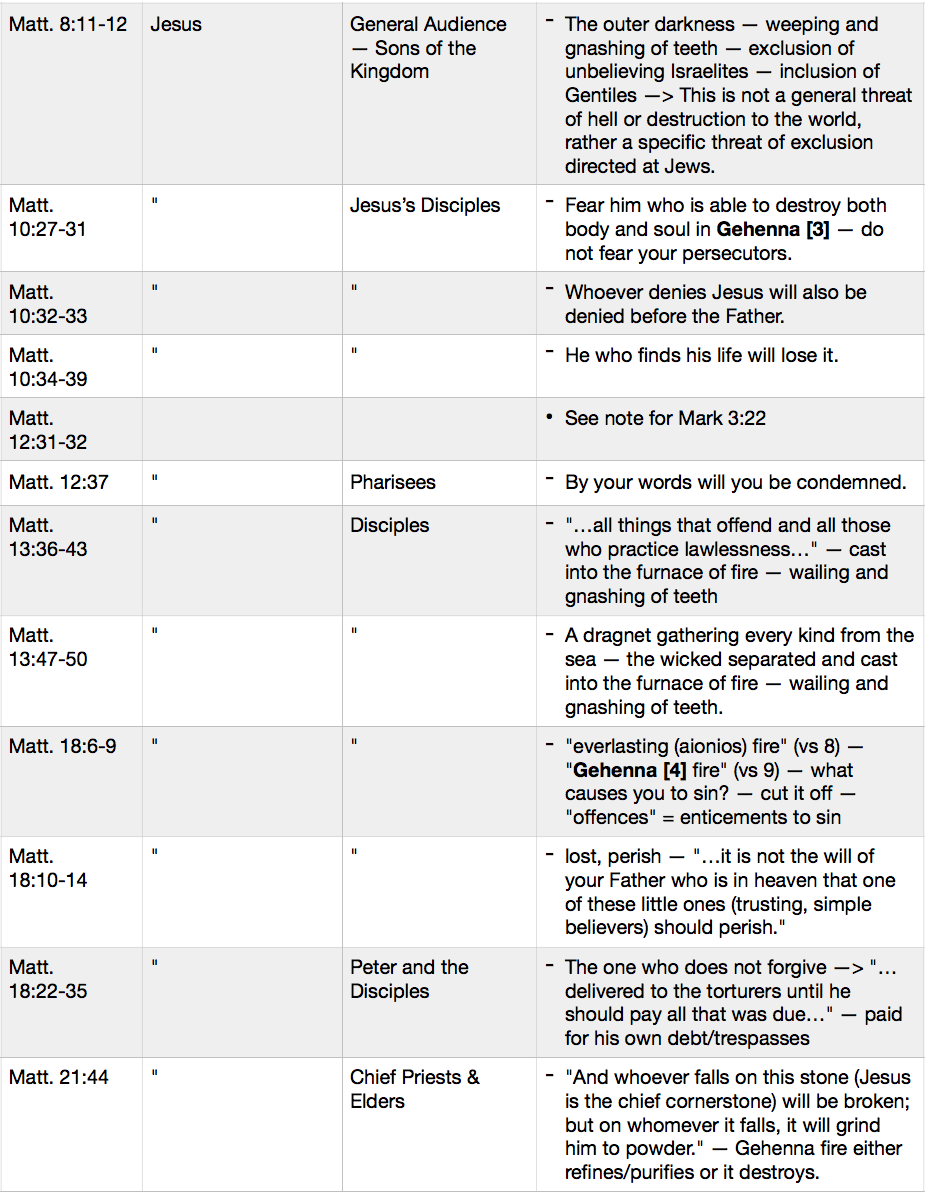
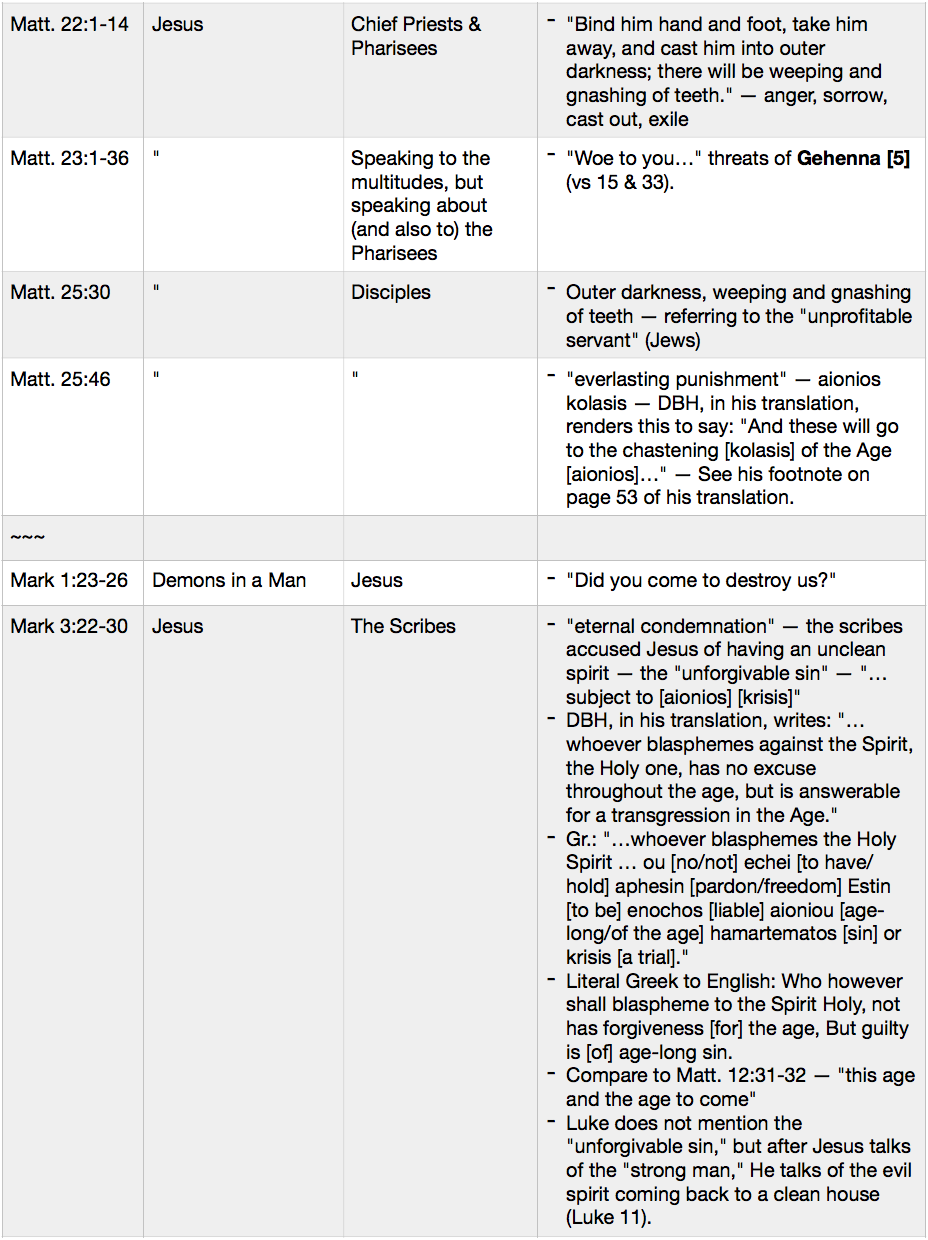

 Pursuit of Percipience