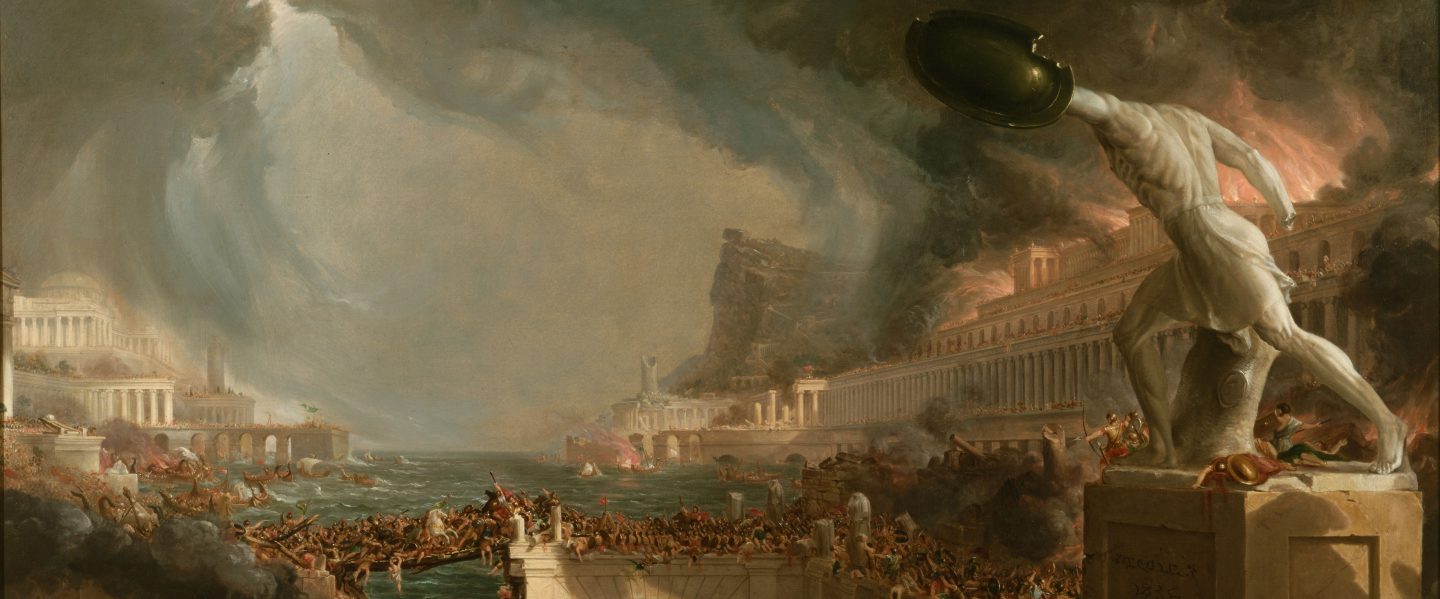

Here is another one from Jiang Xueqin. His lectures are interesting, but I think it’s best to not take his predictions too seriously. There is much speculation, and who knows what his motives are in making these lectures (which are actually being delivered to high school students). However, they are interesting to listen to and perhaps there is some truth to them as well. Below are a couple of AI analyses on this lecture.
Grok
The lecture by Jiang Xueqin (a geopolitical commentator whose talks have gone viral for predicting elements of Trump’s return and Iran policy) presents a highly contrarian, game-theoretic interpretation of the ongoing US-led Operation Epic Fury against Iran. It frames the conflict not as a blunder or conventional war of choice, but as a deliberate, high-stakes masterstroke by Trump to accelerate the collapse of the post-1991 “New World Order” (global finance, consumerism, Pax Americana) and birth a “Trump World Order” centered on resource control, hemispheric autarky, and Christian nationalism. This is explicitly modeled on Vladimir Putin’s Ukraine strategy and Aleksandr Dugin’s ideas from Foundations of Geopolitics (the “Third Rome” vision of Russian resilience amid global disorder).
Core Thesis of the Lecture (Summarized Accurately)
Xueqin argues Trump wants short-term pain (higher oil/fertilizer prices, economic disruption) because:
- Resource geopolitics: Middle East supplies ~20% of global oil (heavily to East Asia/Europe). Disrupting the Strait of Hormuz and GCC production shifts dependence to North America (US shale, Canada, Venezuela—which Trump has “taken over”) and Russia. Maps of oil reserves, nitrogen fertilizers, and freshwater underscore this: Europe/East Asia become supplicants; North America/Russia gain leverage.
- Debt and dollar dominance: Asia (Japan, China, etc.) and Europe hold massive US Treasuries. Resource dependence locks them into financing America’s $39T debt rather than dumping dollars.
- “Greater North America” / Technate: Hegseth’s doctrine (a security perimeter from Greenland to Ecuador/Guyana, enforcing a modern Monroe Doctrine) creates a self-sufficient fortress. Conflicts with Canada, Denmark (Greenland), Mexico, etc., are features, not bugs.
- Managed decline: The post-WWII order (US as consumer/financier of last resort, multiculturalism, offshoring) was a Ponzi scheme doomed by inequality and laziness. Trump accelerates collapse on US terms, rebuilding around manufacturing, resources, and nationalism—mirroring Russia’s war-economy pivot.
- Evidence cited: 50k+ US troops, reserve call-ups, pizza index/Gay bars/Polymarket bets as invasion signals; Trump’s “stone ages” rhetoric as bluff. Long-term win: US exports stability/resources while rivals fracture.
Xueqin ties this to eschatology/history earlier in his series but here emphasizes economics/geopolitics. He acknowledges surface idiocy (“Trump is a buffoon”) but flips it: purposeful chaos.
This aligns closely with real events as of April 4, 2026. Trump’s recent address (April 1-2) echoed the transcript: economy “roaring back,” objectives nearly met in “2-3 weeks,” continued strikes. Albanese/Starmer addressed fuel pain and relief. Hegseth’s “Greater North America” map is official policy. No full ground invasion yet (Polymarket odds ~56-66% by end-2026, lower short-term), but strikes have degraded Iranian navy/air/missiles; Hormuz disruptions are real.
Strengths of Xueqin’s Analysis
- Resource realism: Correct on dependencies. ME oil/fertilizers/semiconductor inputs do matter; US/Canada/Venezuela/Russia hold huge reserves. Geography (Zagros mountains, deserts) makes full occupation brutal—Xueqin nails why a “stupid” ground war could still serve strategic disruption.
- Echoes broader thinkers: Parallels Peter Zeihan’s longstanding view that US geography/energy/agriculture make it the ultimate winner in global disorder—competitors (Europe, East Asia) suffer supply shocks more. Zeihan has discussed Iran strikes in similar terms: costly for importers, but US shale insulates it.
- Dugin/Putin parallel: Russia’s Ukraine grind has reoriented its economy toward war production and resource leverage. Dugin’s influence on Russian strategy (fortress nationalism amid collapse) is real, though overstated as “the plan.”
- Debt dynamic: Asia/Europe’s Treasury holdings do fund US deficits; resource leverage could sustain the “Ponzi” longer.
Weaknesses and Overstatements
- Intent vs. outcome: Claims Trump wants empire collapse for rebirth assumes perfect foresight and control. Most evidence shows tactical goals (denuclearization, degrade proxies, regime pressure) with economic side effects, not a premeditated demolition. Trump frames it as “winning” and “peace through strength,” not managed decline.
- Risks downplayed: Ignores nuclear escalation, Iranian asymmetric retaliation (drones/mines on Hormuz/Gulf states), refugee/terrorism blowback, or alliance fractures (NATO/Gulf states strained). A surviving Iranian regime + insurgency could turn “stone ages” rhetoric into quagmire. Xueqin’s “genius” narrative risks hindsight bias.
- Anecdotal indicators: Pizza index, empty gay bars, and Polymarket bets are fun but not rigorous (insider trading happens, but so does speculation). No ground invasion materialized by March 31 as some bettors feared.
- Collapse inevitability: The old order has flaws (debt, inequality), but US tech/military/demographics remain dominant. Multipolarity is rising, but not inevitable total collapse benefiting only North America/Russia.
Comparison to Other Expert Analysts (April 2026 Context)
Expert consensus is more cautious and less conspiratorial than Xueqin, emphasizing limits of power over master plan:
- Peter Zeihan (geopolitical strategist, aligns closest): Echoes resource-shift benefits—US wins from ME chaos via energy independence and export leverage. Discusses potential ground ops (Marines/82nd Airborne) but stresses costs (expensive interceptors vs. cheap Iranian drones) and global ripple effects (oil prices reshaping economy for importers like China/Europe). Less “Trump genius,” more structural US advantage in disorder.
- George Friedman (Geopolitical Futures): Focuses on miscalculations—terrain, Iranian resilience, shifting US goals (regime change? reset?). Skeptical of easy victory; favors “mowing the lawn” (periodic strikes) over occupation. Questions why engage if withdrawing from hemisphere. No “Technate genius”—stresses intelligence failures and long grind.
- Mainstream realists/institutions (EPC, Atlantic Council, Soufan Center, Georgetown): Warn of overextension, Pyrrhic victory, nuclear arms race risk if regime survives damaged. US precision strikes succeed tactically but risk strategic quagmire, regional instability, and distraction from China/Ukraine. Prioritize diplomacy, Gulf alliances, Saudi-Israeli normalization over indefinite war. Dugin’s multipolar collapse view appears in fringe/Russian analyses but not mainstream US strategy.
- Broader 2026 outlook: CFR and others see Iran as one of multiple flashpoints (Venezuela, etc.) in contested multipolarity. US shifting to “America First” hemispheric focus (Hegseth doctrine fits), but experts stress alliances/tech edge prevent full “fortress” isolation. Xueqin’s Dugin-inspired resilience narrative resonates in nationalist circles but is seen as ideological by most analysts.
In short: Xueqin’s lecture is a sharp, provocative synthesis of resource geopolitics, Duginist strategy, and anti-globalist ideology—insightful on why chaos could structurally favor North America long-term, and eerily timed with real events. It captures a plausible “managed decline/rebirth” logic some Trump allies embrace. However, most experts view the war as high-risk power projection with uncertain ends, not a controlled demolition. Unintended escalation, Iranian adaptation, and global backlash remain the bigger variables. World politics in 2026+ looks headed toward fragmented resource nationalism and great-power spheres (US hemisphere focus, Russia/China alternatives), but US advantages (geography, navy, tech) make total collapse less inevitable than the lecture implies. The coming weeks (Hormuz reopening, potential ceasefire/deal) will test whose view holds.
ChatGPT
This is a sharp, provocative lecture—but it mixes a few real geopolitical insights with some major leaps, weak evidence, and outright fringe claims. I’ll break this down in two parts:
- What Jiang Xueqin is arguing (cleanly and fairly)
- How that compares to mainstream expert analysis on Iran, global order, and great power strategy
1) What Jiang is Actually Arguing
Strip away the rhetoric, and his thesis is:
Core Claim
- The global system (post-1991 “American-led order”) is fragile and heading toward breakdown
- Leaders like Donald Trump and Vladimir Putin understand this
- Therefore, they are intentionally accelerating collapse to reposition their countries for advantage
His Strategic Model
He’s essentially proposing a controlled-collapse strategy:
Step 1: Trigger disruption
- War in Iran → disrupt oil, food, semiconductors
Step 2: Break global interdependence
- Europe + Asia lose access to Middle East resources
Step 3: Force dependency shift
- World becomes dependent on:
- North America
- Russia
Step 4: Build regional “fortresses”
- US → “Technate” (self-sufficient North America)
- Russia → “Third Rome” bloc (inspired by Aleksandr Dugin)
Step 5: Survive the collapse better than others
- Not winning the war → irrelevant
- Winning the post-collapse world → the real goal
What’s actually insightful here
There are three serious ideas embedded in this:
1) The world is becoming less globalized
Many analysts agree we’re moving from globalization → fragmentation / blocs
- US-led bloc
- China-centered bloc
- Russia + aligned states
This is widely discussed in:
- International Monetary Fund reports
- World Bank analysis
2) Resource security is now central
He’s right that:
- Energy
- Food (fertilizer inputs)
- water
are becoming geopolitical weapons
This aligns with work from:
- International Energy Agency
- Chatham House
3) Wars can reshape economic systems
The idea that war:
- accelerates industrial policy
- reorganizes economies
is historically accurate (WWI, WWII, Cold War)
2) Where His Analysis Breaks from Expert Consensus
Now the important part: where he goes off track.
A) The “intentional collapse” theory is fringe
Mainstream analysts do NOT believe:
The US is deliberately collapsing the global economy to rebuild itself
Instead, the consensus is:
- The US is reacting, not orchestrating collapse
- Policy is messy, conflicting, and political—not grand-strategic chess
Experts like:
- John Mearsheimer
- Fareed Zakaria
argue:
- Great powers pursue security and influence
- Not self-destruction as strategy
👉 His “Trump as secret genius collapsing the system” idea is speculative and not evidence-based
B) The Iran war framing is exaggerated / unrealistic
There are several red flags:
1) Ground invasion of Iran
Serious analysts broadly agree:
- A full invasion of Iran would be extremely unlikely
- Costs would be catastrophic
Think tanks like:
- RAND Corporation
- Center for Strategic and International Studies
generally conclude:
- US strategy would focus on:
- airpower
- naval control
- proxies
—not occupation
2) “World runs out of oil in weeks”
This is simply not credible.
Even with major disruption:
- Strategic reserves exist
- Alternative suppliers ramp up
- Markets reprice, not collapse instantly
This claim is alarmist, not analytical
3) “Pizza index” and betting markets as proof
These are not serious intelligence indicators
They fall into:
- anecdotal speculation
- internet myth territory
No credible analyst uses these as primary evidence.
C) Overstating Russia’s coherence and strategy
He leans heavily on Foundations of Geopolitics and Dugin.
But experts generally view Dugin as:
- influential in some circles
- not a blueprint for Kremlin policy
Also:
- Russia’s war in Ukraine is widely seen as:
- costly
- strategically risky
- not clearly strengthening long-term position
D) Misreading how power actually works
His biggest mistake is this:
He assumes leaders can precisely control chaos
In reality:
- Wars create unintended consequences
- Economic shocks are hard to steer
- Domestic politics constrain strategy
Even highly capable states struggle with this.
3) What Experts Actually Say About the Future
Here’s the real consensus direction:
1) We are entering a “fragmented world order”
Not collapse—reconfiguration
- Less globalization
- More regional blocs
- More supply chain duplication
2) US strategy is shifting—but defensively
The US is:
- reshoring industry
- securing supply chains
- countering China
This is risk management, not collapse engineering
3) Middle East conflict matters—but won’t “end the system”
Even major escalation would likely lead to:
- energy shocks
- inflation
- regional instability
But not:
- total global economic collapse
- immediate end of the dollar system
4) The dollar system is more resilient than he claims
Despite debt concerns:
- US financial markets remain dominant
- Alternatives (China, euro) have structural limits
So the “Ponzi scheme collapse” framing is overstated
Bottom Line
Jiang’s lecture is compelling because it tells a clean, dramatic story:
“The system is collapsing, and powerful leaders are secretly engineering it.”
That’s psychologically satisfying—but analytically weak.
What he gets right:
- Globalization is under strain
- Resource geopolitics is rising
- Conflict is reshaping economic systems
What he gets wrong:
- Overestimates strategic coherence
- Uses weak evidence
- Assumes intentional collapse
- Dramatically exaggerates outcomes
Straight advice
Don’t throw this out—but don’t buy it whole.
Use it like this:
- Treat it as a thought experiment
- Extract the structural insights
- Discard the conspiracy-level conclusions

