Poipet Through the Ages

When the Khmer Rouge came to power in Cambodia in the ’70s they destroyed much infrastructure, including the railroad. And as Cambodia has been rebuilding, the railroad is coming back.

Poipet is the main crossing point between Cambodia and Thailand. Here is Lonely Planet’s description of Poipet…

Long the armpit of Cambodia, notorious for its squalor, scams and sleaze, Poipet (ប៉ោយប៉ែត, pronounced ‘poi-peh’ in Khmer) has recently splurged on a facelift and no longer looks like the post-apocalyptic place it once was. Thanks mainly to the patronage of neighbouring Thais, whose own country bans gambling, its casino resorts – with names like Tropicana and Grand Diamond City – are turning the town into Cambodia’s little Las Vegas. However, beyond the border zone it’s still a chaotic, trash-strewn strip mall sprinkled with dodgy massage parlours. The Khmers’ gentle side is little in evidence, but don’t worry, the rest of the country does not carry on like this.

As the railroad is being rebuilt, it will eventually link Bangkok to Phnom Penh. That railroad will run right through Poipet.

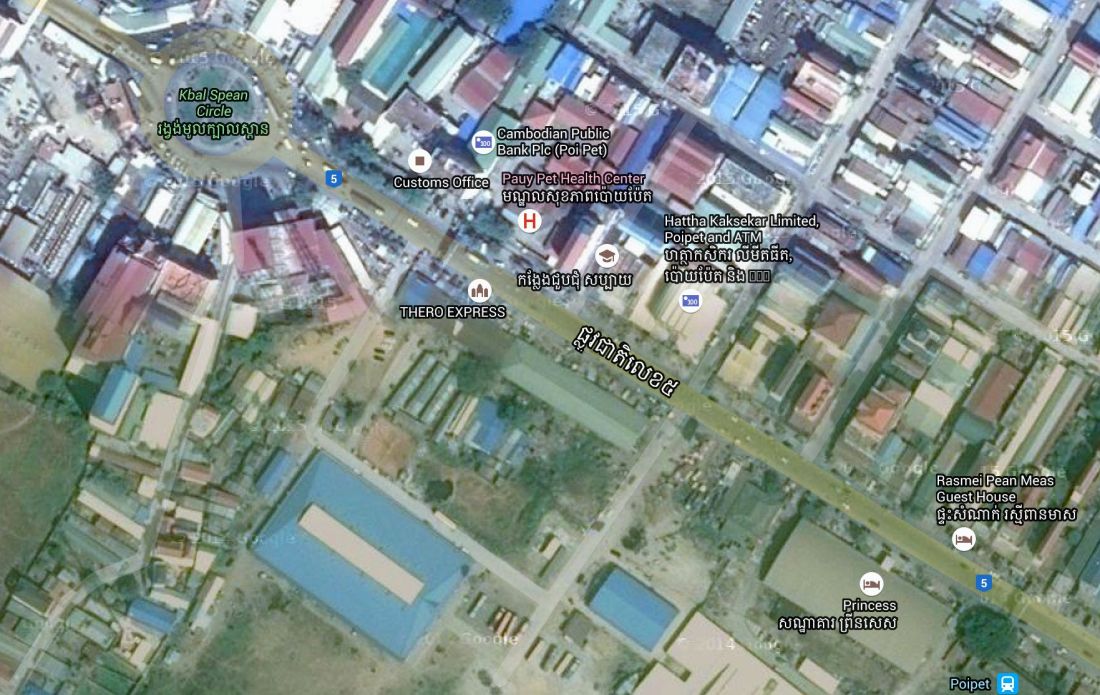
map 001

Just as you enter into Poipet from Thailand, there is a roundabout (Kbal Spean Circle in above picture) which then leads on to the main road through the city. The train will come straight through that roundabout (the busiest road in town) and then run south of the main road through the current slum area.

I don’t even want to think of how busy that border crossing area is going to be when the rail is finished and the train is running.

Here are some photos of that border crossing over the years….

1
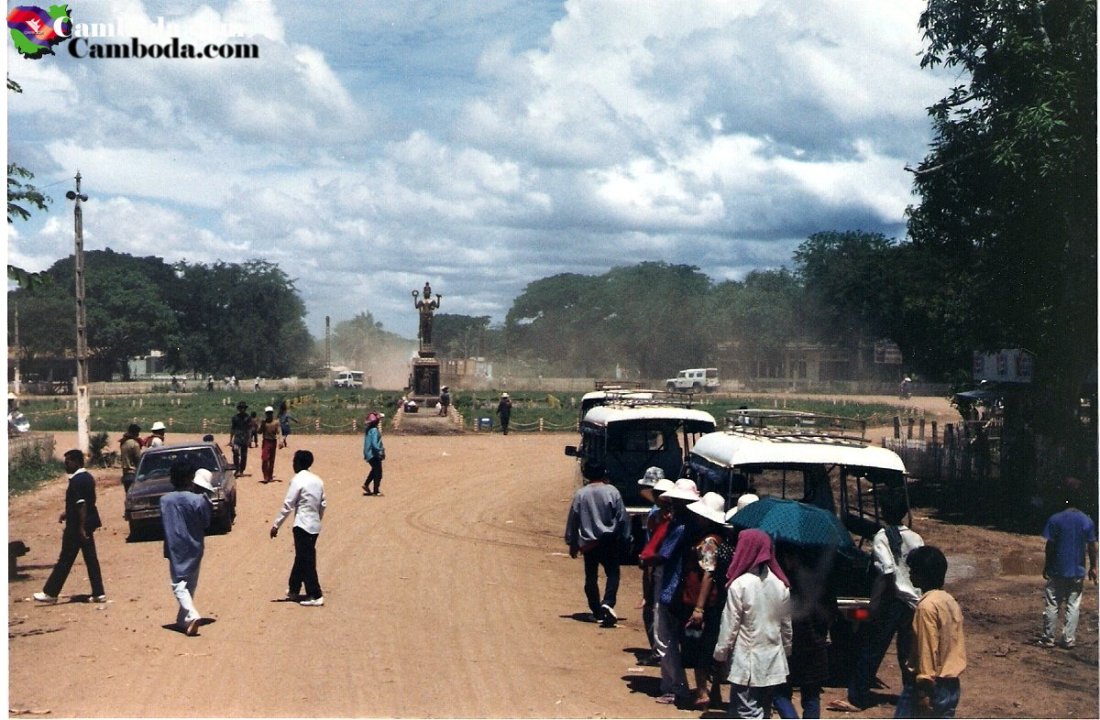
1) I don’t know how old this photo is, but it’s quite old I think. If you took this photo, your back would be towards Thailand, and you would be looking into the beginnings of Poipet and Cambodia. That’s a big idol standing in the middle of the Kbal Spean roundabout. All dirt roads.
2
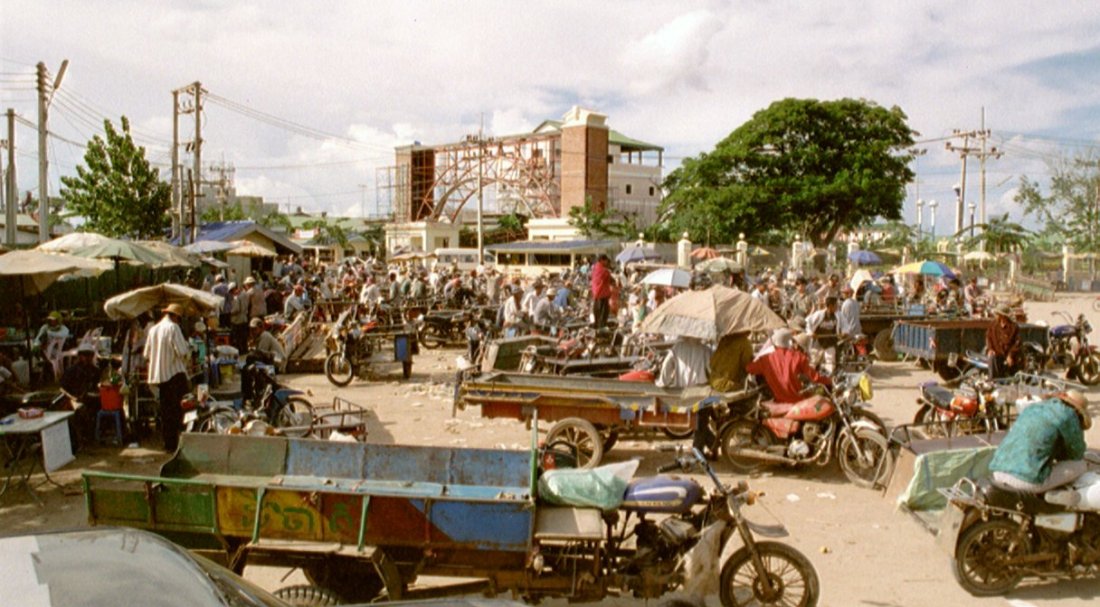
2) This photo is well over ten years old. Now we are looking towards Thailand while standing on the road of the round-about. That big idol is standing just off camera to the right. The first photo was taken from straight ahead of the view of this photo. That arch-way being constructed is the start of an entrance to a new casino.
3
3) This photo is taken from inside Poipet looking out towards Thailand (probably taken around 2006/2007 or so). The idol can be seen, but now we are seeing the reverse side from what we see in the first photo. The red brick pillar seen on the far right of this photo (centered from top to bottom) is the archway under construction in the last photo. Now we see the casinos are dominating the scene.
4
4) Now we are looking into Poipet again with Thailand at our back. Now we see there are lots of buildings, and the roads are paved. This is pretty much what Poipet looks like today, except that big idol is gone. The new railway is going to run straight through the roundabout.
5
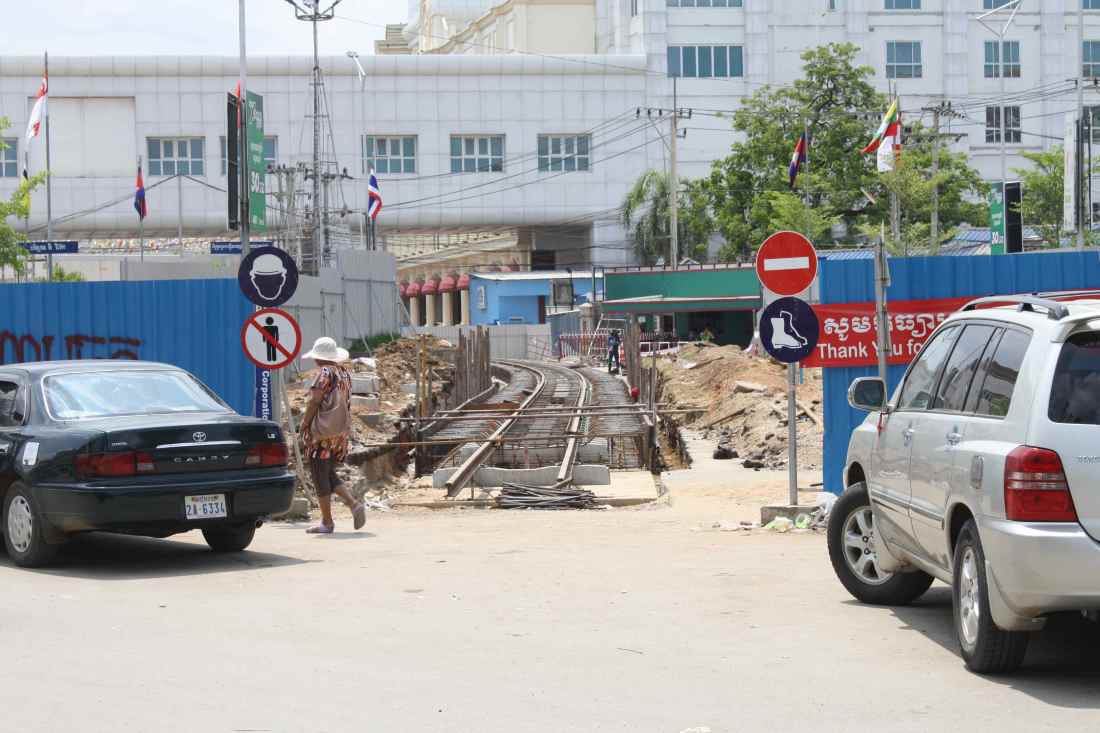
5) Here is the track being constructed. This photo was taken just a few days ago (May, 2016). The track is running right through where the roundabout used to be. Notice that the red brick archway from photos #2 and #3 has been torn down to make room for the train. Also notice the crane on the left is still there (from photo #3). I think that crane has become a permanent fixture.
6
6) A closer look. The casino builders knew the train would eventually come which is why they built the walkways up above the road to connect their buildings.

Sources…

Photo #1 is from Cambodia.com

Photo #2 is from this website.

The Morning Bike Ride

banner 001

The heat in Poipet these days is so intense that it penetrates everything. I put my hand on my laptop and worry about the heat it’s giving off, but then put my hand on the desk’s surface to discover it’s radiating the same amount of heat. The brick walls project heat. The feverish wooden doors. Lying on the couch is like dipping into a sauna. My pillow feels like bread freshly taken from the oven. Heated toilet seats are overrated.

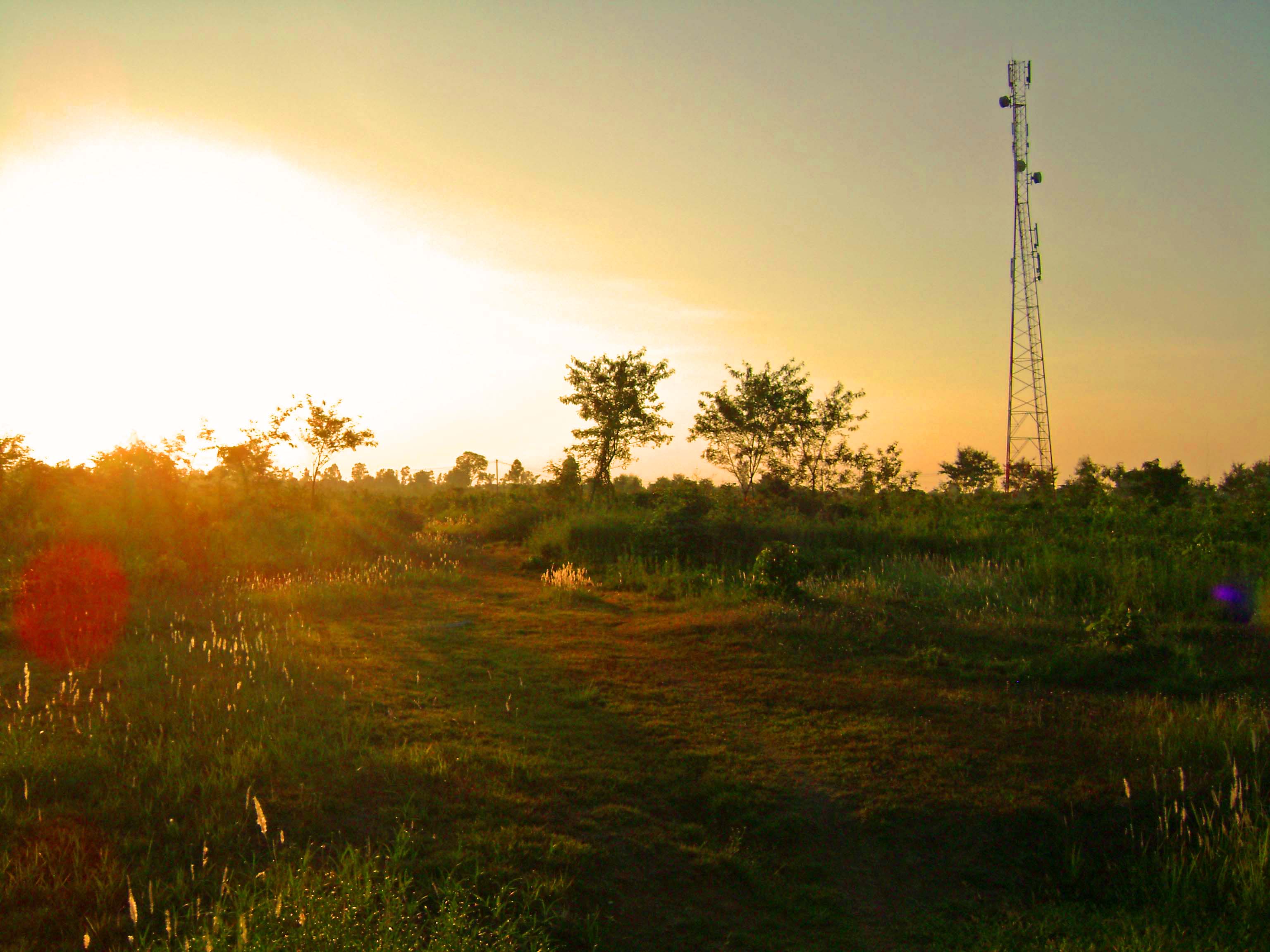
So, the favorite part of my day has become the early morning just after the sun comes up and hasn’t had a chance to infiltrate anything yet. This is when I can jump on my mountain bike and hit some trails before our students start showing up for school at 6:30.

I live on the northern edge of the city so I don’t have to go far to be in the bush. Once the rainy season really kicks in I’ll probably be forced to head south onto the city’s pavement. But as long as it stays dry I’ll keep riding on what was not too long ago Khmer Rouge mine fields.

Here are some pictures…

Once a mine field, this land is now cleared and is sectioned off for future sale. Soon it will be full of houses and shops.
Once off the roads, it’s easy to find some small trails used by the locals on their motorbikes.
No shortage of cellular towers in this country. Cambodia is the first nation in the world to have more cell phones than land-line phones.
It’s beautiful and peaceful.
I carry a retractable baton with me. Not to use on people, but on dogs. It’s not unusual to be riding along and have four or five dogs spring out of the bush with teeth flaring. They usually stay back, but if they do get too close I have the means to put the fear of man into them.

Slum Dog Missionary Kid~Part Two

image

I’m writing up some articles about life in Cambodia. I don’t know when I’ll be done with them, so I’ll just keep posting them in these segments as I go. This article is number two. Click here to read part one.

Fast forward to the future, and I’m raising a family in Cambodia. Cambodia: one of the poorest countries, sub-standard schools, unnerving health care, corrupt law enforcement, and dirt roads.

In Cambodia I encounter a whole new kind of poverty. This is third world poverty. This poverty is deeply pervasive, affecting the whole culture. If western poverty were compared to a light sunburn on one’s arm, Cambodian poverty would be a full body, third degree, heretic’s execution burn. And it’s not just material poverty, in fact materialistic lack is the smallest part of the problem. This is a deep spiritual poverty. If you’re hungering for a spiritual experience, don’t waste your time at the Angkor Wat temple, just visit a slum. The material world and the spiritual world intersect more strongly at places of extreme poverty. The utter spiritual poverty of man is seen and understood most clearly in places riddled with garbage and open sewage.

But I don’t want to portray too dismal a picture. Here’s what else you’ll see in the slum…

image

image

I actually don’t live in the slum myself. My family and I live in a house that’s nicer than what we would live in if back in Canada. There are some missionaries who feel its necessary to live right in the mud with the locals, and that’s cool, I’m just not one of those missionaries. I don’t need to change who I am in order to share the gospel or make disciples. I’m not one of those prosperity gospel guys, but I’m not one of those poverty gospel guys either. Rich or poor, you’ve got to go where God calls you. Wealth is a relative concept anyways.

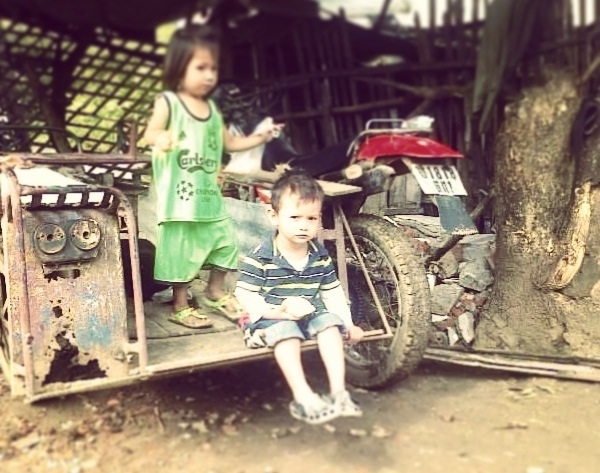
This brings me to my son, Noah–the slum dog missionary kid.

My wife’s parents, Noah’s grandparents do live in the slum, right in the heart of it. They have had opportunity to get out of it, but I think it is where they feel they belong for now. Noah’s grandmother, Srai Sim, serves God in her own way there. Noah spends a lot of his time at their home, eating, sleeping, playing with the oodles of kids in the area. He gets right into it and couldn’t care less about this place or that place. Noah, when he grows up, will be able to spend time with the rich and the poor, and not feel out of place in either situation. A long-term missionary friend told me recently that the US military likes to recruit missionary kids because they grow up in difficult, poverty stricken situations, and won’t be taken off guard when encountering it in some overseas combat mission. Makes sense.

It is not a sheltered life, thank God. Noah is being, and will be, exposed to things that the wisest of the west have never dealt with. I’ve seen near mega-church pastors mortifyingly stripped of their “know-it-all-ness” when crossing the Poipet border into Cambodia. It’s very refreshing. A well rounded wisdom–that’s what Noah is growing up into here in the third world.

to be continued…

Srai Sim’s Story

On April 17, 1975, the Khmer Rouge army marched into Phnom Penh. Over the next few frantic days, journalists covered what they saw before they were forced to leave. They watched, astounded, as Khmer Rouge soldiers, young peasants from the provinces, mostly uneducated teenage boys who had never been in a city before, swept through town. For them, Phnom Penh offered many mysteries. The boys didn’t know what to make of telephones, or toilets. But they set to their job right away, evacuating Phnom Penh, forcing all its residents, at gunpoint, to leave behind everything they owned and march toward the countryside. Hospital patients still in their white gowns stumbled along carrying their IV bottles. Screaming children ran in desperate search for their parents.
~Joel Brinkley, “Cambodia’s Curse”, pg. 40

image

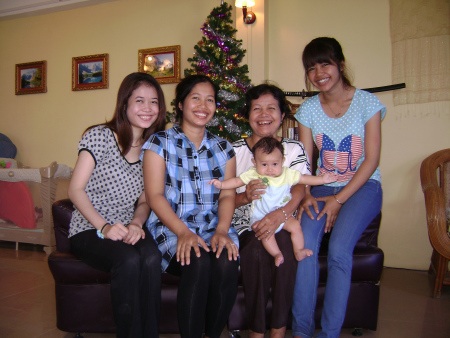
Srai Sim is my wife Makara’s mother and a survivor of the Khmer Rouge regime. This is her story.

Early Life and Marriage

Born in 1954 in Phnom Penh, Cambodia’s capital, Srai Sim was the only daughter in a family of five children. Her father worked for the government, while her mother was a homemaker.

At sixteen, Srai Sim married a hardworking young sergeant in the army. Together, they welcomed their first daughter, Srai Dtop, and looked forward to a promising future.

The Khmer Rouge Takeover

In 1975, as the United States withdrew from Vietnam, Cambodia was already in turmoil, plagued by political instability. That April, the Khmer Rouge (KR) took control of Phnom Penh, ordering its residents to evacuate under the false pretense of an impending American bombing. In reality, the KR sought to eradicate urban life and transform Cambodia into an agrarian society.

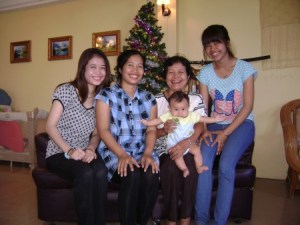
Seven months pregnant with their second child and with a three-year-old daughter in tow, Srai Sim and her family were forced to march out of the city. They were herded like cattle to Kampong Speu, where she gave birth to Srai Owne. A month later, they were relocated to Moung Roussei in Battambang province, given a week to rest, and then sent to Phnom Thippadei to build their own shelter and work under grueling conditions.
imageTragedy Strikes

Two months after settling in, KR soldiers began identifying former government workers. Srai Sim’s husband, a soldier under the previous government, was among those selected. The KR claimed these men would return safely to Phnom Penh, but only the men were taken.

A month after her husband’s departure, Srai Sim’s eldest daughter, weakened by starvation and illness, passed away before her fourth birthday. With little food herself, Srai Sim could no longer produce breast milk, and just three weeks later, baby Srai Owne also died. Soon after, a KR soldier visiting his mother in Moung Roussei revealed the truth—Srai Sim’s husband had been executed along with all the other men.

With no children to care for, Srai Sim was assigned to hard labor in the rice fields. Each day from 6 a.m. to 10 p.m., she worked under the threat of death, surviving on meager portions of rice soup. Malnourished and exhausted, she began to lose her eyesight. A friend had to guide her, and she feared being executed if the soldiers discovered her blindness.

When the rice season ended, she was reassigned to transporting wood by ox cart. The work was less physically demanding, and over time, her eyesight returned.

imageA Forced Marriage

At the worksite, Srai Sim met Heang, a former farmer. The KR leaders, intent on forcing city dwellers and rural workers to intermarry, ordered them to wed. When Srai Sim refused, insisting her husband was waiting for her in Phnom Penh (though she knew he was dead), a soldier threatened to kill her. Resigned to survive, she relented. Along with 22 other couples, they were forcibly married on the same day.

Though Heang was happy to have a wife, Srai Sim remained distant. He feared she would leave him and would cling to her at night to prevent her escape. Soon after, she was sent back to the rice fields, while Heang was relocated 40 kilometers away to cut trees. Despite the grueling distance, he would walk all night just to visit her before making the return journey.

Escape and Survival

By late 1978, the Vietnamese invaded Cambodia to overthrow the Khmer Rouge. The fighting made its way to the Moung Roussei area. KR soldiers began killing many Cambodians rather than letting them escape during the chaos of the fighting. The KR soldiers rounded up Srai Sim and all the other workers and took them into the forest where Heang was working. They sent everyone up a small mountain to create a stronghold against the Vietnamese soldiers. It was extremely hot up the mountain, and they began to run out of drinking water.

Dehydration and heat took their toll. Those who attempted to flee were shot or caught in crossfire. Realizing they would die if they stayed, Srai Sim and Heang made a run for safety. As they sprinted, bullets flew past them. Miraculously, they reached Vietnamese soldiers, who ushered them to safety. By early 1979, the KR had fallen, and the couple settled in Moung Roussei.
sim n kids sm

A New Beginning

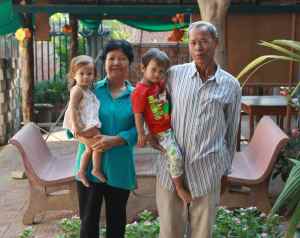
In 1980, Srai Sim and Heang had their first son, Sarin. Over the years, they welcomed more children: Makara, Petra, Seyha, Gunya, and Dtolla.

When Sarin was 17, he joined a Christian church and became deeply involved. Though Srai Sim remained devoted to Buddhism, she allowed him to practice his faith. However, financial hardship struck, shaking her beliefs. With her family struggling, Sarin invited her to church. She agreed.

At the service, she was overwhelmed by emotion, crying throughout. Though she didn’t understand why, she felt she had encountered God. She soon chose to follow Christ.
sim school

Serving Others

In 2002, the family moved to Poipet, where Sarin found work at a casino to support them. Trusting fully in God, Srai Sim started a house church, sharing her faith with her neighbors.

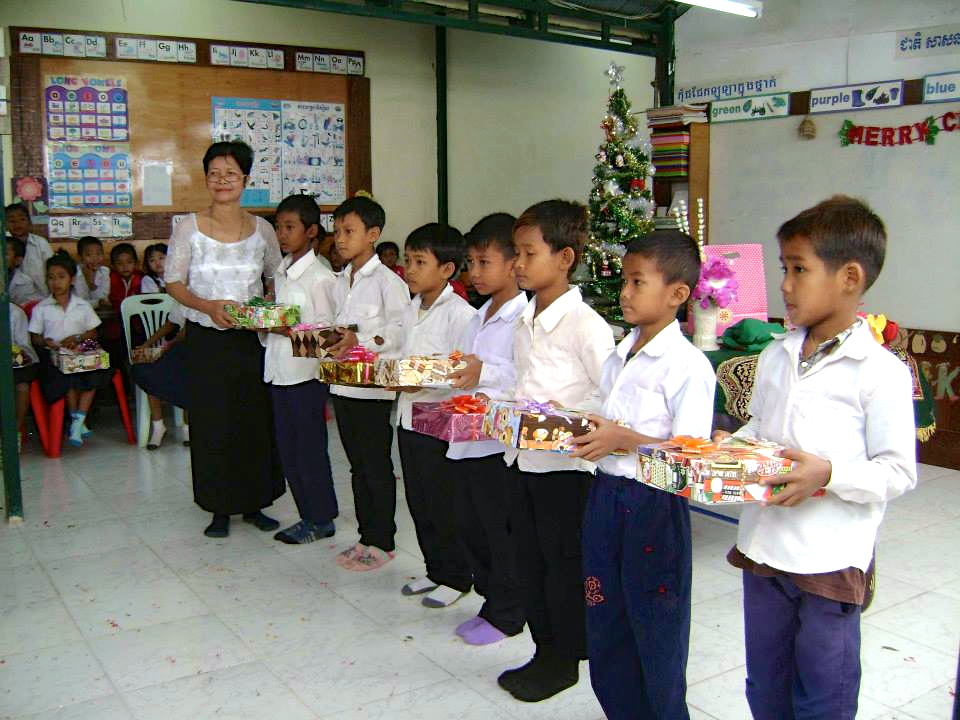
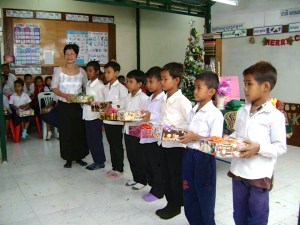
Today, she continues to serve as the director of a school in Poipet, strong in her Christian faith, working tirelessly to guide others to the truth she has found.

image