
Facing Darker Days

image

One thing that western Christians need to remember is that the Christian Church does not revolve around the western world. And so, if it appears that the Church is “dying” in the west, that certainly does not mean it is dying worldwide. In fact, the Church is growing worldwide.

But is the Church really dying in the west? Or is this some kind of publicity stunt?

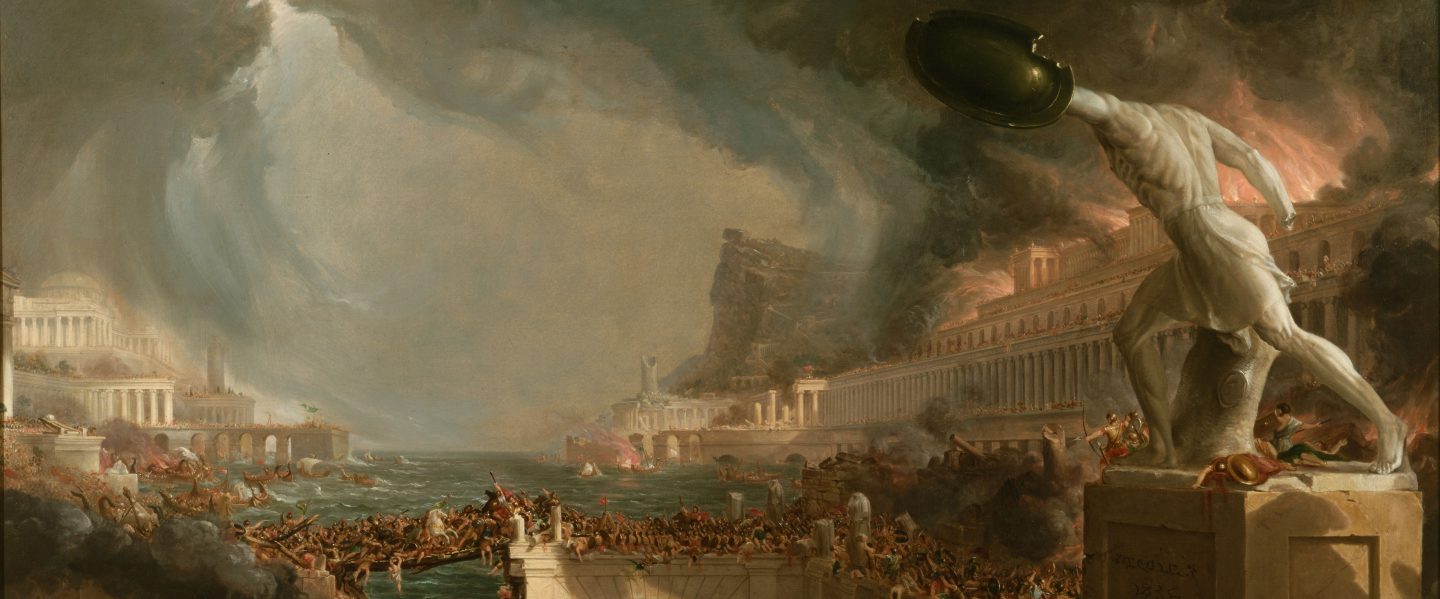
Something that is indeed happening in the west is that the secular and political realms are no longer paying homage to the Church. The “new atheism” we see these days does not just want to deny God’s existence, but it wants to tear down all Christian power in society. And this does seem to be happening; the Church has been and is losing power in the secular and political spheres.

But dying? Well I guess that depends on whether or not people are really getting saved and are joining churches. The numbers of those calling themselves Christian may be down, but how reliable are those numbers anyways? Ten years ago, if a surveyor went to any given house and asked what religion the home’s dweller belongs to, they’d probably get a response like, “Well, I grew up in a Catholic family, so I guess I’m Christian.” Yet the person hasn’t set foot in a church for 25 years. These days I think people are more inclined to be honest and say they are non-religious. They no longer feel the need to show some kind of respectful acknowledgment of religious tradition.

So perhaps the Church is not dying, but rather, with the loss of the Church’s political power, we are just seeing more honesty and realism. This is a good thing. The Church thrived in a hostile Roman Empire. No one dared to pretend to be Christian for personal gain. Nor did anyone sleepily pay tribute to the faith out of some obligation to tradition. Lines were clearly drawn, and no one could be a “casual believer”.

So, as the Church loses religious control over society, no one should lament that the end is near. The Church’s true influence will grow as its false religious and political clout dwindles.

photo credit: “A Letter From Pastor Mark”

Some Methods and Tools to Read the Bible

image

There are two ways, I think, we should read the Bible. One is to study it deeply. This means choosing a chapter or a couple of verses at a time and reflecting on each word carefully. The second way is to read it in a more general fashion, like how you’d read a novel. The first way is to get you to understand fully what each specific author wanted to get across to his readers. The second is to get you intimately involved with the whole overarching plan of God.

One handy way to deeply study the Bible is to use a Hebrew and Greek lexicon. This way you can look up the original meaning of the words you’re currently reading in English. I wouldn’t recommend getting too caught up in this though. The people who translated the different versions of the Bible were experts in the Greek and Hebrew, and so, took great care in getting the proper meaning of the original into English. But still, if you’re curious about a word, you can look it up, and you might be surprised at what you find.

Here’s an example:

Romans 8:15 says,
“For you did not receive the spirit of slavery to fall back into fear, but you have received the Spirit of adoption as sons, by whom we cry, ‘Abba! Father!'”

We read the word ‘adoption’ and assume that it simply refers to kids with no parents getting parents. But it means something different. The Greek word, ‘uihothesia’, means the establishing or setting in place a male child into the position of being a son. And what Paul was likely referring to is the Roman practice where a father would officially set his oldest son into the place of being the legitimate heir to the family. A male child didn’t automatically become an heir simply for being the oldest biological offspring, and the father could cast him out of the family if he wanted to. It wasn’t till the boy was older, and had proven to his father that he was worthy of the family name, that the father would officially name him the heir. Once the boy was set in place he had all the rights, privileges, and burdens of that family. He was seen as being one with his father and having the authority of his father.

Now when we apply this analogy to the modern Christian, the term ‘son’ becomes gender neutral, and the ‘adoption’, or setting in place one as God’s heir who has rights and authority as His heir, appertains to all believers. This changes our understanding of adoption from being, “I was an orphan and now I have a daddy who loves me” to being, “I was not rejected by my Father, and now I have all the rights and privileges of being His son, His heir.” And when you begin to study what having His authority means, you will begin to understand how profound this ‘adoption’ really is.

A tool I use for this kind of study is “eSword“. It is free for PC, and there is an app for iPad, which is not free, but I bought it and use it all the time.

A tool I use for my general reading of the Bible is a reading plan called “Professor Grant Horner’s Bible Reading System”. This plan is designed to get you to read from all over the Bible each day. The plan suggests you read ten chapters per day, but you can set your own pace. Click here to read about the plan. I like this plan because it gives you a good bird’s eye view of the whole Bible and you will see scripture supporting scripture — all of the Bible tied together.

Another tool is, as you’re reading the New Testament, when an author quotes an Old Testament passage, you may have a Bible which gives you what that OT verse is. For example, Paul, in 1 Corinthians 15:27, quotes Psalm 8:6. Now if you flip to the Psalm verse you won’t see in your Bible a reference to 1 Corinthians. So, write it there yourself. Now, every time you read the NT and see a reference to the OT, go to the OT and write in the NT verse yourself. Once you’ve done that for awhile you’ll find as you’re reading the OT all sorts of references to the NT. Why is this helpful? Because then you’ll have Jesus, Paul, Peter, John, and the other NT writers teaching you how to understand the OT passages. Every time you come across one of your written references in the OT to the NT, go and look it up, and the NT writer will tell you what that OT verse is really saying. Now, again, you have a tool to give you a clear overarching view of the plan of God.

There are lots of good ways to read and study the Bible. I love studying the Bible and can spend hours doing it. These are just a couple of ways I do so.

Be Fruitful and Multiply

image

I don’t know what to believe about the global warming or climate change issue anymore because both sides of the contention say they’re 100% right and they cantankerously demonize each other.

But if we look to the issue from a Christian perspective, rather than a political one, we can see more clearly.

And God blessed them. And God said to them, “Be fruitful and multiply and fill the earth and subdue it and have dominion over the fish of the sea and over the birds of the heavens and over every living thing that moves on the earth.”
~Genesis 1:28

This verse is the first commission — our first duty as human beings in relation to this planet. God created the world, put our first parents into a garden surrounded by wilderness, and told them to expand the garden; take dominion.

What does it look like to take dominion?

Well obviously, since it was God who gave the order, we are to care for and nurture the earth. God cares for and nurtures His own, and so He clearly expects us to do the same. Notice how when you love and nurture plants, they grow and flourish. And when you love and care for a dog, that dog will be a loving gentle animal. It is our responsibility to enable lower life forms to reach their fullest potential. We do this through love and care. Unfortunately sin has totally screwed things up, but the original commission still stands. In fact, the newer ‘Great Commission’ given by Jesus, in Mark 16:14-18, empowers us to once again fulfill the first commission.

And I use the term ‘lower life forms’ designedly. I am not equal to a tree. I am greater than a tree. I was created in God’s image. The Giant Sequoia was not. And so while we care and nurture for the earth we are also commanded to be fruitful and multiply. That means having kids, building houses and roads, shaping the landscape, and developing new technologies. So, trees are going to be cut down, and animals are going to be relocated. This is okay when we do it in a caring, nurturing fashion.

When we obey God, act according to His character, and trust in His sovereignty, we don’t need to worry about the end of the world. Jesus came to save the world, not destroy it.

For I consider that the sufferings of this present time are not worthy to be compared with the glory which shall be revealed in us. For the earnest expectation of the creation eagerly waits for the revealing of the sons of God. For the creation was subjected to futility, not willingly, but because of Him who subjected it in hope; because the creation itself also will be delivered from the bondage of corruption into the glorious liberty of the children of God. For we know that the whole creation groans and labors with birth pangs together until now. Not only that, but we also who have the firstfruits of the Spirit, even we ourselves groan within ourselves, eagerly waiting for the adoption, the redemption of our body. For we were saved in this hope, but hope that is seen is not hope; for why does one still hope for what he sees? But if we hope for what we do not see, we eagerly wait for it with perseverance.
~Romans 8:18-25 (NKJV)

A Pedestal Too High

image

God speaks in a great language. His words are brimming and nothing in our experience can counter balance the heftiness of what He trumpets forth. Therefore, our crippling slant is to disbelieve what God has spoken about us, both in our being and doing. Our idea of Heaven and eternal life is as bland as contemporary church building architecture. We doubt hell, firstly because we are illicitly repulsed by it, secondly because we deem ourselves unworthy of it. So when God speaks, we are reluctant to apply His words to ourselves, and instead look to someone else preeminent and greater. We are content to consign God’s words to whomever is on a pedestal too high for our reach.

These days we are being conferred a shallow ‘playground righteousness’. The priests and priestesses of pop culture preach it well: “Now come on children. Let’s all be nice and get along. Everyone needs to feel good about themselves”. Now that’s fine for the playground if all there is is a playground, but for the graduated grown ups we have to go deeper than the sand; we must go down to the bedrock. A standard this deep looks to who God is, what He has set into place, and what He has done to cultivate it all. Here we have to listen carefully to God’s words, and bear the weight of those words, in our place and in our time.

I’ve heard it said that God doesn’t have a sense of humor. But of course He does. We have humor and we were created in His image. The Bible deals with a weighty matter and so we don’t see God cracking jokes in it. God takes us too seriously for that. In fact, it’s terrifying to think about how seriously God takes us. The bible describes God’s glory. The Hebrew word for glory (kabod) means weight or heaviness. That same glory passes on from God to us. We have an eternal worth that places us on a pedestal much higher than we think possible. And with that worth comes two options: turn to the Giver in faith and worship or spit on the Giver, the gift, and ourselves in disobedience.

When God created the universe (not multiverse) He set each and everything into its place. The sun goes here, the earth orbits the sun at this distance, the ocean stops at this line, each animal will reproduce its own kind, a man marries a woman. Order was brought from chaos. The book of Genesis describes the pre-created state as a dark empty wasteland. God then spoke His massive words, the sound of many waters, and everything that is came into being. Everything being done to the amplitude of never being undone. Everything with the worth that comes with eternity.

God doesn’t foresee anything, He ordains everything. And when the world fell into sin, God enacted the plan that shows us just how much worth the created world truly has. Jesus entered history and established a sovereignty that is beyond anything we could imagine. He became a man. He had to be a man in order to win the world back for men. He was born of a virgin. He had to be born of a virgin so as to not inherit the sinful nature. He lived a perfect life and satisfied God’s law. He died a bloody violent death and satisfied God’s wrath. He rose from the dead so that we who believe will do so also. He ascended into Heaven, the capital city, and established His kingdom. And He never gave up His manhood. A man, like us, sits and rules from a throne, a pedestal too high, but not too high.

**photo credit: http://www.stockfreeimages.com/10808584/Pedestal.html#_

‘The Medium is the Message’

image

If you were living in Canada in the 1990′s you would have been subjected to the “Heritage Minute” historical messages seen on TV and in movie theaters. As I have not actually watched TV for several years, I don’t know if these “Heritage Minutes” are still being produced. One that I remember well is the one about Marshall McLuhan. I thought it was stupid, and I didn’t understand what was being said.

Take a minute to watch the clip…

I hadn’t given any thought to this guy, McLuhan, until I was studying on the web about media in today’s world. He is most famous for his phrase: “The medium is the message”.

What he means by that phrase is basically this:

Media is an extension of ourselves. The device we choose to convey our message to others will determine the content of that message. And so the device, or the media, becomes the true message.

Tim Challies makes a good point in his book The Next Story that when any new media technology is created it is created for a specific environment, and even though the technology can be taken out of that original environment and be used in an entirely different type of environment, it will always take with it, where ever it is used, elements of the original environment. Power Point, for example, was created for the business board room. It is a great tool for making presentations using charts, graphs, and bullet points. But it didn’t stay in the board room. A lot of pastors use Power Point when giving their sermons. And so, when a pastor uses Power Point in delivering his sermon, he creates a business board room type of atmosphere in the church. The use of Power Point in the church brings with it elements of its original environment.

I remember when I was living in Canada attending my home church. The pastor at the time always used Power Point. He delivered his sermons using bullet points, and sometimes charts and graphs too. I once asked some new attenders, who had to drive for an hour each Sunday morning, why they decided to come to our church. Their answer was that they loved how the sermons were delivered in such a way that it made them feel as though they were at a business seminar. They didn’t comment on the content of the messages (although that was important to them too), instead they commented on the medium: how the message was delivered. The medium, then, is in itself a very powerful message. Some churches will never use Power Point. Some will have wooden pews and built in pulpits which would require a crane if anyone ever wanted to move them. In some churches the pulpit is just a glorified coffee table. These are all mediums which, in themselves, deliver very strong messages, perhaps even stronger messages than what is spoken by the preacher each Sunday.

You can also look at Christian television. What was TV originally created for? Entertainment. Therefore any TV show that isn’t entertaining will not last long. In fact the only place where you’ll see an unentertaining TV show last an undeservedly long time is on either public TV or Christian TV–where ratings don’t matter. All too often Christian TV programs simply consist of 50+ year olds sitting around a table discussing the theory of how to live life like they live life. Who finds this entertaining? Anyone under 40? I suppose the only people who do find these shows entertaining are other 50+ year olds who take comfort in that there is a show on that holds to the same values as they do. But even then I imagine that they only turn on the show so that there can be some background noise while they clean the house or something. Even the guys obsessed with the “End-Times” watch the programs that are obsessed with the “End-Times” for entertainment. They don’t watch the shows for education or information. They get a thrill from the idea that they are getting the inside edge on some secret knowledge as to when the world is going to end. And so when the maker of a Christian TV show says he doesn’t want to entertain, but rather just use TV as a tool to get his message across, then I’d say he’s chosen the wrong medium.

So with the medium being a powerful message in and of itself one cannot simply focus on the content. One has to choose the correct medium to use as well. One has to ask the right questions about what one is trying to get across to the viewers.

Here are four questions which McLuhan himself asked…

1) What does the medium or technology extend?

2) What does it make obsolete?

3) What is retrieved?

4) What does the technology reverse into if it is over-extended?

Good questions for any media producer to ask.

Media these days is a huge subject to look at, and it is very complicated. It is also a very interesting subject to study. I myself am just getting started. When I look at the questions above, and I think about how quickly technology is advancing, I wonder how things will look in ten years. Will McLuhan’s theories even apply anymore?

photo credit: http://www.flickr.com/photos/theilluminated/5161779163/in/photostream/