The debate about Bill C-16 with Dr. Jordan B. Peterson has got me thinking. Why would anyone living in a free society, freedom which men have fought and died for, want a big fat mama government to take care of them?
First, those who support Bill C-16 believe that they are on the side of love and compassion, and therefore have the moral high-ground. But, the not so obvious threat which they’re not seeing is that C-16 will give the government the authority to punish Canadian citizens for not talking a certain way. The gender issue is, more or less, just the issue which the threat has been attached to.
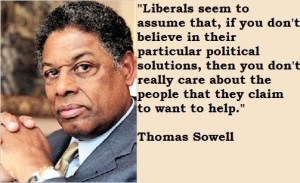
Second, why would anyone assume that those who oppose C-16 are automatically hateful towards the trans-gender community? Just because one might be against a particular solution to a problem does not mean that one doesn’t care about the problem. If someone says to me, “You should always give money to any homeless person who asks for it,” and I say that’s a bad idea; if the person then responds by saying, “You don’t care about homeless people,” then that person is ignorant, especially if I regularly volunteer at a homeless shelter and donate to the food bank — which are much better solutions to help homeless people. The same principle applies to C-16. If one is opposed to C-16, it doesn’t mean they are hateful toward the trans-community — it may just mean they care about free speech in Canada, and are unwilling to give that up.
And third, why do those who support C-16 believe that their only option is to run to big fat Mama Canada to solve their problems for them? Why don’t they get out there and do some awareness type work? Write up some literature to pass around. Make some Youtube videos. If they see someone mistreating a trans-gender, go and deal with the situation. But, it’s much easier to complain and let Mama Canada deal with it.
A free society requires adult citizens, not babies who always run to mommy.
“A wounded heart does not recover in the spiritual world without a change in the visible world. Resurrection never does enthrone the spirit in the same place where it left one body, as though nothing had happened. Something has happened; death has intervened. When I experienced an infinitesimal fraction of resurrection, I learned to my amazement how severe the law was which made it impossible for me to continue among the same people in the same place.”
Watching this, it wasn’t much of a debate. It was two against one (three against one if you count the moderator). Dr. Peterson’s main argument is that it is never good to give the government the authority to punish people for not saying things a certain way. This is not so much an issue of what you can’t say; it’s an issue of what you must say, and Peterson rightly points out how dangerous that is for a free society.
Peterson’s opponents, Brenda Cossman and Mary Bryson, appeal mainly to kindness and an unquestioning obedience to the law. I’m quite sure that if this had been a debate about abortion, Brenda Cossman’s only argument would have been: “Abortion is legal. What’s the point in debating it?” She criticized Peterson for not knowing the law well enough. Well, you don’t have to be a lawyer to recognize bad law, and Peterson, who has studied totalitarian societies for years, does know how bad laws corrupt free society.
Hopefully Dr. Peterson doesn’t lose his job or his license to practice psychiatric care in the future. But if he does, will Canada still continue down this current path? Or, will someone throw a Trump brand monkey wrench into Canada’s PC machine?
“[E]very boy or girl in this country learns the three R’s. Now, perhaps they would have better minds if they learned the Greek letters and language instead, but they have no choice. This English is their heritage. Long before they could choose, their elders have moulded their minds and made them into English speakers, English readers, English writers, and accountants. The young depend on the choices made for them by their elders. An heir is not somebody who can choose what he shall inherit; if he could make his choice, he would be self-made. But, in so far as his inheritance is determined, he is an heir, and under the laws of heredity. And to his heredity a man may say either yes or no, but he is caught in this one alternative which is not creative. He does, however, determine the background of the next generation.
“Hence, one’s generation’s background is due to the previous generation’s foreground. My father’s values determined my education. And by no action of mine can I cancel out the fact that his education preceded my own judgements. I am more the product of his intent or his omissions than his own life was. I am his heir. Only my own son or students may fully reflect my own choices.”
I’m writing this review from the point of view of Christian Missions. Too often, in my opinion, Christians disconnect themselves from the context of real life, and end up living in a vacuum, mostly unaware of the world around them. Whether it is because of the love for a vision, or an idealistic view of the future, Christians can easily become guilty of the old saying: “You’re so heavenly minded, you’re no earthly good” – although I would change ‘heavenly’ to ‘spiritually’.
“[A] feeling of being on the side of the angels can be a dangerous self-indulgence in a heedless willfulness that is sometimes called idealism. This kind of idealism can replace realities with preconceptions, and make the overriding goal the victory of some abstract vision, in defiance of reality or in disregard of the fate of fellow human beings.”
(Thomas Sowell. Wealth, Poverty and Politics, pg. 420. New York: Basic Books, 2016.)
The above quote was not made by Sowell in any kind of religious/missions context, but the principle still applies. If I were teaching a missiology course at a seminary, I would make this book required reading.
The main question Sowell is asking in this book is: “Why, given that poverty is the default for humanity, are some nations wealthy?” That’s the reverse of what other poverty/economic books ask, which is: “Why are some nations poor?” To Sowell, the answer to that questions is obvious; all of humanity is flawed and ‘fallen’ and it is a ‘miracle’ that some nations get out of that fallen impoverished state at all.
Sowell looks at culture, politics, geography, history, and other factors to determine how some nations and groups of people are able to create wealth. For example, while there are large rivers in Africa, there are no rivers in Africa like the Mississippi river. The Mississippi is a slow moving river traveling along a small decline in elevation. Therefore, it is easy to travel on and transport goods on. In Africa, the largest rivers have many rapids and cascades, making it difficult to travel on. That inability to travel isolates people from economic trade and cultural trade. Some land is better for growing crops than other land. Some countries have oil, others not. Some nations have a culture of honesty and hard work, other nations view deception as necessary.
That’s really what the whole book is: looking at the various different factors of reality and trying to determine how each factor applies to the wealth, or lack thereof, of peoples, groups, and nations. My one criticism of the book is that it is too repetitive, and could have been 100 pages shorter. I read the ‘revised and enlarged edition,’ so perhaps the first edition is 100 pages shorter.
In missions the same method which Sowell uses to explain wealth and poverty can be used to explain why some nations are Christian and others are not. First off, I’m not denying the spiritual aspect of missions. The Holy Spirit kicked off the Great Commission, and continues to guide it along, but the spiritual and the physical are not two different things, but rather are two parts of the same thing: reality. We can not remove ourselves from the context of the world in which we live. Culture, geography, religion, language, etc. all play a factor in the spread of the gospel. That is a fact and can not be denied spiritually. These physical factors need to be taken into account and used as a starting point. As C.S. Lewis said, “Miracles do not, in fact, break the laws of nature.” God’s universe has an inbuilt capacity for the miraculous. “Nothing can seem extraordinary until you have discovered what is ordinary. Belief in miracles, far from depending on an ignorance of the laws of nature, is only possible in so far as those laws are known.” (Lewis)
Why is the Church growing rapidly in the Philippines, but not Thailand? What happened in South Korea, where nearly 30% of the population is Christian, that didn’t happen in North Korea? Why are the western nations, colonized by the British, the most prosperous Christian nations compared to South American nations colonized by Spain? What about India, where Christianity was supposedly introduced there 2000 years ago by the apostle Thomas? Why did Hinduism, and later Buddhism, spread so far from India into South East Asia in the centuries past?
But… this post is just a book review. I’m not going to attempt to answer those questions here.
I recommend this book to anyone who wants to understand how the world works and why it works that way, and, using that knowledge, figure out how to predict the future and make life better for everyone.
I give it 4/5 stars. One star less than 5 for being too repetitive.




 I’m writing this review from the point of view of Christian Missions. Too often, in my opinion, Christians disconnect themselves from the context of real life, and end up living in a vacuum, mostly unaware of the world around them. Whether it is because of the love for a vision, or an idealistic view of the future, Christians can easily become guilty of the old saying: “You’re so heavenly minded, you’re no earthly good” – although I would change ‘heavenly’ to ‘spiritually’.
 Pursuit of Percipience