Jesus is Not Coming Down From the Sky

There is No Santa

Imagine a young boy who believes in Santa Claus. He believes that the presents he finds under the tree each Christmas morning were placed there by a magical man who came down the chimney, and who afterward hopped on his sleigh pulled by flying reindeer.

But, one Christmas Eve, the boy decides he wants to see Santa for real and so he sneaks out of his room late at night hoping to catch Santa in action. What he does see, however, is his own parents carefully laying out presents, one by one, around the base of the tree. And so, he knows the truth. It is in fact his own parents who are delivering the goods.

Now, with this knowledge, would it be proper for the boy to then believe that it is his own parents who slid down the chimney? And it his own parents who will fly off into the night on the sleigh? No, of course not. The boy must disregard the entire Santa narrative. There’s no one coming down the chimney. It’s all his parents buying the presents from the store, wrapping them out of sight, and placing them under the tree. Once the boy discovers the truth about one thing, he must apply that truth to everything else.

First Century Cosmology

First century Christians did not have telescopes. They believed the realm above them was a series of layers transcending the dome of the sky. They believed that angels and God literally resided in and above the layers containing the sun, moon, and stars. God’s throne room was a literal place up in what we would call “outer space.” When Jesus ascended up to the Father, to sit at His right hand, Jesus literally went up to sit on a literal throne in a literal throne room.

Since Jesus was up in outer space, of course when He returns, he will return from outer space. Where else would He come from?

21st Century Cosmology

Today we have telescopes. We know that we live in one galaxy among billions, and that each galaxy contains billions, if not trillions, of stars. The universe is so vast, it is beyond comprehension. In fact, the universe is likely infinite. We know this now.

We know that there is no Santa. Therefore, is it proper for us to continue to believe that one day the world will see Jesus descending down to the earth through the layers of the heavens as they believed He would in the 1st century? Should we combine their cosmology with our own? No, of course not. Ask any Christian today where heaven is, and unless he’s a flat-earther, he will likely say that heaven is located in the spiritual realm, someplace beyond the material realm that we do not have access to.

New Testament Eschatological Language

New Testament (NT) eschatology is primarily Israel’s eschatology. The Church’s eschatology builds upon it, but then transcends it. The cosmos coming under judgement for the NT authors was the Israelite cosmos. The end was near, at hand, at the door, soon, and about to happen. Every NT author believed he was living in the last days. And he was, to the degree that the old order of things was coming to an end. The apocalyptic language of the NT reflects this.

Israel’s eschatology is not the Church’s eschatology. The Church’s eschatology is this: Just as a dragnet draws all the fish into the boat, so is all creation being drawn to the Father by the redemptive work of Christ. We don’t know when this work will be complete, and we don’t know what it will finally look like. For now it is beyond our comprehension, beyond our reach.

It’s okay to be somewhat agnostic when it comes to eschatology. Embrace the mystery. Whatever you do, don’t go on believing that your dad has a pack of flying reindeer hidden away in a barn somewhere.

We Are Not Israel

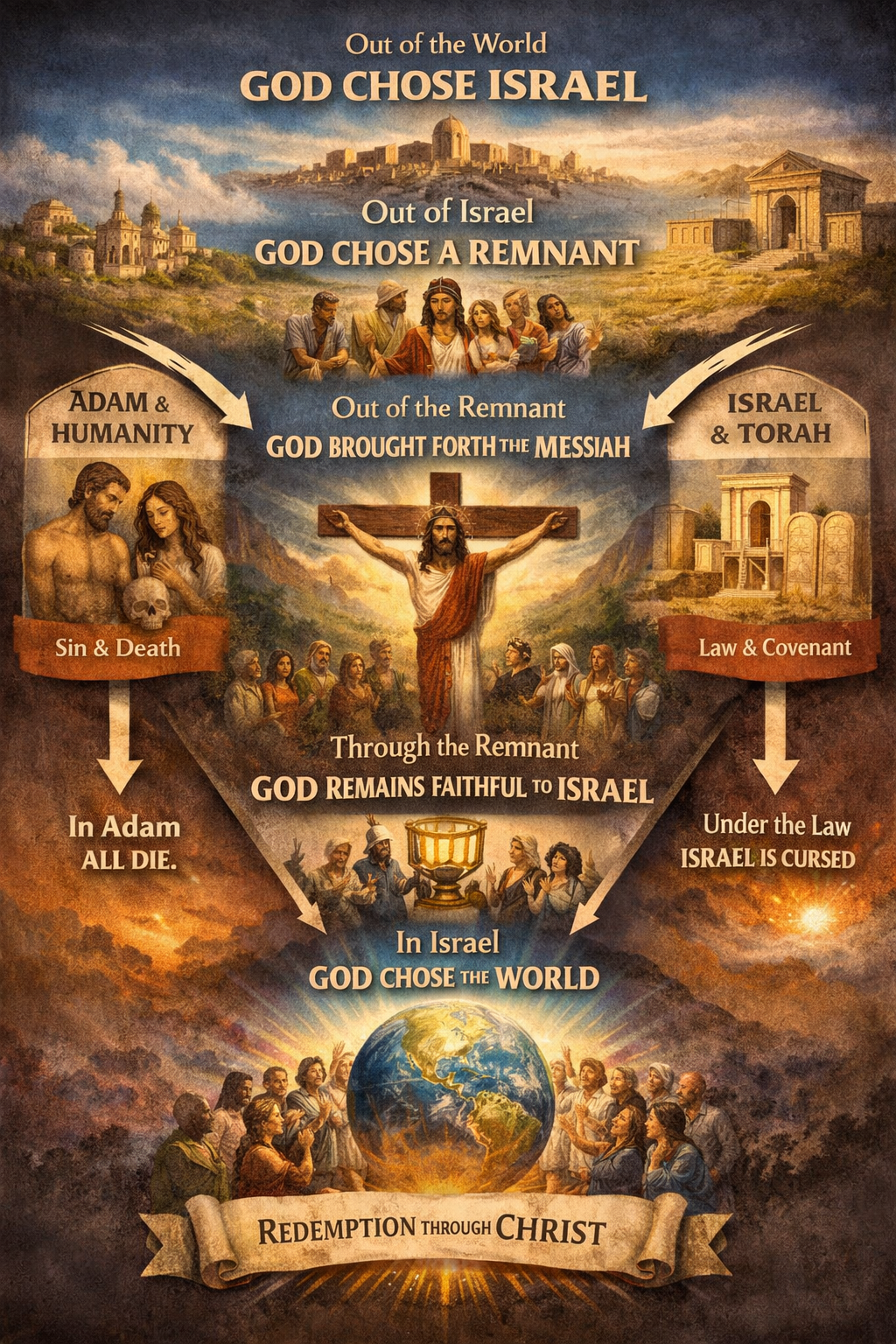
Israel is gone. Our faith is not “Judeo/Christian.” We are just Christian. Yes, Jesus was the Messiah Israel was waiting for, but He was not the Messiah they were expecting. Jesus was not the blood soaked Davidic warrior coming to destroy Rome and establish a powerful Israelite theocracy the 1st century Jews were hoping for. This is why He was rejected.

Jesus subverted all Messianic expectations. His kingdom is not of this world. He came to conquer a higher enemy. He came to do the will of the Father, not Israel. The Father’s will is to redeem His creation. This is what Christianity is: The redemption of creation through Christ.

For Christians, Israel has become allegory. The Old Testament scriptures are transformed to types and shadows. It’s not our literal history. It’s our mythology.

Most Christians live like this even if not fully aware of it. They may say the stories are literal history, but they always apply the stories allegorically to their own life’s journey. It doesn’t matter if the stories are literal history or not; anything to do with Israel we allegorize.

Jesus is not coming down from the sky. Israelite cosmology is not true. That’s okay, because we are Christians. We know more. We’ve seen more. We know what is mythology and what is reality. We know the truth, and what we know is true; we must apply it to everything else.

David Bentley Hart and Eschatology

David Bentley Hart (an Eastern Orthodox scholar), in a series of articles concerning eschatology, writes: “[B]iblical eschatology is of its very nature … somewhat obscure on the actual details of how things end. Whatever it tells us—or hints at for us—comes in the often unintelligible form of elaborate symbolic fantasias and infuriatingly elliptical metaphors, all pronounced with an urgency soon belied by history’s perversely persistent failure to end. If we are to be strict and fastidious literalists about the language of scripture, the Lord, it would seem, has been coming “quickly” for two millennia now; the hour has been late since the days of the Caesars; the world that is passing away is doing so with all the hectic dispatch of molasses flowing uphill in February.”

Other than a shared expectation of a soon fulfillment of eschatological expectations, the New Testament authors give us no consolidated narrative. The traditional Christian eschatological storyline (Christ’s second coming, general resurrection, final judgment, eternal Kingdom) is not found in a unified form. Texts like Paul’s epistles, the Gospel of John, and Revelation offer distinct visions.

“My claims regarding the early Christian sense of a rapidly approaching ‘eschaton’ are, before all else, claims regarding the first epoch of the church as an association of believers in Christ who harbored a large variety of apocalyptic expectations, at once intrahistorical, truly eschatological, wholly eternal, or combining two or more of these in an indeterminate haze of anxious anticipation, fear, and hope. And I assume that it was only a sense of the imminent realization of those expectations that imposed any sort of uniformity on what was otherwise a farraginous collection of religious, political, cosmic, and psychological aspirations. The things that were coming soon from God—the things that lay just over the horizon of the present—were imagined in many forms and modalities, temporal and atemporal and both at once; but what was beyond doubt was that they absolutely must happen very soon (δεῖ γενέσθει ἐν τάχει, as the first verse of Revelation says), and this was the uniform confession and profoundly unified experience of believers.” (Hart)

Below is a summary of the various views of eschatology and resurrection the NT authors had, as presented by Hart in his articles…

1. Paul (Authentic Epistles: Romans, 1 & 2 Corinthians, Galatians, Philippians, 1 Thessalonians, Philemon)

  • Eschatology: Paul’s eschatology is marked by an imminent expectation of Christ’s return (parousia) to consummate the present age and inaugurate the Kingdom (1 Thessalonians 4:13-17). He envisions a cosmic transformation where the “Age to Come” replaces the current order (1 Corinthians 15:24-28). Judgment is ambiguous, sometimes suggesting a selective process for the saved (Romans 8:11) and other times hinting at universal salvation (Romans 5:18; 1 Corinthians 15:28). Condemnation, if it occurs, consigns the reprobate to the past, not eternal torment (1 Corinthians 3:12-15). Paul’s focus is both intrahistorical (imminent divine intervention) and eternal (cosmic renewal).
  • Resurrection: Resurrection is central to Paul’s theology, equated with salvation itself (1 Corinthians 15:42-50). It involves a transformation from a mortal “psychical body” (σῶμα ψυχικόν, animated by soul and flesh) to an imperishable “spiritual body” (σῶμα πνευματικόν), composed of spirit (πνεῦμα), akin to angelic or celestial beings. This transformation is conflated with an ascent through celestial spheres in Christ’s train at his return (1 Thessalonians 4:16-17; Philippians 3:20). Resurrection is primarily for the righteous, though universalist passages suggest broader inclusion (Romans 5:18).
  • Key Features: Paul’s eschatology is future-oriented but imminent, with a strong universalist undercurrent. Resurrection is a cosmic, spiritual event, reflecting first-century cosmology where spirit is a subtle, incorruptible element.

2. Synoptic Gospels (Mark, Matthew, Luke)

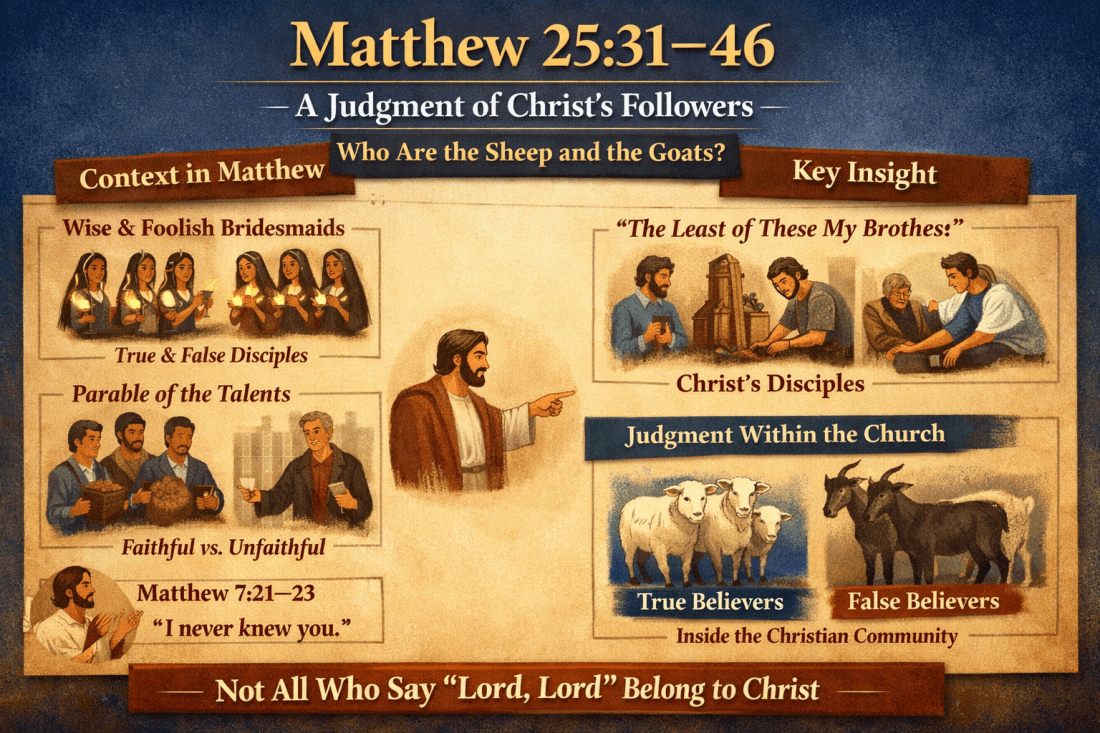
  • Eschatology: The Synoptics blend intrahistorical and eternal horizons, with a strong preterist emphasis on first-century events, particularly the destruction of Jerusalem in 70 CE (Olivet Discourse: Mark 13; Matthew 24; Luke 21). Jesus’ prophecies use prophetic idioms (e.g., Isaiah 65:17-25) to depict historical calamities as cosmic upheavals, targeting the rich and powerful for their oppression (Matthew 25:31-46). Judgment is often intrahistorical (e.g., within a generation, Matthew 24:34), but a secondary eschatological horizon of divine justice looms (Matthew 11:22-24:11). The Kingdom is both imminent (Luke 11:20) and present within believers (Luke 17:20-21), with varied fates for the unrighteous (e.g., destruction, exclusion, temporary chastisement). Matthew’s allegory of judgment (Matthew 25:31-46) is a gathering of nations, not a resurrection event. Mark mentions resurrection only once (Mark 12:25), and Luke links it to the righteous (Luke 14:14).
  • Resurrection: In the dispute with the Sadducees (Mark 12:25; Matthew 22:30; Luke 20:35-36), Jesus describes the resurrected as “like angels” or “equal to angels” (ἰσάγγελοι), implying a spiritual, eternal existence free from marriage and death. Resurrection is not clearly tied to judgment, and its nature remains ambiguous. Luke’s depiction of the risen Christ with “flesh and bones” (Luke 24:39) contrasts with this angelic vision, suggesting potential inconsistency or redaction. Mark’s minimal focus on resurrection may align with spiritual ascent or soul revival.
  • Key Features: The Synoptics’ eschatology is heavily preterist, with metaphorical language tied to historical events. Resurrection is symbolic and ambiguous, often reserved for the righteous, with a focus on ethical transformation.

3. Gospel of John

  • Eschatology: John’s eschatology is predominantly realized, emphasizing the present reality of eternal life through faith in Christ (John 5:24; 11:25). The Kingdom is marginalized, replaced by “eternal life” (aiōnios zōē), which collapses future expectations into the now. Judgment is immediate, occurring in Christ’s crucifixion, which casts out the world’s Archon and draws all to himself (John 12:31-32). While a future resurrection and judgment are mentioned (John 5:28-29), these are qualified as already present (John 5:25: “the hour is coming”). The “last day” is the cross, where history and eternity meet (John 12:48). John’s universalist tone suggests all are redeemed through Christ’s act (John 12:32).
  • Resurrection: Resurrection is both a future event (John 5:28-29) and a present reality (John 11:25: “I am the resurrection and the life”). Believers already possess eternal life through faith, transcending death (John 6:47; 8:51). Resurrection is an ascent to a supercelestial reality, described as aiōnios, likely indicating a divine, eternal realm akin to Plato’s Timaeus. John lacks a final ascension scene, portraying Christ as continually present (John 20:19-28).
  • Key Features: John’s eschatology is radically present-focused, with judgment and resurrection fulfilled in Christ’s life, death, and resurrection. The universalist vision reconciles historical and eternal horizons.

4. 1 Peter

  • Eschatology: 1 Peter has a future-oriented eschatology, anticipating Christ’s return and final judgment (1 Peter 4:7). However, it also hints at a realized dimension, with Christ’s resurrection enabling spiritual actions (e.g., preaching to the “spirits in prison,” 1 Peter 3:18-19). Judgment is linked to historical suffering and divine vindication, but not explicitly tied to a universal resurrection.
  • Resurrection: Christ’s resurrection is described as a transformation from flesh to spirit (1 Peter 3:18: “put to death in flesh, made alive in spirit”), enabling him to enter spiritual realms. This aligns with Paul’s spiritual body concept, suggesting a non-carnal, angelic existence for the resurrected.
  • Key Features: 1 Peter bridges future and realized eschatology, with resurrection as a spiritual transformation, reinforcing the apostolic view of an imperishable state.

5. Hebrews

  • Eschatology: Hebrews shifts from imminent historical expectations to a vertical, transcendent eschatology. Christ’s second coming is mentioned (Hebrews 9:28), but the focus is on his present role as High Priest in the heavenly sanctuary (Hebrews 4:14; 8:1). Salvation is an ascent to the “world above,” emphasizing a timeless divine reality over future consummation.
  • Resurrection: Resurrection is implicit in the ascent to the heavenly places, where believers are drawn by Christ’s priestly work (Hebrews 6:19-20). It is not detailed but aligns with a spiritual, non-carnal transformation.
  • Key Features: Hebrews prioritizes a vertical eschatology, with resurrection as a spiritual ascent, reflecting a shift from historical to eternal concerns.

6. Pseudo-Pauline Texts (Ephesians, Colossians, 2 Thessalonians, 2 Timothy)

  • Eschatology: These texts reflect responses to delayed expectations. Ephesians and Colossians emphasize a realized eschatology, with believers already “raised” and “seated” with Christ in heavenly places (Ephesians 2:6; Colossians 3:1-2), though future consummation is noted (Ephesians 1:10). 2 Thessalonians, likely non-Pauline, introduces an intermediate period of apostasy and the “man of lawlessness” to explain Christ’s delay (2 Thessalonians 2:1-3), insisting on future divine intervention. 2 Timothy refutes claims of a mystical resurrection, maintaining future imminence (2 Timothy 2:17-18).
  • Resurrection: Ephesians and Colossians view resurrection as a present spiritual reality, aligning with John’s eternal life. 2 Thessalonians and 2 Timothy anticipate a future bodily resurrection, possibly for both just and unjust (Acts 24:15, though not pseudo-Pauline).
  • Key Features: These texts show a transition from Paul’s imminent eschatology to realized or adjusted expectations, with resurrection varying from present to future.

7. Revelation

  • Eschatology: Revelation is primarily preterist, focusing on the fall of Rome and the establishment of a new Jerusalem (Revelation 21:1-5). It adopts apocalyptic imagery, including a millennial messianic reign and two resurrections (Revelation 20:4-6), but these inaugurate a new epoch, not history’s end. Judgment is symbolic, tied to political and spiritual aspirations rather than a final cosmic assize.
  • Resurrection: The first resurrection is for martyrs during the millennial reign, the second a universal judgment (Revelation 20:11-15). Both are symbolic, reflecting anti-Roman hopes rather than literal eschatology.
  • Key Features: Revelation’s eschatology is allegorical and preterist, with resurrections as political symbols, not doctrinal statements.

Differences in New Testament Eschatology and Resurrection

Author/TextEschatology (Kingdom, Judgment)ResurrectionKey Features
Paul (Authentic)Imminent parousia, cosmic transformation (1 Thess 4:13-17). Judgment ambiguous, possibly universal (Rom 5:18). Kingdom is future “Age to Come” (1 Cor 15:24-28).Spiritual transformation into imperishable “spiritual body” (1 Cor 15:42-50), conflated with celestial ascent (1 Thess 4:16-17). Primarily for righteous.Future-oriented, universalist hints, spiritual resurrection, first-century cosmology.
Synoptics (Mark, Matthew, Luke)Preterist focus on AD 70 (Olivet Discourse: Mk 13; Mt 24; Lk 21). Judgment intrahistorical (Mt 25:31-46) with eternal horizon. Kingdom imminent and present (Lk 17:20-21).Angelic, non-carnal existence (Mk 12:25; Lk 20:35-36). Vague, possibly for righteous only (Lk 14:14). Luke’s “flesh and bones” (Lk 24:39) inconsistent.Metaphorical, preterist, ethical focus, ambiguous resurrection.
JohnRealized eschatology: eternal life now (Jn 5:24; 11:25). Judgment immediate, on cross (Jn 12:31-32). Kingdom marginalized, universalist tone.Present eternal life through faith (Jn 11:25), also future (Jn 5:28-29). Ascent to supercelestial reality, no final ascension scene (Jn 20:19-28).Radically present, universalist, eternal life as aiōnios reality.
1 PeterFuture-oriented, with Christ’s return and judgment (1 Pet 4:7). Some realized elements (1 Pet 3:18-19).Christ’s resurrection as shift to spirit (1 Pet 3:18), enabling spiritual realms. Aligns with Paul’s spiritual body.Bridges future and realized, spiritual resurrection.
HebrewsVertical, transcendent eschatology. Christ as High Priest in heaven (Heb 4:14). Future coming secondary (Heb 9:28).Implicit as spiritual ascent to heavenly places (Heb 6:19-20), non-carnal.Vertical focus, present salvation, minimal resurrection detail.
Pseudo-Pauline (Eph, Col, 2 Thess, 2 Tim)Mixed: realized in Eph/Col (Eph 2:6), future with delays in 2 Thess (2:1-3), 2 Tim (2:17-18). Judgment varies.Present spiritual raising (Eph 2:6; Col 3:1-2) or future bodily (2 Thess, 2 Tim, cf. Acts 24:15).Transition from imminent to realized or adjusted, varied resurrection views.
RevelationPreterist, anti-Roman focus (Rev 21:1-5). Millennial reign, symbolic judgments (Rev 20:11-15). New epoch, not history’s end.Two symbolic resurrections: martyrs’ reign, universal judgment (Rev 20:4-6). Political, not doctrinal.Allegorical, preterist, symbolic resurrections, political critique.

The Natural and Gnomic Will

The following is a cleaned up transcript from the above video (starting at 25:51)…

Think of it this way: one way of understanding Jesus as the Incarnate Son of God, as Maximus says, is that in most human beings, there is the natural will. In all rational creatures, there’s the natural will, which spontaneously desires only God and chooses only God because that’s its true end. To the degree that we’re separate from God, we have a deliberative or gnomic will, the psychological will that can make errors, go in the wrong direction, and do sinful things. Jesus, according to Maximus, doesn’t have a gnomic will, not because He lacks the capacity for deliberation, but because He’s so perfectly, fully, truly one with the Father and is Himself the Son that there’s no division between who He is essentially and who He is psychologically and empirically. There’s no space of separation. Human beings are called to become like that, utterly transparent before Christ to the presence of Christ in them in the Holy Spirit. As Paul says in First Corinthians 15, God becomes all in all, not just all over all, but all in all.

Here is an expansion on what David Bentley Hart said…

1. The Natural Will in Rational Creatures

Hart begins by referencing Maximus’s concept of the natural will (Greek: thelema physikon). According to Maximus, the natural will is an inherent faculty in all rational creatures—humans, angels, and other spiritual beings—that spontaneously orients them toward their ultimate end: God. This will is not deliberative or subject to choice in the way we typically understand decision-making; it is an intrinsic, ontological drive toward the good, the true, and the beautiful, which Maximus (and Hart) identifies as God Himself. The natural will is rooted in the idea that rational creatures are created in the image of God (imago Dei), and their deepest desire, by nature, is to be united with their divine source.

  • Expansion: The natural will reflects Maximus’s broader metaphysical framework, where creation is inherently oriented toward God as its telos (purpose or end). This aligns with the Christian patristic tradition, particularly the Eastern emphasis on theosis (deification), where the purpose of human existence is to participate fully in the divine life. Hart emphasizes that this desire for God is not a conscious choice but a fundamental aspect of what it means to be a rational being. It’s why Augustine’s famous phrase, “Our hearts are restless till they rest in you,” resonates here (mentioned earlier in the video at 4:25–4:32). The natural will is the “restless heart” seeking its fulfillment in God.

2. The Gnomic Will and Human Separation

Hart contrasts the natural will with the gnomic will (Greek: thelema gnomikon), which Maximus describes as a deliberative or discursive mode of willing. The gnomic will arises because humans, in their fallen state, are separated from God. This separation introduces a psychological and empirical dimension to human willing, where choices are made through deliberation, often leading to errors or sin. The gnomic will is not inherently evil but is a consequence of human freedom in a state of estrangement from God, where individuals can choose against their natural end (God) due to ignorance, temptation, or misdirection.

  • Expansion: The concept of the gnomic will is central to Maximus’s Christology and anthropology. In Maximus’s view, the fall fractured human nature, introducing a tension between the natural will (which always desires God) and the gnomic will (which can choose otherwise). This is why humans can act against their own ultimate good, choosing lesser goods or sinful paths. Hart’s point is that the gnomic will is a temporary condition, a product of the “space of separation” between humans and God. This separation is not ontological in the sense of altering human nature’s essence but experiential, resulting from the fall and the limitations of human perception and freedom in this world.

3. Jesus and the Absence of the Gnomic Will

Hart explains that, according to Maximus, Jesus, as the Incarnate Son of God, does not possess a gnomic will. This is not because Jesus lacks the capacity for deliberation—He is fully human and thus capable of human reasoning and choice—but because His human nature is perfectly united with His divine nature. In Jesus, there is no division between who He is essentially (His divine and human natures united in the hypostatic union, as defined by Chalcedonian Christology) and who He is psychologically and empirically (His lived experience as a human being). Jesus’s human will is perfectly aligned with the divine will, so there is no need for a deliberative, gnomic process that could lead to error or sin.

  • Expansion: Maximus developed this idea in response to the Monothelite controversy (7th century), which debated whether Jesus had one will (divine) or two (divine and human). Maximus argued for dyothelitism—that Jesus has both a divine will and a human will, but the human will operates without the gnomic mode because it is perfectly attuned to the divine. This is critical for Maximus’s soteriology: Jesus’s perfect unity of wills demonstrates the possibility of human nature being restored to its intended state, where the natural will fully governs without the interference of a gnomic will prone to error. Hart’s reference to “no division” reflects the Chalcedonian principle of the hypostatic union, where Jesus’s two natures (divine and human) are united without confusion, change, division, or separation. In Jesus, the human will is “transparent” to the divine, embodying the goal of human deification.

4. Human Destiny: Becoming Transparent to Christ

Hart extends this Christological insight to human destiny, stating that humans are called to become like Jesus—utterly transparent to the presence of Christ within them through the Holy Spirit. This transparency means aligning the human will with the natural will’s orientation toward God, eliminating the gnomic will’s tendency to err. In this state, humans become fully united with God, participating in the divine life (theosis), where their individuality is not erased but fulfilled.

  • Expansion: This idea of “transparency” draws on Maximus’s theology of deification, where the human person, through grace and the work of the Holy Spirit, becomes a perfect reflection of the divine Logos (Christ). The term “transparent” suggests a state where the human self is no longer opaque or obstructive to God’s presence but allows the divine light to shine through fully. This aligns with the Eastern Christian emphasis on theosis as the fulfillment of human nature, not its annihilation. Hart’s earlier discussion in the video (around 22:24–25:00) about becoming “uncreated” clarifies that this does not mean annihilation but becoming fully united with the uncreated God, sharing in His nature while retaining personal identity. The analogy of a prism’s facets (27:33–28:24) illustrates this: each facet (individual person) remains distinct, but the light (God) shines through all, uniting them in one divine reality.

5. First Corinthians 15: God Becomes All in All

Hart concludes this section by referencing Paul’s statement in First Corinthians 15:28, where God becomes “all in all” (panta en pasin). This is the culmination of the apokatastasis (universal restoration), where all creation is reconciled to God, not merely ruled over (“all over all”) but fully indwelt by God. This underscores Hart’s broader argument in the video (e.g., 21:15–21:28, 27:26–27:33) that Christian eschatology points to universal salvation, where all rational beings are deified, becoming fully united with God’s presence.

  • Expansion: In First Corinthians 15, Paul describes the resurrection and the ultimate subjection of all things to Christ, who then subjects Himself to the Father, so that God may be “all in all.” For Maximus and Hart, this is not a coercive domination but a transformative union where every rational creature’s natural will is fully realized, free from the distortions of the gnomic will. This ties into Hart’s rejection of the Thomistic “two-tier” view (2:50–9:01), which posits a natural end for humans separate from the supernatural. Instead, Hart and Maximus see human nature as inherently oriented toward deification, with no ultimate separation between nature and grace. The phrase “all in all” suggests a cosmic restoration where every aspect of creation—mineral, vegetable, animal, and human (18:48–18:56)—is transfigured, participating in God’s eternal life. This is why Hart emphasizes universal salvation in That All Shall Be Saved (mentioned at 21:15–21:21), arguing it is the only logical outcome of Christian eschatology.

6. Context in the Video

This passage (around 25:57–27:33) is part of Hart’s broader discussion of deification and the rejection of a nature-supernature dichotomy. Earlier, he critiques the Thomistic view that separates natural and supernatural ends (2:50–9:01), arguing it creates a “psychotic picture of reality” (20:32) where grace is arbitrary and disconnected from human nature. He contrasts this with the Eastern patristic view, including Maximus, where nature and grace are continuous, and human destiny is to become “uncreated” by participating in God’s life (21:47–25:00). The discussion of Jesus’s will and human transparency to Christ builds on this, showing how Christ’s incarnation models the human calling to deification, where the natural will is fully realized in union with God.

7. Broader Implications

Hart’s exposition has several implications:

  • Christology and Anthropology: Jesus’s lack of a gnomic will demonstrates the potential for human nature to be restored to its original purpose. Humans are called to overcome the gnomic will’s errors through grace, becoming like Christ in their unity with God.
  • Universal Salvation: The reference to “all in all” supports Hart’s argument for universal salvation, where all rational creatures achieve this transparency, fulfilling their natural will’s desire for God.
  • Eastern vs. Western Theology: Hart aligns with Eastern Orthodox theology (Cappadocian Fathers, Maximus, Pseudo-Dionysius) over Western Thomistic distinctions, emphasizing a monistic metaphysics where God is the ground of all being (11:36–13:19).
  • Practical Spirituality: Becoming “transparent” to Christ suggests a spiritual path of aligning one’s will with God’s through prayer, contemplation, and participation in the life of the Holy Spirit, a theme resonant in Eastern Christian mysticism.

Conclusion

Hart, through Maximus, presents Jesus as the paradigm of human destiny: a being whose human will is perfectly aligned with the divine, free from the deliberative errors of the gnomic will. Humans are called to this same unity, becoming transparent to Christ’s presence within them, culminating in the eschatological vision of First Corinthians 15, where God becomes “all in all.” This reflects Hart’s broader theological project of rejecting artificial distinctions between nature and grace, advocating for a monistic metaphysics where all creation is destined for deification, supporting his case for universal salvation. The passage encapsulates a vision of human fulfillment not as annihilation but as a transformative union with God, retaining personal identity while fully participating in the divine life.

Chart of Events/Figures in Both Josephus and Acts

Event/FigureDescription in ActsDescription in JosephusApproximate Date
Herod Agrippa I’s DeathActs 12:20–23 describes Herod being struck down by God and eaten by worms after accepting divine worship.Antiquities 19.8.2 describes Agrippa’s death at Caesarea, struck by illness during a festival, possibly due to poisoning or divine punishment.44 AD
Gamaliel the PhariseeActs 5:34–39 mentions Gamaliel, a respected Pharisee, advising the Sanhedrin to leave the apostles alone.Antiquities 20.9.4 and other references describe Gamaliel as a prominent Pharisee and teacher, respected in Jewish society.~30–50 AD
Theudas the InsurrectionistActs 5:36 references Theudas, a false prophet whose rebellion failed.Antiquities 20.5.1 describes Theudas leading a revolt, later executed by Roman authorities.~44–46 AD
Judas the GalileanActs 5:37 mentions Judas leading a revolt during the census, later killed.Antiquities 18.1.1 and Jewish War 2.8.1 describe Judas the Galilean’s revolt against the Roman census, founding the Zealot movement.~6 AD
Famine under ClaudiusActs 11:27–30 describes a great famine in Judea, prompting relief from Antioch Christians.Antiquities 20.2.5 and 20.5.2 mention a severe famine in Judea under Claudius, alleviated by Queen Helena of Adiabene.~46–48 AD
Herod Agrippa II and BerniceActs 25:13–26:32 describe Paul’s trial before Agrippa II and Bernice in Caesarea.Antiquities 20.7.2–3 and Jewish War 2.15.1 mention Agrippa II and his sister Bernice, their roles, and interactions with Roman governors.~59–62 AD
Felix, Roman GovernorActs 23:24–24:27 describes Paul’s imprisonment and trial under Felix.Antiquities 20.7.1–2 and Jewish War 2.13.2 describe Felix’s governorship and harsh rule in Judea.~52–60 AD
Festus, Roman GovernorActs 24:27–25:12 mentions Festus succeeding Felix and handling Paul’s case.Antiquities 20.8.9–10 describes Festus’s appointment and efforts to suppress unrest.~60–62 AD
Ananias, High PriestActs 23:2–5 describes Ananias ordering Paul struck during his trial.Antiquities 20.5.2 and 20.9.2 mention Ananias as high priest, later assassinated for corruption.~47–59 AD

Explanations and Notes

  1. Herod Agrippa I’s Death (44 AD):
    • Acts: Portrays Agrippa’s death as divine judgment for accepting worship as a god, with an angel striking him, leading to death by worms (Acts 12:20–23).
    • Josephus: Describes Agrippa falling ill at a festival in Caesarea, possibly due to poisoning or a medical condition, dying after five days (Antiquities 19.8.2). Both accounts align on the sudden and dramatic nature of his death.
    • Historical Context: Agrippa I, king of Judea, was a key figure under Emperor Claudius. His death created a power vacuum, leading to direct Roman rule.
  2. Gamaliel the Pharisee (~30–50 AD):
    • Acts: Gamaliel, a respected Sanhedrin member, advises caution regarding the apostles, citing past failed movements (Acts 5:34–39).
    • Josephus: Mentions Gamaliel as a leading Pharisee and teacher, influential in Jewish legal circles (Antiquities 20.9.4). He is likely the same figure, possibly Paul’s teacher (Acts 22:3).
    • Note: The timing of Gamaliel’s speech in Acts aligns with early Christian persecution (~30–35 AD), though Josephus’s references are less specific.
  3. Theudas the Insurrectionist (~44–46 AD):
    • Acts: Gamaliel references Theudas’s failed revolt as an example of movements that collapse (Acts 5:36).
    • Josephus: Describes Theudas leading followers to the Jordan River, claiming prophetic powers, but killed by Roman forces (Antiquities 20.5.1).
    • Issue: Acts places Theudas before Judas the Galilean (6 AD), creating a chronological discrepancy, as Josephus dates Theudas to ~44–46 AD. This may reflect a narrative anachronism in Acts or a different Theudas.
  4. Judas the Galilean (~6 AD):
    • Acts: Mentions Judas’s revolt during the census, which failed (Acts 5:37).
    • Josephus: Describes Judas leading a tax revolt against Rome during Quirinius’s census, founding the Zealot movement (Antiquities 18.1.1; Jewish War 2.8.1).
    • Context: The census (6 AD) sparked widespread unrest, and Judas’s movement influenced later Jewish rebellions.
  5. Famine under Claudius (~46–48 AD):
    • Acts: Describes a famine predicted by Agabus, leading to Christian relief efforts (Acts 11:27–30).
    • Josephus: Notes a severe famine in Judea, with Queen Helena of Adiabene providing aid (Antiquities 20.2.5).
    • Context: The famine under Emperor Claudius aligns with historical records of grain shortages in the eastern Mediterranean.
  6. Herod Agrippa II and Bernice (~59–62 AD):
    • Acts: Agrippa II and Bernice hear Paul’s defense in Caesarea, with Agrippa noting Paul could have been freed if not for his appeal to Caesar (Acts 25:13–26:32).
    • Josephus: Details Agrippa II’s role as a Roman client king and Bernice’s controversial presence (Antiquities 20.7.2–3).
    • Context: Agrippa II ruled parts of Judea and advised Roman governors, while Bernice was a prominent figure, later linked to Titus.
  7. Felix, Roman Governor (~52–60 AD):
    • Acts: Felix oversees Paul’s trial, keeps him imprisoned, and hopes for a bribe (Acts 23:24–24:27).
    • Josephus: Describes Felix’s governorship, marked by harsh measures against Jewish rebels (Antiquities 20.7.1–2).
    • Context: Felix’s rule was turbulent, contributing to rising tensions in Judea.
  8. Festus, Roman Governor (~60–62 AD):
    • Acts: Festus succeeds Felix, hears Paul’s case, and sends him to Rome (Acts 24:27–25:12).
    • Josephus: Notes Festus’s efforts to manage Jewish-Roman conflicts (Antiquities 20.8.9–10).
    • Context: Festus’s brief governorship preceded the First Jewish-Roman War.
  9. Ananias, High Priest (~47–59 AD):
    • Acts: Ananias orders Paul struck during his trial, prompting Paul’s rebuke (Acts 23:2–5).
    • Josephus: Describes Ananias’s corrupt tenure and eventual assassination by Jewish rebels (Antiquities 20.9.2).
    • Context: Ananias was a polarizing figure, aligned with Roman interests.

Comparison: The Egyptian in Acts and Josephus

Event/FigureDescription in ActsDescription in JosephusApproximate Date
The Egyptian (False Prophet/Rebel)Acts 21:38 mentions a Roman tribune asking Paul if he is “the Egyptian” who led a revolt and took 4,000 “assassins” (Sicarii) into the wilderness.Jewish War 2.13.5 and Antiquities 20.8.6 describe the Egyptian as a false prophet who led a large following (30,000, per Josephus) to the Mount of Olives, promising to overthrow Roman rule, but was defeated by Felix’s forces.~52–58 AD

Detailed Comparison

  1. The Egyptian in Acts:
    • In Acts 21:38, during Paul’s arrest in Jerusalem, a Roman tribune (Claudius Lysias) mistakes Paul for “the Egyptian,” asking, “Are you not the Egyptian, then, who recently stirred up a revolt and led the four thousand men of the Assassins (Sicarii) out into the wilderness?” (ESV). This implies the Egyptian was a known figure associated with a recent uprising.
    • The “Sicarii” were a radical Jewish group known for assassinations, often targeting Roman collaborators. Acts suggests the Egyptian led a significant number of them, though the scale (4,000) is smaller than Josephus’s account.
  2. The Egyptian in Josephus:
    • In Jewish War 2.13.5, Josephus describes the Egyptian as a false prophet who gathered a large following—around 30,000 people—and led them to the Mount of Olives, claiming he would cause the walls of Jerusalem to fall, signaling the overthrow of Roman rule. Roman governor Felix attacked, dispersing the group, and the Egyptian escaped.
    • In Antiquities 20.8.6, Josephus provides a similar account, noting the Egyptian’s messianic claims and Felix’s decisive response. He emphasizes the Roman crackdown on such movements, which were common during this period of unrest.
    • The discrepancy in numbers (4,000 in Acts vs. 30,000 in Josephus) may reflect exaggeration by Josephus, a common trait in ancient historiography, or a difference in sources.
  3. Historical Context and Overlap:
    • Date: Both accounts place the Egyptian’s revolt during Felix’s governorship (52–60 AD), likely around 55–58 AD, aligning with the turbulent period leading up to the First Jewish-Roman War (66–73 AD).
    • Nature of the Figure: Both sources depict the Egyptian as a messianic or prophetic figure leading a rebellious movement against Roman authority, fitting the pattern of 1st-century Jewish uprisings. Acts’ reference to the Sicarii connects him to violent resistance, while Josephus emphasizes his role as a false prophet with a large, albeit short-lived, following.
    • Location: Acts mentions the wilderness, while Josephus specifies the Mount of Olives as the staging ground for the Egyptian’s demonstration, which overlooks Jerusalem—a symbolically significant location for messianic expectations.
  4. Differences and Interpretation:
    • Acts provides a brief, secondhand reference, using the Egyptian as a point of mistaken identity to highlight the Roman perception of Paul as a potential revolutionary. Josephus, writing as a historian, gives a more detailed narrative, focusing on the event itself and its political implications.
    • The numerical difference (4,000 vs. 30,000) could stem from Acts relying on a Roman report (via the tribune) with a more conservative estimate, while Josephus, writing later, might inflate numbers to emphasize the scale of unrest under Roman rule.
    • Neither source names the Egyptian, and his fate remains unclear—Josephus notes he fled, while Acts offers no further details.

Eschatological Drift

Theology often adapts to historical events, which helps explain the different views on the end times (eschatology) even among early Christians. For instance, in letters written before the destruction of the Jerusalem temple in AD 70, Paul never links Christ’s return (the Parousia), the resurrection, or judgment to that event. Instead, he focuses on a general, future hope for all believers (e.g., 1 Corinthians 15:23; 1 Thessalonians 4:16), without mentioning the temple, which was still standing at the time.

In contrast, the Synoptic Gospels (Mark, Matthew, and Luke), likely written after the temple was destroyed, directly connect its fall to the Parousia. They portray the temple’s destruction as a sign of coming judgment and a lead-up to Christ’s return (Mark 13:2, 24–27; Matthew 24:2, 29–31; Luke 21:6, 20–28). Even so, they still view the resurrection as a future event, hinted at through symbols like the trumpet (Matthew 24:31) and affirmed in other teachings (Mark 12:25; Matthew 22:30; Luke 20:36).

Later still, the Gospel of John (written around AD 90–100) does not mention the temple’s destruction in relation to the Parousia or resurrection. Instead, it emphasizes a more spiritual or “realized” view of Christ’s presence now, while still affirming a future bodily resurrection (John 5:24–29). This reflects a shift toward a more universal theological perspective, no longer centered on the events of AD 70.

This development—from Paul’s silence on the temple, to the Synoptics’ focus on it, to John’s move beyond it—shows how early Christian beliefs about the end times evolved in response to historical changes.