Predisposed to Rule

crownA question often asked about the Adam and Eve story is: Why did they fall? And why so quickly? If all was perfect and wonderful, why did they fall at all?

The answer usually given revolves around free will. God wanted them to truly love Him, and they couldn’t do that without free will. Okay, fine, they did have free will. But that doesn’t answer the question of why they chose to fall.

Free will is like gravity. Gravity is a powerful force in the universe, and it effects everything. But, when compared to other forces, gravity is relatively weak. Free will is like that – it is a force in your life, but it is weak compared to other forces in your life.

For example, take two men: one is an alcoholic who hasn’t had a drink in three days; the other has only tasted alcohol once and it nearly made him puke – he hates it. Lock both men in a room containing only a full bottle of whiskey. Both men have free will – they can both choose to drink or not to drink, but we all know which man will drink. One man is predisposed to drink while the other is not. The force predisposing the man to drink is stronger than his free will. That doesn’t mean he can’t choose not to drink; it just means he probably will choose to drink. That’s an imperfect example of course, but it helps us to understand why Adam and Eve chose to disobey God and eat of the Tree of the Knowledge of Good and Evil.

What was the Tree of Knowledge? Read 1 Kings 3:6-9:

“And Solomon said: ‘You have shown great mercy to Your servant David my father, because he walked before You in truth, in righteousness, and in uprightness of heart with You; You have continued this great kindness for him, and You have given him a son to sit on his throne, as it is this day. Now, O Lord my God, You have made Your servant king instead of my father David, but I am a little child; I do not know how to go out or come in. And Your servant is in the midst of Your people whom You have chosen, a great people, too numerous to be numbered or counted. Therefore give to Your servant an understanding heart to judge Your people, that I may discern between good and evil. For who is able to judge this great people of Yours?'”

Also read 2 Samuel 14:17; Deuteronomy 1:39; Hebrews 5:12-14. All these passages show us that a knowledge of good and evil (the ability to discern and judge between good and evil) is a sign of maturity and kingly rule.

Just as the alcoholic is predisposed to choose to drink, Adam and Eve were predisposed to choose to rule. It was not a bad thing for them to want to do this, God created them that way (Genesis 1:26). But, to rule requires wisdom – an ability to discern good from evil. Adam and Eve, at the beginning, were like little children and not ready to to rule fully (Deut. 1:39). God did start them on the path of rule in the confines of the garden, but they had to mature to a point where they could rule outside of the garden.

Enter the serpent. Who was this serpent? I believe it was simply Satan in his naturally created form. Not all angels look alike, it would seem, and not all angels resemble men. The Cherubim and Seraphim are mighty dragon-like angels (Seraphim means “fiery serpent” in Hebrew). Satan himself is called a dragon in the book of Revelation. And why was the serpent there? Well perhaps the serpent, not yet fallen himself, was sent to Adam and Eve to be a tutor, a teacher, to show them how to rule. This would mean that Adam, Eve, and Satan all fell into sin at the same time. There’s no biblical reason to believe that Satan and the angels existed for millions of years before the creation (if there was such a thing as “years” before the creation), and that at some point in that “before-time” Satan fell.

God told Adam and Eve to increase and multiply and to fill the whole earth. Perhaps they needed a tutor who was a crafty beast from the field/wilderness (outside of the garden) to teach them what the rest of the world was like. We don’t know how long the serpent spoke to Eve, but at some point in the conversation, I believe, Satan realized what God had planned for mankind (to rule) and he became jealous.

Satan did not fall because he wanted to be like God, he fell because he wanted to be like Adam. Adam fell because he wanted to be like God too quickly.

Notice that the worst of the punishments fell on the serpent (Gen. 3:14-19), which means that he was the most responsible for the fall. It also means that he was not in the same category as Adam and Eve. God promised salvation to Adam and Eve (Gen. 3:15b), but not to the serpent.

The serpent understood that to cause Adam and Eve to fall he would need to tempt them to enter into their rule prematurely. The Tree of Knowledge was off limits to Adam and Eve, but not permanently. They would, over time, mature into the ability to eat of it. But the serpent knew that they were predisposed to rule and that that force could be used to overcome their free will to simply obey God. And he was right.

Jesus was also tempted by Satan (Matthew 4:1-11) – and in the same way as Adam and Eve, although no longer in the safety of the garden but in the wilderness itself.

Jesus came to rule (Isaiah 9:6-7), and Satan offered Him a short cut. Jesus truly was tempted to give in to Satan. He desired what Satan was offering. Jesus was, too, predisposed to rule. But, being the first mature man, He did not give in and chose to obey God first. Jesus, being the second Adam (1 Corinthians 15:45-49), obeyed God and made the way for all of us to be restored to our true purpose: to rule.

Adam and Eve’s great mistake then was not a desire to know good and evil, or a desire to be like God (those are good things), but rather, their great mistake was not trusting God and not obeying Him. Our predispositions may be stronger than our will, but our obedience to God must be stronger than all.

“If you love Me, you will keep My commandments.” ~John 14:15

Tribes, Kingdoms, and Empires (Part One)

Tribal-MarkTribal Markers

Some ideas and beliefs we hold allow for some give and take. Other ideas, however, no matter how much our opponents logically refute them, we hold on to as though our whole self-identity depended on them. Which, they do. These are our tribal markers.

How do you know your tribal markers? If you’re in a debate about what you believe, and you are willing to cede some of your arguments to your opponent, then those particular beliefs are not foundational to your identity. But, if you and your opponent reach a point at which you have no other argument to offer than to say, “You just don’t understand. My people understand. We will just have to agree to disagree.” Then you have found your tribal marker.

For example, Charismatic “speaking in tongues” is one such tribal marker. Speaking in tongues is not essential to being a christian, but it is essential to being a Charismatic. If one stops doing it, one is no longer a Charismatic. It is essential to the identity. A Calvinist’s “predestination” beliefs are tribal markers as well.

The more radical the marker, the smaller the tribe, and the less one has to use logical thought to defend it. The more a group insists upon and refines a tribal marker, the more people will be excluded from the group.

Part Two

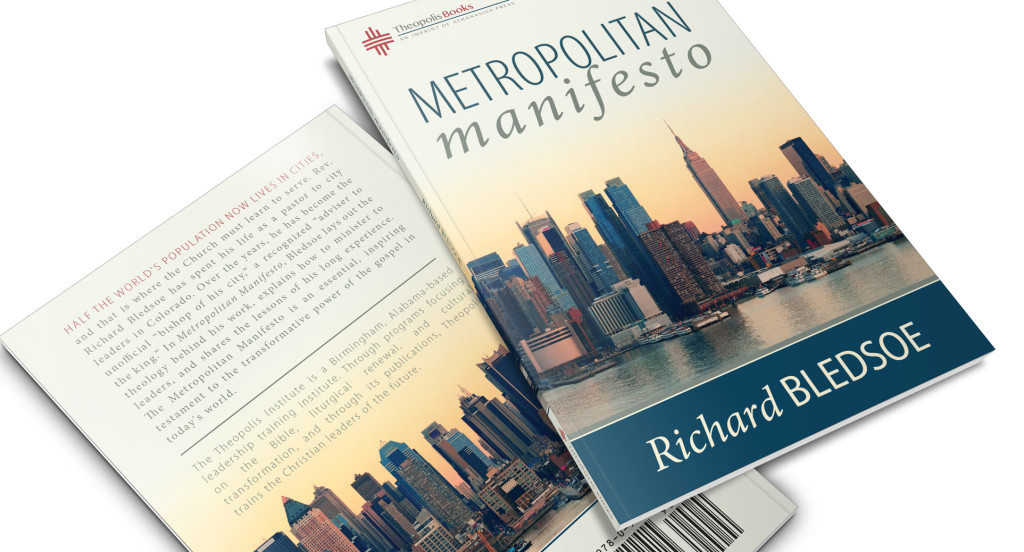
Metropolitan Manifesto by Richard Bledsoe (Brief Book Review)

MetropolitanManifesto-3Dfrontback-Promo2-1024x552

Sometimes when I finish a book I think: “If that book was a hundred pages shorter it would have been a lot better.” But the opposite is true with this one. I think it should have been at least a hundred pages longer.

There are lots of interesting ideas here, and I underlined a lot and stopped to think a lot. Some of the book is theological, some is philosophical, and some is political. It is really a bunch of different topics put together (while yet all pointing to the theology of the city), and I think many readers will not like that. Most of the ideas can greatly be expanded on, and that’s why I say the book could be longer, or be expanded into two or three more books. This is especially true for the chapter about how western history has progressed through the Bible in reverse. That idea comes from “Out of Revolution” by Eugen Rosenstock-Huessy. Huessy’s book is nearly 800 pages long, so there is a lot there. (I have not read “Out of Revolution” yet, but recently received a copy.) I don’t think most readers of Bledsoe’s book will have read “Out of Revolution”, so it would have been helpful if he had expanded on that idea more. I have read many of Bledsoe’s articles online and have listened to some of his lectures too, so that helped me to follow his thinking in this book a lot more. Here is a link to some of his lectures which go along with the book:

http://tricitycovenant.com/?s=bledsoe

A good book to read along with this one is “Crisis, Opportunity, and the Christian Future” by James B. Jordan. That 63 page essay deals with the different stages of human history which Bledsoe refers to in his book.

I will come back to this book again and again, as it is filled with many interesting (and sometimes strange — but strange is good) ideas. Also, after reading this book I am looking forward to reading that copy of “Out of Revolution” I received.

Information about the book.

Other reviews.

The Five-fold Gifts

Print

The terms found in Ephesians 4:11 are often used to describe the different types of ministry work we Christians do today. And that’s exactly correct. But, these terms were not invented recently, nor were they invented by Christians. These terms were used by anyone living in the first century Roman empire. So, in order for us to understand how these words apply to us today, it is helpful to see how they applied to regular people living at the time of Jesus, 2000 years ago.

Greek was the common language of the Roman empire. Before the Romans were in power, the Greeks were in power. And once the Greeks were in power, many of the nations began to adopt Greek culture, gods, and language. Below are the terms as listed in Ephesians 4:11, and defined as people would have used them in Jesus’s time. One word that seems to stand alone is ‘prophet’. This word was used mainly in the Old Testament, and so it’s best to get its meaning from there.

1) Apostle: (Greek: apostles) Envoy, ambassador, or messenger commissioned to carry out the instructions of the commissioning agent. An apostle was sent by someone in authority to give instructions to a specific person or group of people. In relation to the Church, an apostle is one sent by King Jesus to give instructions to the churches on how to conduct themselves. An apostle’s life was somewhat expendable.

2) Prophet: (Hebrew: nâbîy’; Greek: prophētēs) One who speaks for God and knows God’s plans. One who God listens to. One who can declare the future. One who can destroy old worlds and create new worlds with his words. The word is first used in Genesis 20:7 (Abraham, the prophet, had to pray for Abimelech’s life – God would only listen to the prophet).

3) Evangelist: (Greek: euaggelistēs [yoo-ang-ghel-is-tace]. The word is very similar to the Greek for ‘gospel’: euaggelion [yoo-ang-ghel-ee-on]. The prefix “eu-” means joyful and this is connected to the Greek word ‘aggelos’ [ang-el-os], or ‘angel’ in English, which means messenger.) A herald who proclaims a gospel (joyful message).

4) Pastors: (Greek: poimēn) A shepherd. One who takes care of the believers under his care both spiritually and physically. One who works to keep his people in the Church as a shepherd keeps sheep in the flock. One who works to see his people grow in maturity and Christ-likeness.

5) Teacher: (Hebrew: bîyn; Greek: didaskalos) An instructor. One who teaches the word and commands of God. One who works to ensure that his people are hearing the truth and not led astray by deception. One who works to see his people grow in maturity and Christ-likeness.

• Note: Pastors and Teachers are actually one item in this list. In the Greek the two are put together, and an acceptable translation of Ephesians 4:11 could be this:

“And He Himself gave some to be apostles, some prophets, some evangelists, and some pastors/teachers…”

•Note: It’s important not to confuse an apostle with an evangelist. An evangelist proclaims a gospel to a general crowd of people, while an apostle delivers a king’s instructive message to a specific group of people so that they know what they’re supposed to do.

Consider this as an example (historically accurate or not):

In 30 BC Augustus Caesar defeated Mark Antony and became the new ruler of the Roman empire. Once this was done, the news (the good news – euaggelion) of his victory and rise to power had to be made known to all the people all over the empire. The euaggelion was proclaimed to the people by the euaggelistēs (the evangelists). The evangelists were heralds who went through the towns and villages crying out the gospel message: “Hear this message all you people! Augustus has defeated his enemies and now rules the Roman world! Those of you who supported Augustus in the war will be rewarded! Those of you who opposed him – now is the time to turn away from your support of the enemies of Augustus and submit to him!”

Once Augustus had secured his rule, he returned to the capital city of Rome and took his throne. From there he worked to expand the influence of the empire by setting up colonies of Roman people in the places he recently defeated. Once these colonies were established, he gave instructions to the colonists by sending apostolos (apostles) – messengers from the king.

King Jesus has done the same thing, but on a much greater scale. Jesus was the first evangelist for His own rule when He said, “The time is fulfilled, and the kingdom of God is at hand. Repent, and believe in the gospel.” (Mark 1:15) Jesus was calling the people to turn away from their allegiance to the enemy (to repent) and to turn to Him as their true king. Jesus proclaimed His gospel even before He died on the cross – He had no doubt of His own victory.

After Jesus rose from the dead, He ascended up to heaven and took His throne at the right hand of the Father. From there He will rule until all His enemies have been put under His feet. Jesus is now in His capital city ruling His empire. We, the Church, are establishing “colonies” for His empire by planting churches and starting up other Christian ministries all over the world.

Our evangelists continue to go out and proclaim the good news of our King’s rise to power, and to warn anyone who would choose to oppose Him. Our apostles continue to deliver orders from the throne room of Jesus to instruct the churches on how to worship, serve one another, build, expand, and make new disciples. Our pastors and teachers continue to care for their flocks and teach them all the truth of our Lord Jesus. And finally, our prophets continue to speak words of guidance based on God’s word, and to speak more words which would tear down anything holding us back.

Which of these gifts do you believe you are called into? It’ll most likely be more than one. Paul was first an evangelist then an apostle. Timothy was both an apostle and a pastor/teacher. You’ll probably walk in different gifts at different times in your life. Which are you most passionate about now?

Whatever you choose to do, don’t forget the instructions Paul the apostle wrote:

…(these five gifts are) for the equipping of the saints for the work of ministry, for the edifying of the body of Christ, till we all come to the unity of the faith and of the knowledge of the Son of God, to a perfect man, to the measure of the stature of the fullness of Christ; that we should no longer be children, tossed to and fro and carried about with every wind of doctrine, by the trickery of men, in the cunning craftiness of deceitful plotting, but, speaking the truth in love, may grow up in all things into Him who is the head—Christ—from whom the whole body, joined and knit together by what every joint supplies, according to the effective working by which every part does its share, causes growth of the body for the edifying of itself in love. (Ephesians 4:12-16)

* All scripture quoted from the NKJV.

Kingdom Come (Book Review)

Kingdom ComeKingdom Come by Sam Storms
My rating: 4 of 5 stars

“Kingdom Come” is written by Sam Storms and is an explanation of the amillennialist position of eschatology. I would describe this book more as a critique of pre-millennialism and dispensationalism, and a good one too. In fact, it is because of this, that I would describe amillennialism as being a negative eschatology. Not negative in an emotional sense (although that could be said too), but rather negative in the sense that amillennialism appears to be that which the other positions are not. The other two main positions (pre-millennialism and post-millennialism) are positive in their assertions as to what they believe. Amillennialism seems to be more or less the vacuum which is produced when the assertions of the other two positions are rejected. It is as though the amillennialist says, “Well I don’t believe in this (pre), and I don’t believe in that (post), so what I’m left with is the other (a).

I think my favourite chapter of the book is the one on post-millennialism. I would even point to that chapter as a good defence of post-milleniallism. Reading that chapter leads me to conclude that Storms is like all amillennialists: an agnostic post-millennialist. He writes: “I want to believe that postmillennialism is true. The notion of a progressive and ultimate triumph of the gospel within history itself such that when Jesus returns he finds a truly Christianized cosmos is profoundly appealing. But as of the publication of this book, I am not yet convinced. I remain an amillennialist.” (page 384)

View all my reviews