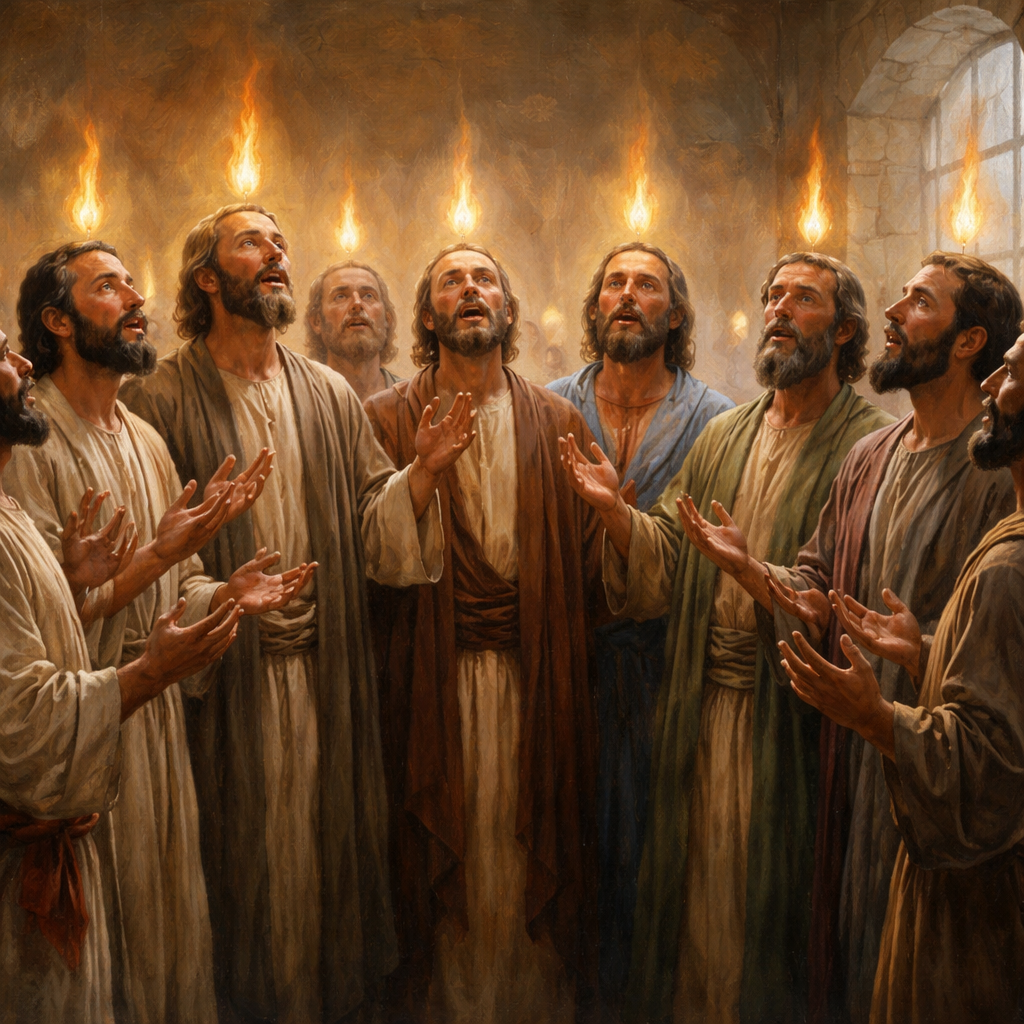
Tag: history
Reasons to Doubt the Supernatural Nature of Christianity
I’ve taught Apologetics before. I didn’t like it. I wouldn’t consider myself a Christian apologist as apologists are expected to come up with black and white answers to difficult issues. I do not believe there are black and white answers. Also, apologists seem less interested in discovering truth than they are defending presupposed dogmas.
However, as unlikely as it seems, there’s a chance I might teach the subject again. Therefore I thought, “What are some legitimate reasons why one would doubt the supernatural nature of Christianity?”
Here is my list…
- Unfalsifiability of Christianity
- Claims about heaven, hell, or divine judgment rely on post-mortem experiences, which are unverifiable in life, aligning with critiques of supernatural claims lacking empirical testability.
Christians cannot claim that living a faithful Christian life guarantees success or well-being in this life, nor that rejecting the Christian life necessarily leads to hardship or misfortune here and now. We know this from simple observation. Plenty of non-religious people live happy fulfilling lives, and plenty of Christians live difficult unhappy lives. The promise of whether things go good or bad for you can apply only to the after-life, which is unfalsifiable.
The hope found in the New Testament is grounded on the soon return of Christ, the transformation of the world, and the transformation of the individual bodies of believers. This leads to my next reason…
- Failed Eschatological Expectations
- New Testament passages suggest Jesus’ return was expected within the first century, which didn’t occur, undermining divine foresight.
Modern Christians have no clear explanation for what happens at death since the New Testament doesn’t teach it. The authors of the New Testament did not expect the world to continue on for thousands of years after Pentecost. The New Testament authors expected the Parousia (return of Christ, resurrection/transformation of bodies, judgement) to happen within their own lifetimes or shortly after.
The Parousia did not happen at that time, nor has it happened from that time till now. This calls into question the divine inspiration of the New Testament writings.
I can also include here the issue of the scripture’s focus on national Israel and the covenant promises. The New Covenant was promised only to Israel (Jeremiah 31:31-34; Hebrews 8:8-13). While it is true that Paul preached the gospel to the gentile world, his primary concern was Israel, which is why he always began his preaching in the synagogues. He clearly was passionate about Israel embracing their New Covenant gospel (Romans 9:1-5). And while I am not a proponent of the Israel Only movement, one can ask, “What if the original Jesus movement, a sect within Judaism, was only a failed Israelite eschatology?”
- Persistence of Evil Under Divine Rule/Absence of Physical Manifestation/Decline of Verifiable Miracles
- If Jesus reigns as a divine king, the ongoing existence of suffering and injustice suggests a lack of observable supernatural governance or intervention.
- Despite theological claims of Jesus’ ongoing divine presence, the lack of any verifiable physical manifestation calls into question the active role or power of a supernatural agent.
- Whereas early Christian accounts abound with miracles, such as healings and resurrections, modern times lack consistent, empirically verified equivalents, raising doubts about the reliability of early miracle claims.
I’ve combined three reasons here into one as they all have to do with the tangible presence of Christ in the current world.
Since the Parousia did not happen in the first century, the Church had to adopt a new way of seeing things. For the most part the Church began to teach that the kingdom of Christ is partially manifest in the Church, and that Christ rules in the hearts of believers. There will still be a future Parousia and history as we know it will end.
One can ask then, “What has actually changed in the world post-Pentecost?” If Jesus is king, what exactly is he king over? The world? The Church? Heaven? He doesn’t appear to be ruling the world, at least not in any obvious way. Perhaps he is king over the Church, but the Church is so fragmented (see reason #7) that he could only be king over an invisible Church: the “true believers,” whoever they may be. Only God knows. We might say he reigns over heaven, which we presume to be perfect. Since we cannot see heaven, we cannot verify this.
- Spread of Christianity Through Natural Means
- Christianity’s global expansion correlates with historical forces such as imperial conquest, colonialism, demographic trends, and migration—factors that suggest a sociopolitical rather than supernatural spread.
Has the spread of Christianity over the last two thousand years been remarkably different than the spread of any other religion?
- Syncretism with Pre-Christian Traditions/Parallels with Other Religious Traditions/Shift from Jewish Sect to Gentile Religion
- Many Christian customs have clear roots in earlier pagan traditions, indicating a blending of cultural practices rather than the emergence of a wholly distinct revelation.
- Christianity shares core motifs (such as virgin births and dying-and-rising gods) with older mythologies, implying that its supernatural claims may stem from universal myth-making rather than unique divine revelation.
- Christianity’s shift from a Jewish Messianic sect to a Gentile-dominated religion suggests human-driven evolution rather than divine preservation.
I’ve again combined three points here to highlight the evolution of religion throughout time. Many scholars agree that pre-exilic Israel was shaped by the dominant cultures surrounding it in the formation of its theocratic system. Likewise, post-exilic Second Temple Judaism was significantly influenced by Zoroastrian and Hellenistic thought. Christianity, which began as a Jewish sect, is often seen as a synthesis of Jewish tradition and elements from first-century mystery religions. Over time, it evolved into a predominantly Gentile movement. These developments suggest a gradual, human-driven evolution of religious ideas rather than a singular, divinely revealed system.
- Theological Discontinuity Between Testaments/Moral Progress Beyond Scripture
- The portrayal of God in the Old Testament (wrathful and nationalistic) differs markedly from the loving and universal God of modern Christianity, suggesting doctrinal evolution shaped by cultural change rather than consistent divine character.
- Modern ethical stances (e.g., the condemnation of slavery) often diverge from or contradict biblical teachings, indicating that moral advancement may arise from secular humanism rather than scriptural guidance.
I am not comparing God as portrayed in the Old Testament to God as portrayed in the New Testament here as much as I am comparing God as portrayed in the Old and New Testaments to God as portrayed by modern Christians. Modern Christians tend to read the Old Testament allegorically, and even Fundamentalists struggle to reconcile the differences.
- Fragmentation Within Christianity/Subjectivity in Scriptural Interpretation
- Theological and cultural divisions across denominations (e.g., Evangelical, Catholic, Eastern Orthodox) suggest Christianity is not a unified divine revelation but a diverse, evolving human tradition.
- The need for personal or ecclesiastical interpretation of scripture underscores the role of human subjectivity in defining doctrine, weakening claims of an objective or universally clear divine message.
Christianity exhibits such a high degree of internal diversity that one expression of the faith may, in practice, function as a distinct religion from another. For example, American Evangelicalism and Syrian Orthodoxy differ so significantly in theology, worship, and worldview that they can be seen as fundamentally separate religious traditions.
Personality often plays a significant role in shaping the style of Christianity a person gravitates toward. For example, someone devoted to John MacArthur’s church is unlikely to transition to a Charismatic congregation. While he may claim his reasons are purely scriptural, it’s more likely that his theological preferences align with his personality (which, of course, includes his politics).
- Modern Biblical Scholarship and Archaeology
- Scholarship questions the historicity of key biblical events (e.g., Exodus, Canaanite conquests), and textual criticism highlights inconsistencies in manuscripts, undermining claims of divine inspiration.
Did Moses write the Pentateuch? Or was it written by several authors and compiled later? Did the exodus out of Egypt actually happen? Did Daniel write Daniel? Did Daniel exist? Or was the book of Daniel Maccabean propaganda? Who wrote the gospels? Did Paul write all the letters attributed to him?
Modern scholars differ much in their opinions, and I find they often overstate their arguments. However, their work cannot simply be dismissed because it contradicts traditional Christian beliefs.
- Psychological and Sociological Explanations for Religious Experience
- Neuroscience and psychology offer naturalistic explanations for spiritual experiences (e.g., visions, divine presence) as brain-based phenomena, and sociological factors like community bonding explain Christianity’s appeal.
Worship services with dimmed lighting and emotional music absolutely influence how a person feels about what they perceive to be Jesus. This isn’t just true of modern western services, but it is true of ancient style Orthodox services as well.
It’s easy to see, especially with productions like The Chosen, that Christians will form their religion to fit their specific needs and desires. One would think it would be impossible to turn Jesus into a false idol, but how can modern Christians be sure that’s not exactly what they’re doing?
The Four Stages of Early Christianity
Chart of Events/Figures in Both Josephus and Acts
| Event/Figure | Description in Acts | Description in Josephus | Approximate Date |
|---|---|---|---|
| Herod Agrippa I’s Death | Acts 12:20–23 describes Herod being struck down by God and eaten by worms after accepting divine worship. | Antiquities 19.8.2 describes Agrippa’s death at Caesarea, struck by illness during a festival, possibly due to poisoning or divine punishment. | 44 AD |
| Gamaliel the Pharisee | Acts 5:34–39 mentions Gamaliel, a respected Pharisee, advising the Sanhedrin to leave the apostles alone. | Antiquities 20.9.4 and other references describe Gamaliel as a prominent Pharisee and teacher, respected in Jewish society. | ~30–50 AD |
| Theudas the Insurrectionist | Acts 5:36 references Theudas, a false prophet whose rebellion failed. | Antiquities 20.5.1 describes Theudas leading a revolt, later executed by Roman authorities. | ~44–46 AD |
| Judas the Galilean | Acts 5:37 mentions Judas leading a revolt during the census, later killed. | Antiquities 18.1.1 and Jewish War 2.8.1 describe Judas the Galilean’s revolt against the Roman census, founding the Zealot movement. | ~6 AD |
| Famine under Claudius | Acts 11:27–30 describes a great famine in Judea, prompting relief from Antioch Christians. | Antiquities 20.2.5 and 20.5.2 mention a severe famine in Judea under Claudius, alleviated by Queen Helena of Adiabene. | ~46–48 AD |
| Herod Agrippa II and Bernice | Acts 25:13–26:32 describe Paul’s trial before Agrippa II and Bernice in Caesarea. | Antiquities 20.7.2–3 and Jewish War 2.15.1 mention Agrippa II and his sister Bernice, their roles, and interactions with Roman governors. | ~59–62 AD |
| Felix, Roman Governor | Acts 23:24–24:27 describes Paul’s imprisonment and trial under Felix. | Antiquities 20.7.1–2 and Jewish War 2.13.2 describe Felix’s governorship and harsh rule in Judea. | ~52–60 AD |
| Festus, Roman Governor | Acts 24:27–25:12 mentions Festus succeeding Felix and handling Paul’s case. | Antiquities 20.8.9–10 describes Festus’s appointment and efforts to suppress unrest. | ~60–62 AD |
| Ananias, High Priest | Acts 23:2–5 describes Ananias ordering Paul struck during his trial. | Antiquities 20.5.2 and 20.9.2 mention Ananias as high priest, later assassinated for corruption. | ~47–59 AD |
Explanations and Notes
- Herod Agrippa I’s Death (44 AD):
- Acts: Portrays Agrippa’s death as divine judgment for accepting worship as a god, with an angel striking him, leading to death by worms (Acts 12:20–23).
- Josephus: Describes Agrippa falling ill at a festival in Caesarea, possibly due to poisoning or a medical condition, dying after five days (Antiquities 19.8.2). Both accounts align on the sudden and dramatic nature of his death.
- Historical Context: Agrippa I, king of Judea, was a key figure under Emperor Claudius. His death created a power vacuum, leading to direct Roman rule.
- Gamaliel the Pharisee (~30–50 AD):
- Acts: Gamaliel, a respected Sanhedrin member, advises caution regarding the apostles, citing past failed movements (Acts 5:34–39).
- Josephus: Mentions Gamaliel as a leading Pharisee and teacher, influential in Jewish legal circles (Antiquities 20.9.4). He is likely the same figure, possibly Paul’s teacher (Acts 22:3).
- Note: The timing of Gamaliel’s speech in Acts aligns with early Christian persecution (~30–35 AD), though Josephus’s references are less specific.
- Theudas the Insurrectionist (~44–46 AD):
- Acts: Gamaliel references Theudas’s failed revolt as an example of movements that collapse (Acts 5:36).
- Josephus: Describes Theudas leading followers to the Jordan River, claiming prophetic powers, but killed by Roman forces (Antiquities 20.5.1).
- Issue: Acts places Theudas before Judas the Galilean (6 AD), creating a chronological discrepancy, as Josephus dates Theudas to ~44–46 AD. This may reflect a narrative anachronism in Acts or a different Theudas.
- Judas the Galilean (~6 AD):
- Acts: Mentions Judas’s revolt during the census, which failed (Acts 5:37).
- Josephus: Describes Judas leading a tax revolt against Rome during Quirinius’s census, founding the Zealot movement (Antiquities 18.1.1; Jewish War 2.8.1).
- Context: The census (6 AD) sparked widespread unrest, and Judas’s movement influenced later Jewish rebellions.
- Famine under Claudius (~46–48 AD):
- Acts: Describes a famine predicted by Agabus, leading to Christian relief efforts (Acts 11:27–30).
- Josephus: Notes a severe famine in Judea, with Queen Helena of Adiabene providing aid (Antiquities 20.2.5).
- Context: The famine under Emperor Claudius aligns with historical records of grain shortages in the eastern Mediterranean.
- Herod Agrippa II and Bernice (~59–62 AD):
- Acts: Agrippa II and Bernice hear Paul’s defense in Caesarea, with Agrippa noting Paul could have been freed if not for his appeal to Caesar (Acts 25:13–26:32).
- Josephus: Details Agrippa II’s role as a Roman client king and Bernice’s controversial presence (Antiquities 20.7.2–3).
- Context: Agrippa II ruled parts of Judea and advised Roman governors, while Bernice was a prominent figure, later linked to Titus.
- Felix, Roman Governor (~52–60 AD):
- Acts: Felix oversees Paul’s trial, keeps him imprisoned, and hopes for a bribe (Acts 23:24–24:27).
- Josephus: Describes Felix’s governorship, marked by harsh measures against Jewish rebels (Antiquities 20.7.1–2).
- Context: Felix’s rule was turbulent, contributing to rising tensions in Judea.
- Festus, Roman Governor (~60–62 AD):
- Acts: Festus succeeds Felix, hears Paul’s case, and sends him to Rome (Acts 24:27–25:12).
- Josephus: Notes Festus’s efforts to manage Jewish-Roman conflicts (Antiquities 20.8.9–10).
- Context: Festus’s brief governorship preceded the First Jewish-Roman War.
- Ananias, High Priest (~47–59 AD):
- Acts: Ananias orders Paul struck during his trial, prompting Paul’s rebuke (Acts 23:2–5).
- Josephus: Describes Ananias’s corrupt tenure and eventual assassination by Jewish rebels (Antiquities 20.9.2).
- Context: Ananias was a polarizing figure, aligned with Roman interests.
Comparison: The Egyptian in Acts and Josephus
| Event/Figure | Description in Acts | Description in Josephus | Approximate Date |
|---|---|---|---|
| The Egyptian (False Prophet/Rebel) | Acts 21:38 mentions a Roman tribune asking Paul if he is “the Egyptian” who led a revolt and took 4,000 “assassins” (Sicarii) into the wilderness. | Jewish War 2.13.5 and Antiquities 20.8.6 describe the Egyptian as a false prophet who led a large following (30,000, per Josephus) to the Mount of Olives, promising to overthrow Roman rule, but was defeated by Felix’s forces. | ~52–58 AD |
Detailed Comparison
- The Egyptian in Acts:
- In Acts 21:38, during Paul’s arrest in Jerusalem, a Roman tribune (Claudius Lysias) mistakes Paul for “the Egyptian,” asking, “Are you not the Egyptian, then, who recently stirred up a revolt and led the four thousand men of the Assassins (Sicarii) out into the wilderness?” (ESV). This implies the Egyptian was a known figure associated with a recent uprising.
- The “Sicarii” were a radical Jewish group known for assassinations, often targeting Roman collaborators. Acts suggests the Egyptian led a significant number of them, though the scale (4,000) is smaller than Josephus’s account.
- The Egyptian in Josephus:
- In Jewish War 2.13.5, Josephus describes the Egyptian as a false prophet who gathered a large following—around 30,000 people—and led them to the Mount of Olives, claiming he would cause the walls of Jerusalem to fall, signaling the overthrow of Roman rule. Roman governor Felix attacked, dispersing the group, and the Egyptian escaped.
- In Antiquities 20.8.6, Josephus provides a similar account, noting the Egyptian’s messianic claims and Felix’s decisive response. He emphasizes the Roman crackdown on such movements, which were common during this period of unrest.
- The discrepancy in numbers (4,000 in Acts vs. 30,000 in Josephus) may reflect exaggeration by Josephus, a common trait in ancient historiography, or a difference in sources.
- Historical Context and Overlap:
- Date: Both accounts place the Egyptian’s revolt during Felix’s governorship (52–60 AD), likely around 55–58 AD, aligning with the turbulent period leading up to the First Jewish-Roman War (66–73 AD).
- Nature of the Figure: Both sources depict the Egyptian as a messianic or prophetic figure leading a rebellious movement against Roman authority, fitting the pattern of 1st-century Jewish uprisings. Acts’ reference to the Sicarii connects him to violent resistance, while Josephus emphasizes his role as a false prophet with a large, albeit short-lived, following.
- Location: Acts mentions the wilderness, while Josephus specifies the Mount of Olives as the staging ground for the Egyptian’s demonstration, which overlooks Jerusalem—a symbolically significant location for messianic expectations.
- Differences and Interpretation:
- Acts provides a brief, secondhand reference, using the Egyptian as a point of mistaken identity to highlight the Roman perception of Paul as a potential revolutionary. Josephus, writing as a historian, gives a more detailed narrative, focusing on the event itself and its political implications.
- The numerical difference (4,000 vs. 30,000) could stem from Acts relying on a Roman report (via the tribune) with a more conservative estimate, while Josephus, writing later, might inflate numbers to emphasize the scale of unrest under Roman rule.
- Neither source names the Egyptian, and his fate remains unclear—Josephus notes he fled, while Acts offers no further details.
The Interpretive Method of New Testament Authors
- Typological Interpretation (or Typology):
- Definition: Typology involves seeing OT events, figures, or institutions as “types” (patterns or foreshadowings) that prefigure or are fulfilled by Christ, the church, or other NT realities. The NT author interprets the OT text as pointing to a greater fulfillment in Jesus or the Christian community.
- Example: In Matthew 2:15, Hosea 11:1 (“Out of Egypt I called my son”) originally refers to Israel’s exodus but is applied typologically to Jesus as the true Israel who recapitulates and fulfills the nation’s story.
- Characteristics: Typology assumes historical correspondence and escalation, where the OT event is real but finds a deeper, often messianic, significance in the NT.
2. Pesher Interpretation:
- Definition: Pesher (from Hebrew, meaning “interpretation”) is a method where OT texts are applied directly to contemporary events or figures, often with an eschatological (end-times) focus. This was common in Jewish exegesis, notably in the Dead Sea Scrolls, and is used by NT authors to show how OT prophecies are fulfilled in their time.
- Example: Matthew 2:17–18 applies Jeremiah 31:15 (Rachel’s weeping) to the Bethlehem massacre, treating the OT text as prophetically fulfilled in Jesus’ era.
- Characteristics: Pesher often reads OT texts as cryptic predictions that find their true meaning in the present, sometimes stretching the original context.
3. Midrashic Interpretation:
- Definition: Midrash (from Hebrew, meaning “to search” or “expound”) is a Jewish interpretive method that creatively elaborates on OT texts to draw out moral, theological, or allegorical meanings. NT authors, especially Paul, use midrashic techniques to apply OT texts to new situations.
- Example: In 1 Corinthians 9:9–10, Paul uses Deuteronomy 25:4 (“Do not muzzle an ox”) midrashically to argue for supporting Christian ministers, extending the law’s principle beyond its literal meaning.
- Characteristics: Midrash often involves allegory, analogy, or recontextualization to make the text relevant to a new audience.
4. Allegorical Interpretation:
- Definition: Allegory treats OT texts as having hidden or symbolic meanings that point to spiritual truths, often beyond the literal sense. While less common in the NT than typology, it appears in some instances, particularly in Paul’s writings.
- Example: In Galatians 4:21–31, Paul allegorizes the story of Hagar and Sarah (Genesis 16–21) to represent the old and new covenants, respectively, a clear departure from the historical narrative.
- Characteristics: Allegory seeks deeper, symbolic meanings, sometimes detaching from the original context.
5. Fulfillment Citation:
- Definition: This term is used specifically for NT quotations introduced with phrases like “this was to fulfill” (common in Matthew) or “as it is written.” It reflects the NT authors’ belief that OT texts find their ultimate purpose or completion in Christ and the church, even if the original context was not explicitly prophetic.
- Example: Matthew 1:23 quotes Isaiah 7:14 (“the virgin shall conceive”) as fulfilled in Jesus’ virgin birth, despite its original context as a sign for King Ahaz.
- Characteristics: The focus is on Christological fulfillment, often reinterpreting non-prophetic texts as messianic.
Chart of Some NT Reinterpretations of OT Passages
| NT Reference | OT Source | OT Context | NT Usage | Shift in Meaning | Method |
|---|---|---|---|---|---|
| Matthew 2:15 | Hosea 11:1 | God’s historical deliverance of Israel from Egypt, called His “son.” | Jesus’ return from Egypt, fulfilling Israel’s role. | Historical event becomes a typological prophecy about Jesus. | Typology/Fulfillment Citation |
| Matthew 1:23 | Isaiah 7:14 | Sign for King Ahaz about a child named Immanuel, born to a young woman. | Jesus’ virgin birth, using Septuagint’s “virgin.” | Historical sign becomes a messianic prophecy. | Pesher/Fulfillment Citation |
| Matthew 2:17–18 | Jeremiah 31:15 | Rachel’s mourning for Israel’s exile, with hope for restoration. | Bethlehem infants’ massacre. | Historical lament reframed as a fulfilled tragedy. | Pesher/Fulfillment Citation |
| Matthew 3:3 | Isaiah 40:3 | Preparing a way for God’s deliverance of Israel from exile. | John the Baptist preparing for Jesus. | Exile restoration prophecy fulfilled in John’s ministry. | Pesher |
| John 19:36 | Psalm 34:20 (possibly Exodus 12:46) | God’s protection of the righteous or Passover lamb regulations. | Jesus’ unbroken bones at crucifixion. | General protection or ritual rule becomes a specific prophecy. | Typology/Fulfillment Citation |
| Acts 15:16–18 | Amos 9:11–12 | Restoration of Israel’s kingdom, dominance over Edom. | Gentile inclusion in the church, using Septuagint’s “mankind.” | National restoration becomes universal salvation. | Pesher |
| Romans 9:25–26 | Hosea 2:23, 1:10 | Restoration of Israel after judgment, called “my people.” | Gentiles becoming God’s people through faith. | Israel’s restoration extended to Gentiles. | Midrash/Typology |
| Romans 10:6–8 | Deuteronomy 30:12–14 | Accessibility of the Torah for obedience. | “Word of faith” in Christ, accessible through faith. | Torah’s accessibility becomes salvation through Christ. | Midrash |
| 1 Corinthians 9:9–10 / 1 Timothy 5:18 | Deuteronomy 25:4 | Law against muzzling an ox while treading grain. | Material support for Christian ministers. | Agricultural law reinterpreted for human laborers in ministry. | Midrash/Allegory |
| 2 Corinthians 6:16–18 | Leviticus 26:12, Ezekiel 37:27, 2 Samuel 7:14 | God’s covenant presence with Israel or Davidic king. | Church as God’s temple and people, including Gentiles. | Israel/Davidic promises applied to the church. | Pesher/Midrash |
| Galatians 3:16 | Genesis 12:7 | Promise of land to Abraham’s descendants (plural). | “Offspring” as Christ, the singular heir. | Collective promise narrowed to Jesus. | Midrash/Typology |
| Galatians 4:21–31 | Genesis 16–21 | Historical narrative of Hagar and Sarah, Abraham’s sons. | Allegory of old (law) and new (faith) covenants. | Family story becomes allegory for law vs. faith. | Midrash/Allegory |
| Hebrews 1:5 | Psalm 2:7 | God’s adoption of the Davidic king at coronation. | Jesus’ eternal divine sonship. | Royal coronation becomes Christ’s divinity. | Typology/Fulfillment Citation |
| Hebrews 10:5–7 | Psalm 40:6–8 | Obedience over sacrifice in personal worship. | Jesus’ incarnation and sacrificial death. | General worship statement becomes messianic prophecy. | Midrash/Typology |
| 1 Corinthians 15:54–55 | Isaiah 25:8, Hosea 13:14 | God’s future defeat of death or taunt against death. | Christ’s resurrection defeating death. | General/judgmental texts become resurrection triumph. | Pesher |
Notes on the Chart
- Columns:
- NT Reference: The NT passage where the OT is quoted or alluded to.
- OT Source: The specific OT verse(s) or passage(s) referenced.
- OT Context: The original meaning or historical setting of the OT text.
- NT Usage: How the NT author applies the OT text.
- Shift in Meaning: How the NT usage differs from or expands the original OT meaning.
- Interpretive Method: The primary method(s) used (typology, pesher, midrash, allegory), based on the definitions provided earlier.
- Interpretive Methods:
- Typology: OT events/figures as patterns fulfilled in Christ or the church.
- Pesher: OT texts as prophecies fulfilled in the NT era.
- Midrash: Creative elaboration to draw out new theological meanings.
- Allegory: Symbolic reinterpretation, often detaching from the literal sense.
- Fulfillment Citation: OT texts seen as completed in Christ, often with “this was to fulfill” phrasing.